






Red Pattern Hallway Rug
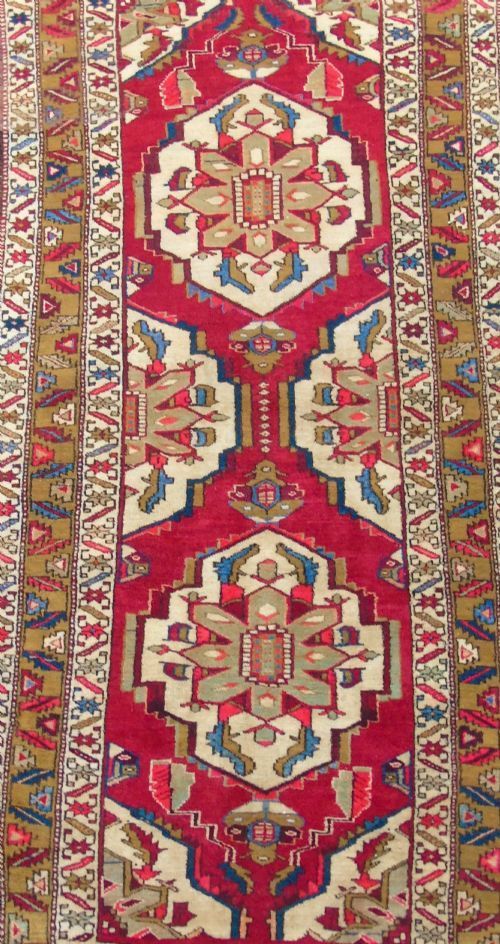
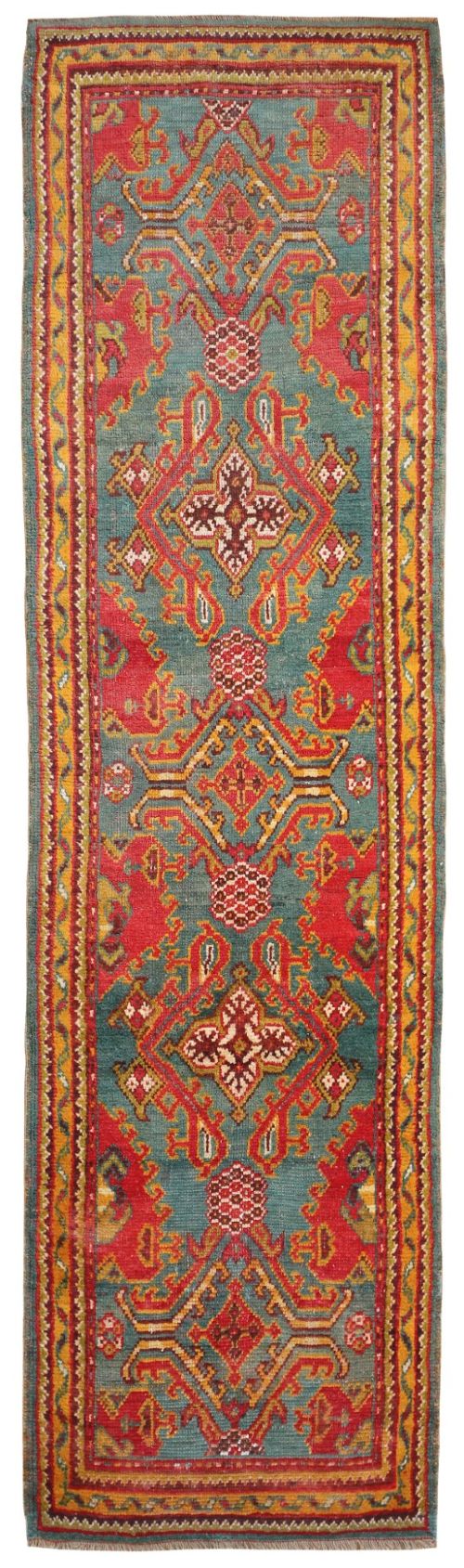
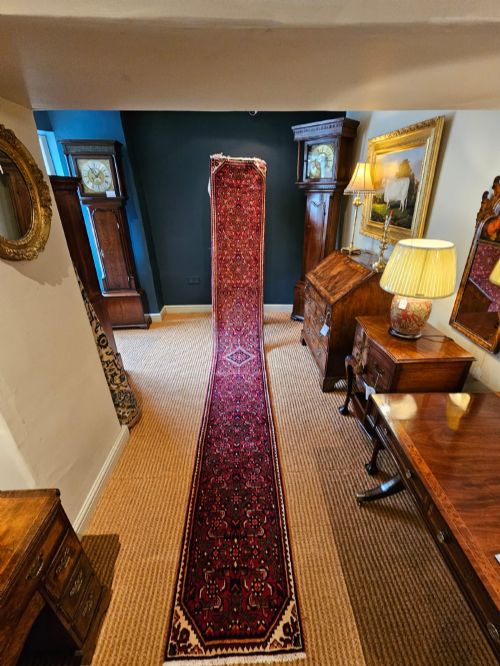
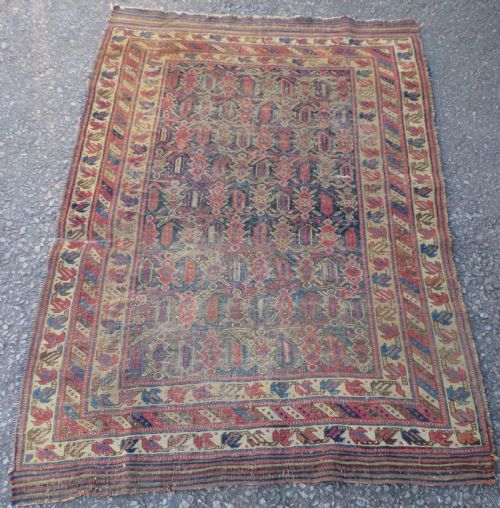
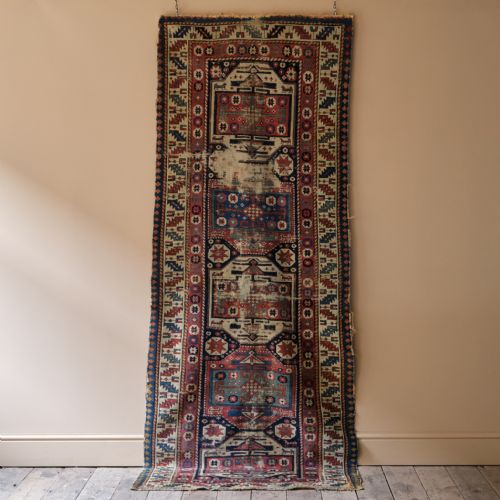
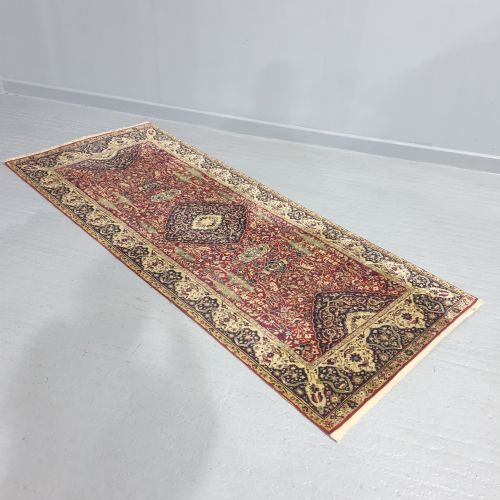
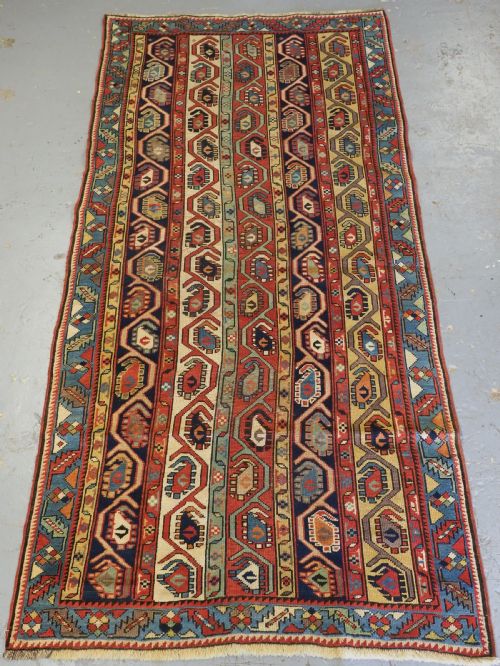
A red pattern hallway rug brings instant warmth and character to a narrow space, offering traditional motifs woven to withstand daily foot traffic.
Red Pattern Hallway Rug
A red pattern hallway rug is typically encountered here as a long runner or carpet runner designed specifically for corridors and narrow passages. These pieces span periods from the nineteenth century into the early twentieth century, originating primarily from Persian, Caucasian, and Anatolian traditions.
The selection encompasses tribal and regional types such as Kazak, Kurdish, Kurdish Tribal, Afshar, Ushak, Mahal, Zanjan, Karaja, Serabend, Veramin, Karabagh, Farahan, and Heriz. Buyers find formats ranging from narrow corridor runners to larger kelleh carpets and long rugs suited for hallways and staircases.
What varies in quality
Quality rests in the precision of the hand-knotting and the integrity of the materials, where hand-spun wool and natural dyes hold their richness over decades of wear. The fineness of the weave dictates how sharply the traditional motifs, such as boteh and shrub designs, resolve across the field.
Structural consistency also distinguishes the range, as older nineteenth-century runners demand robust foundations to maintain their linearity in a hallway. The harmony of the natural dye palette and the balance of regional borders further separate standard utility pieces from exceptional examples.
Red Pattern Hallway Rug Retail Price Guide 2026
Typical asking prices for red pattern hallway rug among the pieces listed under this phrase on Sellingantiques today, from the lower quarter to the upper quarter. They describe what is for sale here now, not the wider market.
Listings feature pieces spanning from the mid nineteenth century through the 1920s, constructed from wool, cotton, and hand-spun wool.
The Red Pattern Hallway Rug Glossary
- Runner
- A long, narrow carpet format designed primarily for hallways, corridors, and staircases.
- Boteh
- A traditional almond-shaped or paisley-like motif symbolising a floral spray or cypress tree, frequently seen in Persian and Caucasian weaving.
- Kelleh
- A large format rug that is longer than it is wide, sitting between a standard rug and a full room-size carpet.
- Natural Dyes
- Colourants derived from plant, insect, and mineral sources that create nuanced shades which age gracefully over time.
- Kazak
- A style of geometric rug originating from the Caucasus region, known for bold primary colours and striking tribal symbolism.
Red Pattern Hallway Rug: Frequently Asked Questions
How do I measure for a hallway runner?
Measure the clear floor space of your corridor, leaving a consistent margin of exposed wood or tile around the perimeter of the rug. Ensure doors swing freely over the thickness of the wool pile without catching.
Take measurements at multiple points along the hallway to account for any irregularities in older structural walls. Allow extra length if the runner is intended to flow down a staircase.
Are these runners suitable for heavy traffic?
These historical floor coverings were built from durable wool and cotton specifically to endure generations of foot movement in busy areas. Their dense hand-knotted construction provides natural resilience against compression.
Using an appropriate underlay helps absorb impact and prevents the runner from shifting under daily strides. Regular gentle sweeping maintains the integrity of the fibres in high-use corridors.
How do I tell Persian and Caucasian runners apart?
Persian examples often feature curvilinear floral patterns, all-over shrub designs, and sophisticated medallion layouts. Their colour palettes tend towards rich reds, indigos, and subtle earthy tones.
Caucasian pieces typically display bolder geometric motifs, sharper lines, and stark primary colour contrasts. Tribal markers such as hooked polygons and stylised animals appear frequently in Caucasian and Anatolian work.
How do I care for an antique wool runner?
Vacuum the rug gently on a low suction setting without a rotating power brush to protect the vintage wool pile. Rotate the runner periodically to ensure even exposure to foot traffic and sunlight.
Address spills immediately by blotting with a clean, dry cloth rather than rubbing the fibres. Professional specialist cleaning should be utilised when deep maintenance is required.