

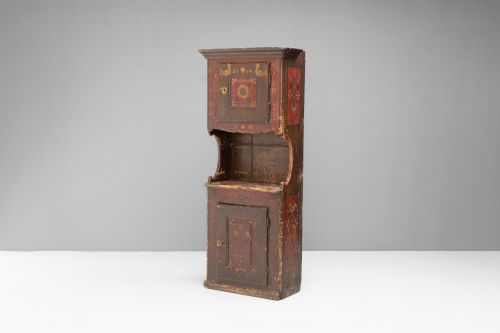


Red Painted Pine Dresser
A red painted pine dresser brings honest utility and vibrant colour to a room, offering robust storage built from timber and pigment.
Red Painted Pine Dresser
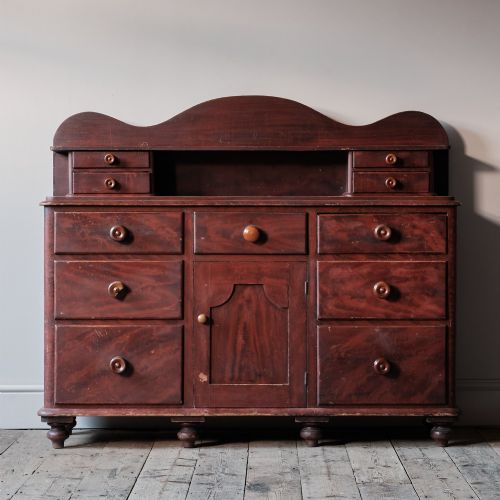
A red painted pine dresser or related storage piece combines the warmth of softwood with striking pigment, rooted in vernacular and country traditions. When exploring a red painted pine dresser, a buyer encounters 19th-century and Victorian domestic furniture designed for everyday storage and display.
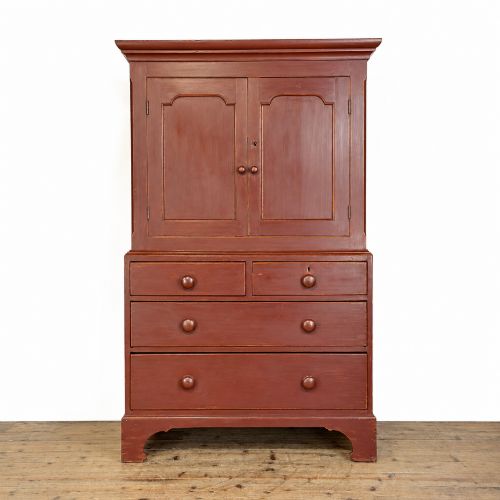
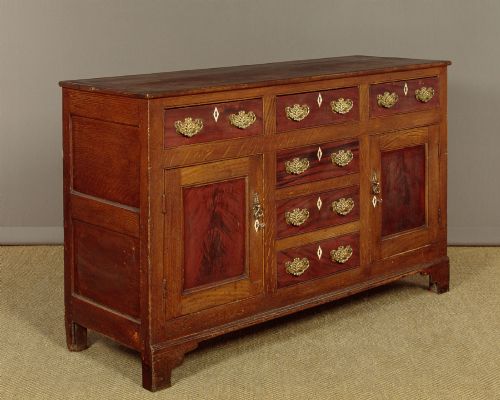
The selections span kitchen dresser bases, housekeeper's cupboards, sideboards, and chests of drawers originating from British, Scandinavian, and European folk art workshops. Swedish country pieces and rustic English examples form the core of what is available on this page.
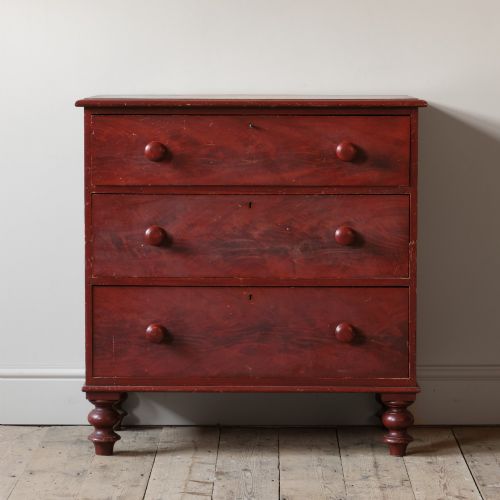
Forms range from simple four-drawer chests to substantial cupboards, often retaining their original surface treatments. These utilitarian objects served practical domestic needs in farmhouses and provincial homes before entering the antiques market.
How they were made
Makers constructed these sturdy items primarily using pine, selected for its accessibility and workability in regional workshops. Surfaces received coats of paint, sometimes applied by hand in domestic or regional settings.
Hardware details incorporated brass, iron, and metal fittings for handles and hinges, occasionally complemented by bone, ceramic, or glass elements on drawer pulls.
Joinery techniques reflected standard country cabinet-making practices of the 19th century, prioritising structural durability over elaborate ornamentation.
Red Painted Pine Dresser Retail Price Guide 2026
Typical asking prices for red painted pine dresser among the pieces listed under this phrase on Sellingantiques today, from the lower quarter to the upper quarter. They describe what is for sale here now, not the wider market.
One Victorian chest carries sign writing for the Smiths Agricultural merchants of Stafford, proving furniture once held a day job.
What varies in quality
The integrity of the painted surface significantly influences the character of each piece, distinguishing original pigment from later overpainting. Surviving brushwork and surface patination tell the story of a object's age and working life.
Proportion and structural soundness vary across regional traditions, from the clean lines of Swedish country items to the heavier build of Victorian country cupboards. The presence of original hardware, such as brass or iron pulls, adds to the integrity of the piece.
The Red Painted Pine Dresser Glossary
- Pine
- A softwood commonly used for country furniture throughout the nineteenth century because it was readily available and easy to work. It accepts paint finishes exceptionally well.
- Housekeeper's Cupboard
- A large storage cabinet traditionally used in substantial homes for linens, dry goods, or tableware. These pieces often feature multiple doors and drawers.
- Folk Art
- Artistic production originating from rural communities rather than formal academic traditions. European and Scandinavian folk art pieces frequently display vibrant painted surfaces.
- Sign Written
- Painted lettering applied to a piece of furniture to indicate a commercial owner or merchant. The Victorian chest of drawers from Stafford demonstrates this practice.
- Patina
- The surface sheen and wear developed through years of handling and age. A good patina reflects the genuine history of a nineteenth-century timber surface.
Red Painted Pine Dresser: Frequently Asked Questions
What is a red painted pine dresser?
A red painted pine dresser is a functional nineteenth-century storage unit built from softwood and finished with a red pigment. These items served practical domestic purposes in rural kitchens and pantries.
Today, they function as focal points in country-style interiors, providing deep shelving or drawer capacity while introducing historic colour to a modern room.
How do I date these pieces?
Dating relies on examining construction methods, timber characteristics, and the wear patterns on the painted surface. Pieces from the nineteenth century often show hand-cut joints and period-appropriate hardware.
Stylistic cues, such as Victorian proportions or Scandinavian folk art details, further help place an item within specific nineteenth-century decades.
Where were these pieces made?
Makers constructed these items across Britain, Sweden, and various European regions to meet everyday domestic storage requirements. Regional workshops utilised local pine and traditional joinery.
Swedish country and rustic English pieces reflect distinct local aesthetic preferences in their paint colours and overall proportions.
How do I care for painted pine?
Maintenance involves keeping the furniture away from direct heat sources and dramatic humidity fluctuations to protect the timber and pigment. Dusting with a dry cloth preserves the historic surface.
Avoid harsh chemical cleaners that might strip or damage the original nineteenth-century paint layers and underlying patina.