
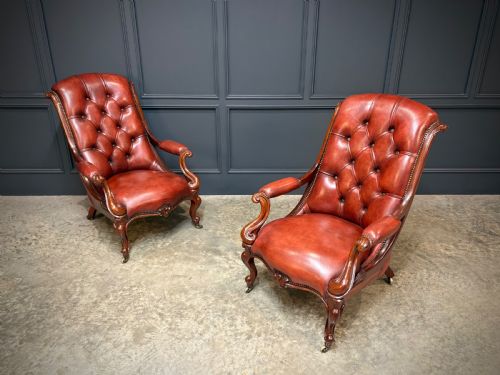


Red Leather Library Armchair
A red leather library armchair anchors a quiet room with substantial timber and worn, characterful hide.
Red Leather Library Armchair
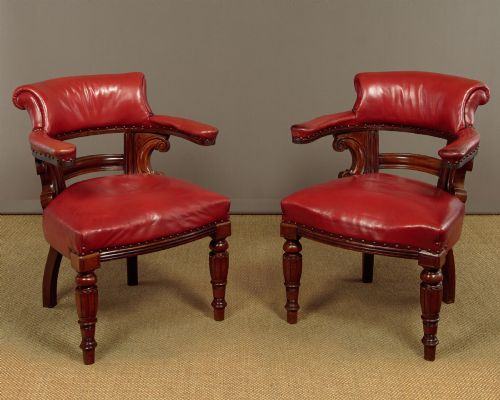
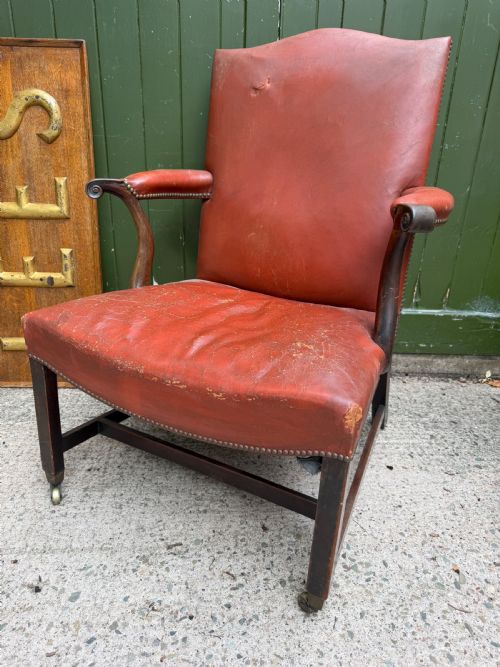
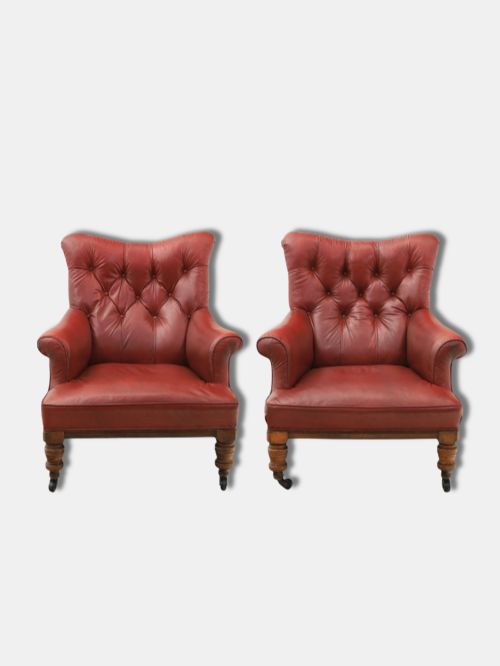
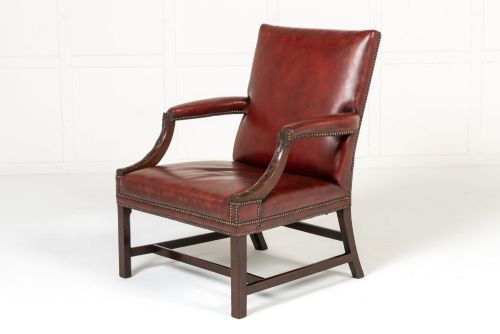
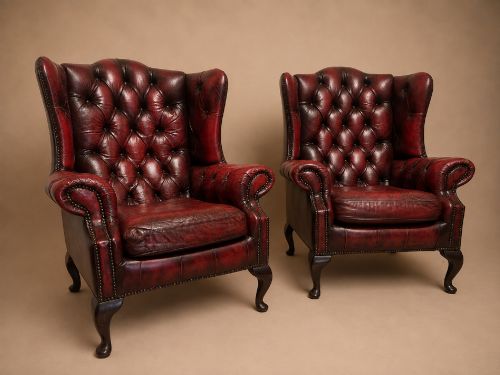
A red leather library armchair brings together functional workspace seating and deep-seated comfort designed for long hours of reading or writing. You will encounter forms ranging from generous George III Gainsborough frames to buttoned Victorian numbers and later Chesterfield designs.
The selection on this page draws heavily from nineteenth-century workshops, alongside Georgian prototypes and early twentieth-century interpretations. These pieces function equally well as desk chairs, reading chairs, or fireside seating in traditional and modern interiors alike.
How they were made
Frames rely on sturdy timbers such as mahogany, oak, walnut, and rosewood, joined to support the heavy loads demanded of library and desk seating. Upholsterers stretched leather over layered stuffings, securing the edges with individual brass tacks.
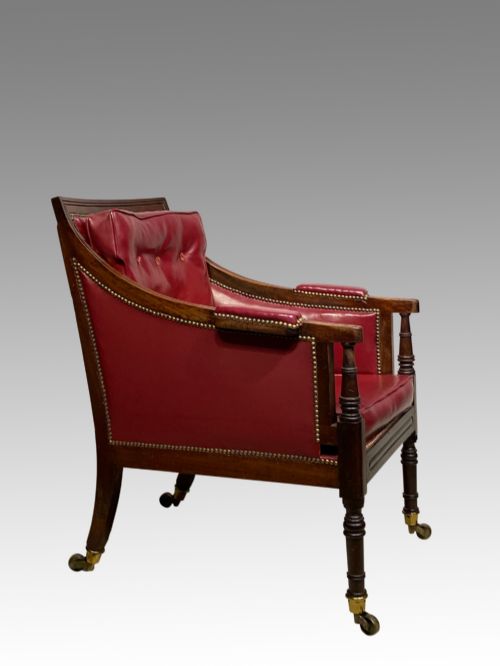
Moving parts and mobility depended on cast metal elements, with brass cappings and castors fitted to the base of legs to allow smooth shifting across floorboards.
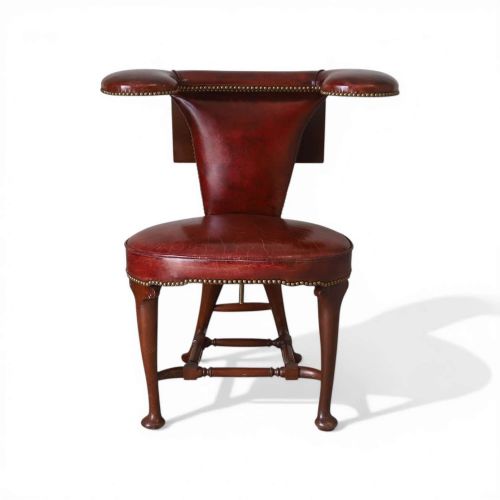
Some oak reading chairs hide rotatable book rests designed for eighteenth-century scholars who hated putting books down.
What varies in quality
The distinction between ordinary seating and top-tier examples lies in the integrity of the timber frame and the depth of the carving. Superior pieces display crisp architectural details, well-proportioned arms, and stable joinery that withstands centuries of use.
Leather selection and upholstery execution also set examples apart. Finer pieces showcase supple hide with natural patination rather than flat, uniform surfaces, paired with careful buttoning and disciplined studwork.
Cope and Collinson·Gillows design·William Birch
The Red Leather Library Armchair Glossary
- Gainsborough chair
- A wide-seated, open-armed armchair originating in the eighteenth century, typically featuring upholstered back and arm pads with exposed wooden framing.
- Bergere
- An enclosed armchair with stuffed upholstery and cane or solid side panels, common in Regency and later nineteenth-century designs.
- Captain's chair
- A sturdy wooden swivel or fixed armchair with a rounded backrest supported by turned spindles, often fitted with a leather seat pad.
- Castor
- A small wheel fitted to the base of chair legs on metal stems or sockets to ease movement.
- Oxblood
- A deep, dark reddish-brown leather tone frequently found on nineteenth and twentieth-century library and club seating.
Red Leather Library Armchair: Frequently Asked Questions
Are these chairs comfortable for daily desk work?
Most library armchairs provide generous proportions and supportive padded backs well suited for extended reading or writing tasks.
Their substantial wooden frames and fixed heights differ from modern ergonomic office chairs, so checking seat dimensions matters for desk clearance.
How do I care for antique red leather?
Preserving the hide involves applying appropriate leather balms to maintain flexibility and prevent the material from drying out over time.
Keeping these chairs away from direct heat sources and strong sunlight protects the red dye and natural surface from fading.
How do I identify a Victorian library chair?
Victorian examples frequently display dense mahogany or walnut framing, deep buttoning, and turned legs fitted with brass castors.
They often incorporate heavier proportions and distinct revival styles ranging from Gothic to Queen Anne influences.