

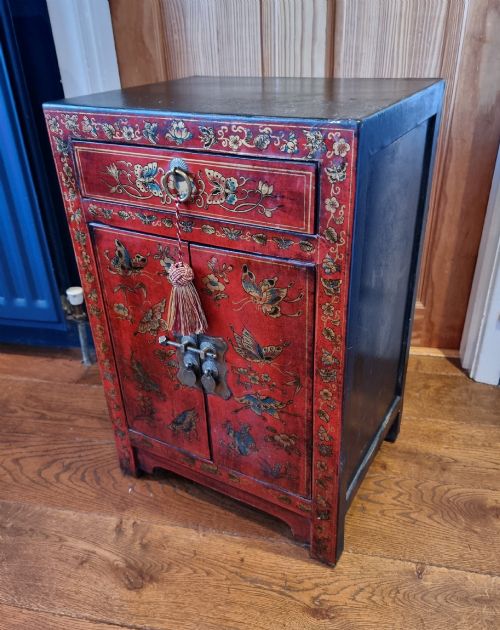
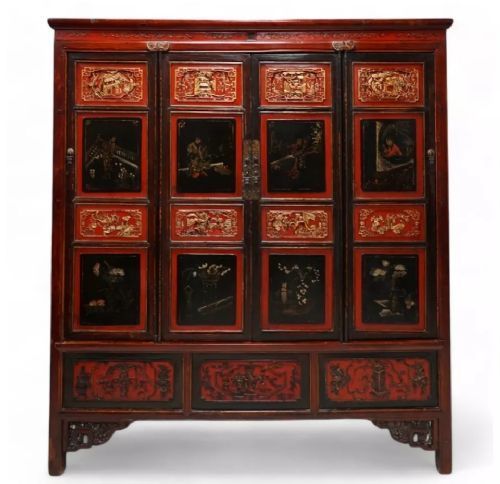
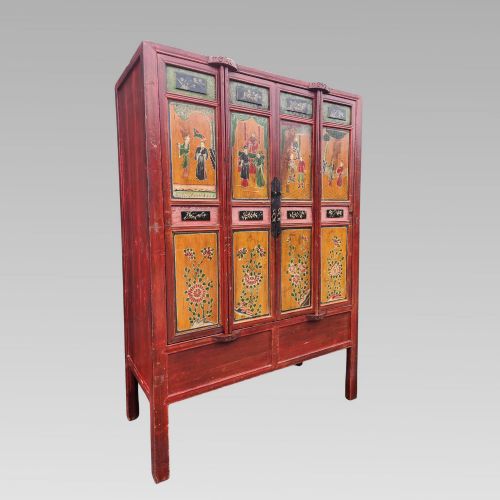


Red Lacquered Cupboard
A red lacquered cupboard brings rich colour and surface depth to a room through traditional Asian and European decorative techniques.
Red Lacquered Cupboard
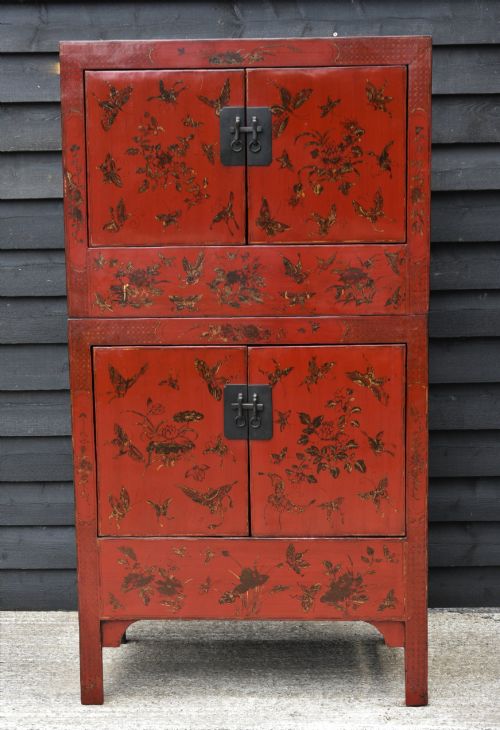
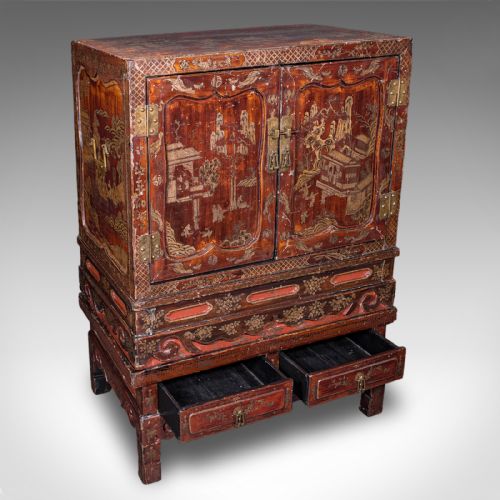
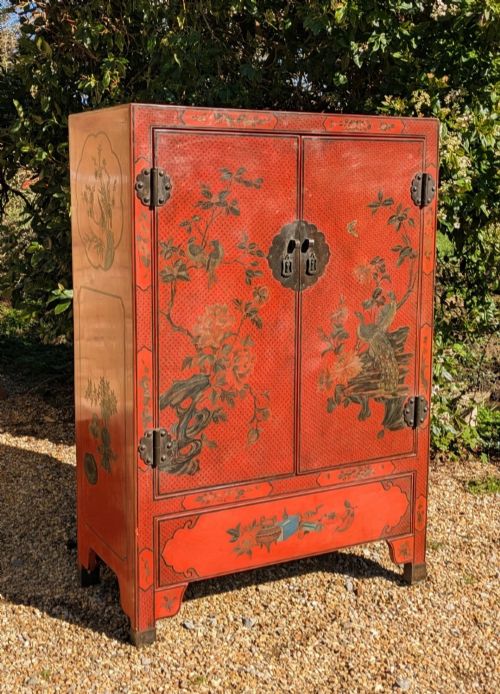
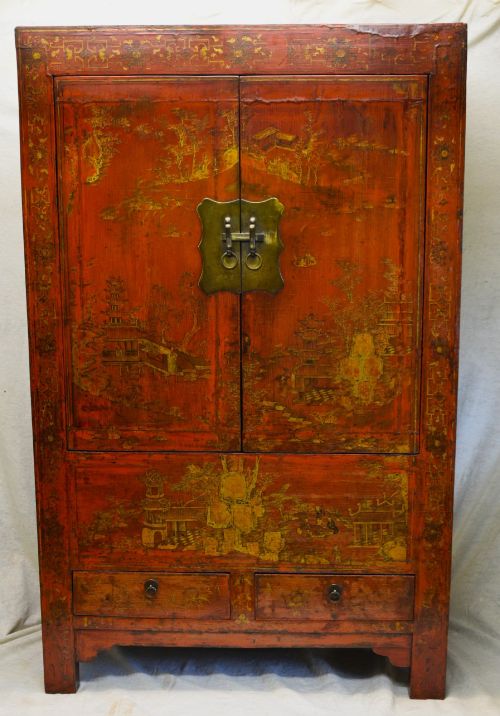
A red lacquered cupboard comprises storage furniture finished with layers of coloured resin or paint, spanning Chinese marriage cabinets, apothecary chests, and European Chinoiserie corner cupboards. Buyers encounter pieces ranging from large nineteenth-century wedding cabinets to compact Edwardian side cupboards.
The selection includes specific regional forms such as elm marriage cabinets from China alongside British and Italian corner cupboards decorated in the Chinoiserie taste. These works serve as focal storage units in domestic interiors, combining functional cabinetry with pictorial decoration.
Materials and construction
Makers built these pieces using timber frames finished with multiple coats of lacquer, often incorporating brass or iron hardware for hinges and lock plates. Artisans applied gold leaf and painted details over the red ground to create raised pictorial motifs.
Surface preparation involved building up layers of lacquer on wood bases such as Chinese elm, followed by meticulous polishing and gilding. Secondary materials like cinnabar and gilt pigments appear on specific provincial and period variations.
Red Lacquered Cupboard Retail Price Guide 2026
Typical asking prices for red lacquered cupboard among the pieces listed under this phrase on Sellingantiques today, from the lower quarter to the upper quarter. They describe what is for sale here now, not the wider market.
Several apothecary chests hide tiny rows of drawers designed for dried herbs and roots rather than linen.
Quality variations
The distinction between tiers rests on the depth of the lacquer finish and the crispness of the hand-painted or carved gilt decoration. Superior examples display harmonious proportions and intact surface detail without heavy modern repainting.
Construction integrity in the underlying timber frame and the preservation of original brass or iron mounts separate standard utility pieces from finer decorative works.
The Red Lacquered Cupboard Glossary
- Chinoiserie
- European theatrical interpretation of Chinese artistic traditions, popular in furniture decoration during various periods. It employs motifs like figures, pavilions, and landscapes rendered in gold on coloured grounds.
- Lacquer
- A durable glossy finish derived from natural resin or specialised varnishes, applied in successive coats. It provides a hard, smooth surface that takes polish and paint well.
- Marriage Cabinet
- A traditional large Chinese storage piece often given as a wedding gift, featuring double doors and brass hardware. These items typically utilise elm and display bright red finishes.
- Cinnabar
- A bright scarlet mineral form of mercurial sulphide used to produce red pigments and carved lacquer surfaces. It gives certain oriental cabinets their distinctive deep red tone.
- Tansu
- Traditional Japanese mobile storage cabinetry constructed from wood with iron fittings. These chests offer compartmentalized organisation.
Red Lacquered Cupboard: Frequently Asked Questions
Where should I place a red lacquered cupboard?
These cabinets work effectively as standalone focal points in hallways, dining rooms, or living spaces where their strong colour can anchor the room design. Their storage capacity makes them practical for hiding tableware, linens, or media equipment.
Position them away from direct sunlight and excessive heat sources to protect the delicate lacquer finish and prevent timber movement.
How do I clean a lacquered surface?
Dust the exterior gently with a soft, dry microfibre cloth to remove surface particles without scratching the delicate gilt or painted details. Avoid harsh chemical cleaners, abrasives, or excessive moisture which can damage the aged finish.
Apply a minimal amount of specialist furniture wax only if the lacquer appears dry, following the manufacturer guidelines carefully.
Are these cupboards authentic antiques?
The inventory encompasses pieces from the eighteenth, nineteenth, and early twentieth centuries, alongside Edwardian and provincial European interpretations. Each listing specifies the manufacturing period and style characteristics based on physical evidence.
Examining the timber joints, hardware types, and wear patterns helps confirm the age and origin of individual storage cabinets.
What is the difference between Chinese and European styles?
Chinese examples frequently take the form of large wedding cabinets, apothecary chests, or side cupboards utilising native timbers like elm with traditional brass or iron hardware. The decoration reflects Asian pictorial conventions and provincial woodworking methods.
European Chinoiserie pieces, such as British corner cupboards, apply oriental-inspired motifs to standard domestic forms like bowfront or hanging cabinets using local cabinet woods.