
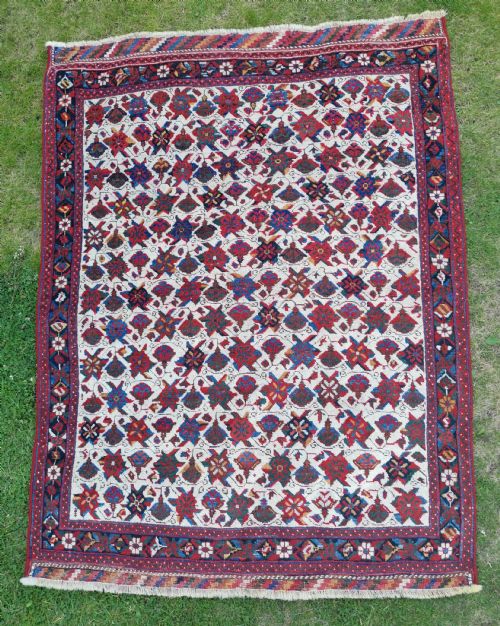


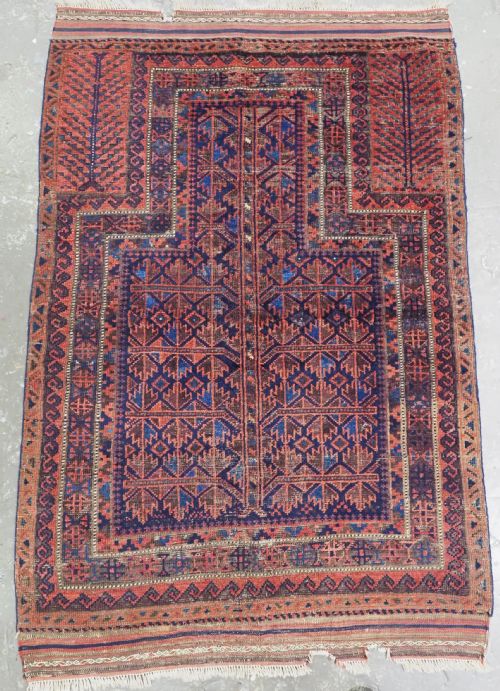


Red Ground Carpet
A red ground carpet brings warmth and deep colour to a room, anchoring the space with centuries of weaving tradition.
Red Ground Carpet
A red ground carpet draws the eye through rich crimson and madder tones, appearing across large Persian room sizes and smaller village rugs alike. When browsing this selection, buyers frequently encounter pieces originating from Heriz, Isparta, and Ferahan traditions.
The evidence spans the nineteenth and twentieth centuries, capturing tribal and workshop weaving from Persia, Anatolia, and the Caucasus. Alongside expansive carpets, the inventory contains smaller formats including runner lengths, prayer rugs, and nomadic bag faces.
While many examples display the titular red fields, the listings also encompass diverse ground colours such as ivory, camel, green, and blue. Each piece reflects the specific regional palette and knotting structure of its maker, from Kurdish runners to Caucasian Soumaks.
Materials and construction methods
Weavers constructed these textiles predominantly using wool pile hand-knotted onto sturdy cotton or wool foundations. Natural dyes derived from plants and minerals provided the foundational reds, blues, and yellows that soften gracefully over time.
Nomadic and village pieces often incorporate camel hair within the pile or borders for natural tone and texture. Advanced workshops utilised tightly packed Turkish or Persian knots to achieve detailed geometric and floral medallions.
The listings feature textiles spanning the nineteenth and early twentieth centuries, utilising wool, cotton, and camel hair.
Assessing quality in antique woven textiles
Quality rests in the precision of the knotting and the depth achieved by natural dye stuffs. Finer examples display crisp delineation in medallions and borders, while softer wool handling indicates superior fleece selection.
The integrity of the foundation and the preservation of original selvedges and end finishes dictate the structural merit of a textile. Artisanal skill appears in the balance of secondary colours against the dominant field.
The Red Ground Carpet Glossary
- Medallion
- A central ornamental design motif placed in the middle of the carpet field. This focal element often dictates the surrounding geometry of the composition.
- Prayer rug
- A small format textile featuring a mihrab or arch design at one end, traditionally used for individual prayer. These pieces frequently originate from Anatolian and Caucasian weaving centres.
- Soumak
- A flat-weave technique where coloured weft threads wrap around the warp threads in a herringbone pattern. This method creates a sturdy textile without a cut pile.
- Torba
- A small utilitarian bag face produced by Turkmen tribes to store household goods. They display characteristic guls and curled leaf motifs.
- Boteh
- An almond-shaped or paisley motif representing a floral spray or cypress tree. It appears frequently across Persian and Kurdish runners.
Red Ground Carpet: Frequently Asked Questions
How do I style a red carpet?
A vibrant red ground anchors neutral wooden floors and pairs well with leather or dark upholstery. It works effectively as the central focus in a living room or study.
Allow sufficient floor margin around the edges of the carpet to let the border designs frame the space properly. Layering smaller tribal rugs over plain floorboards offers an alternative display method.
How are these carpets dated?
Weavers often embedded regional motifs, specific dye chemistries, and structural quirks that align with particular decades. Comparing knot density and wool quality helps narrow the era of production.
Archival records and known workshop traits from regions like Heriz or Isparta provide further benchmarks for age estimation. Natural variations in hand-spun wool point away from modern synthetic manufacturing.
What is camel hair used for?
Undyed camel hair provides a soft, warm brown tone that appears naturally in nomadic weaving. It creates durable outlines and field areas in pieces from Baluch and Afshar traditions.
Over long periods, camel hair wefts can erode faster than sheep wool due to natural fibre properties. This differential wear often helps confirm the genuine age of a tribal textile.
How do I care for antique wool?
Regular gentle vacuuming without a rotating brush roll keeps dust from settling into the wool pile. Professional specialist cleaning ensures natural dyes do not bleed during washing.
Rotating the textile every year prevents uneven fading from sunlight exposure near windows. Placing a breathable underlay beneath the carpet prevents slipping and reduces fibre friction.