
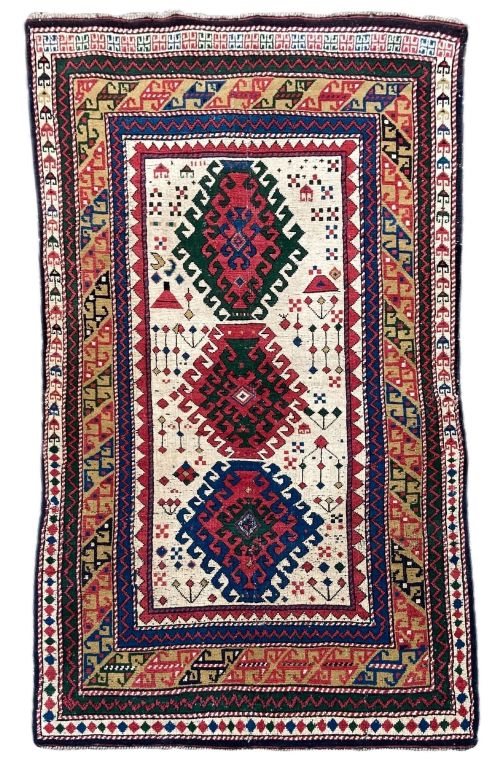
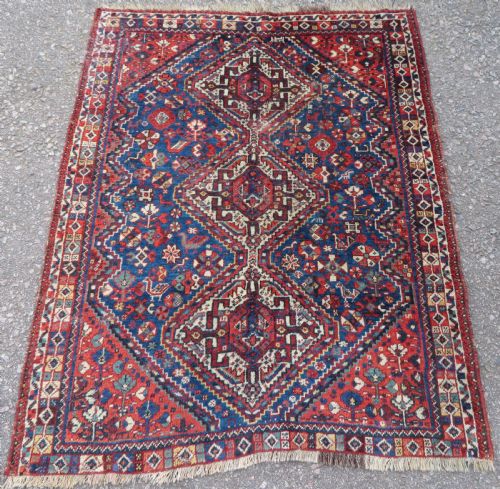
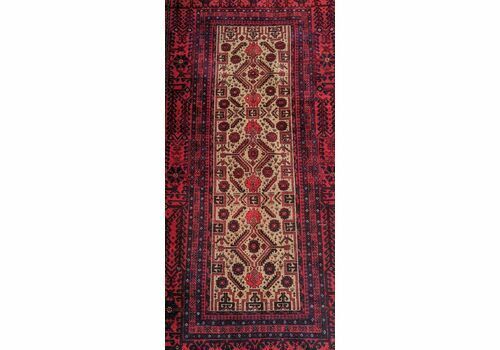
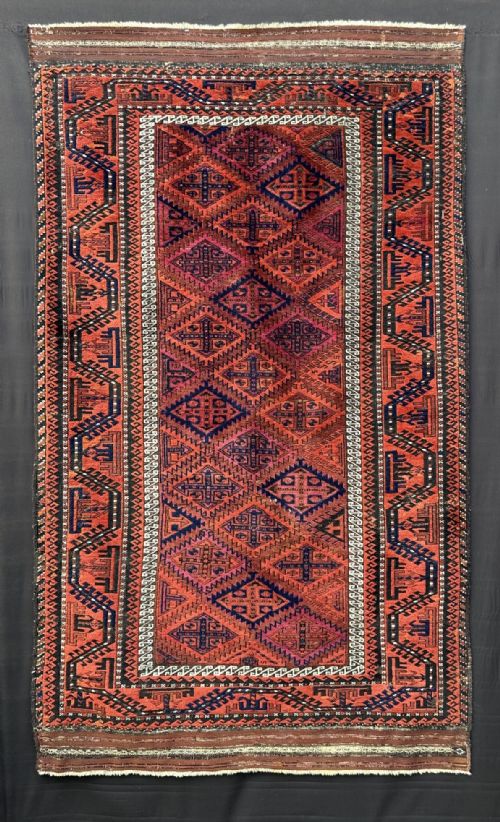
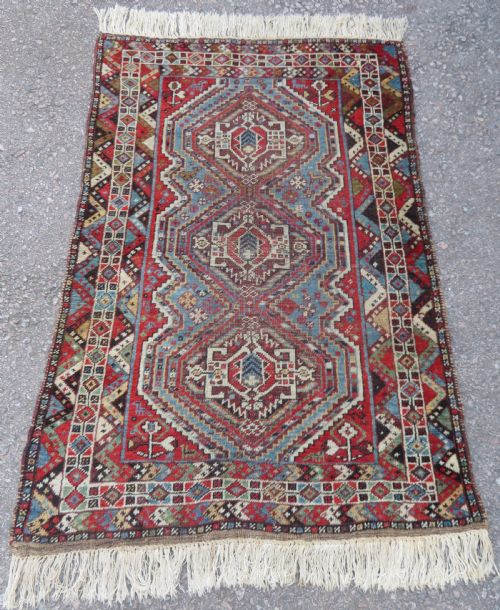
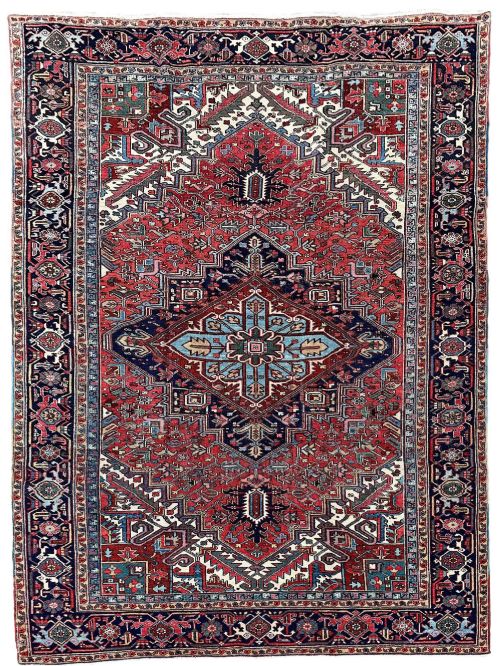
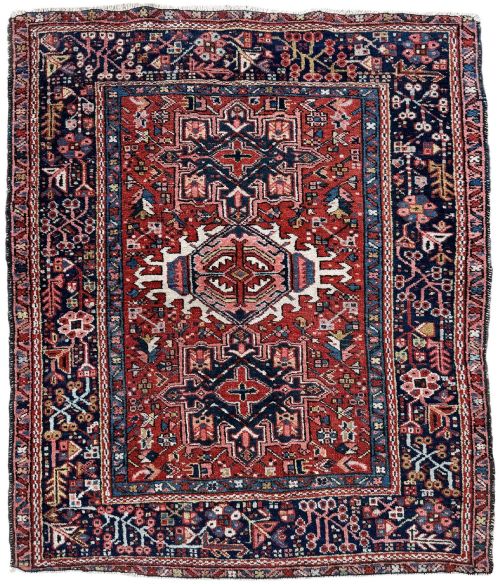
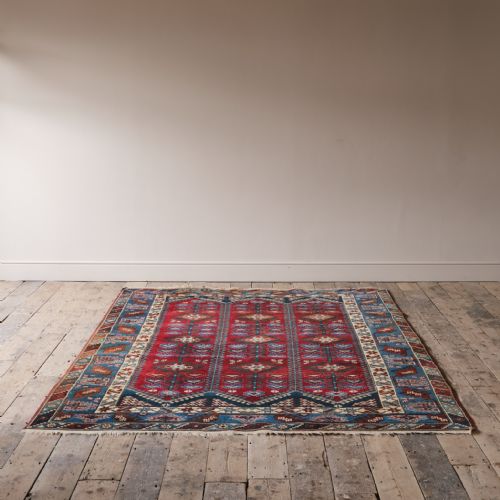
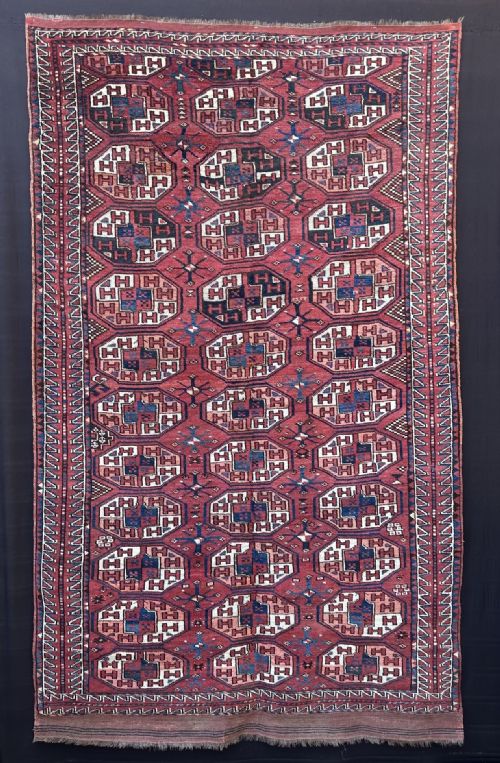


Red Geometric Area Carpet
These red geometric area carpet examples span traditional Persian, Caucasian, and Anatolian tribal weaving traditions.
Red Geometric Area Carpet
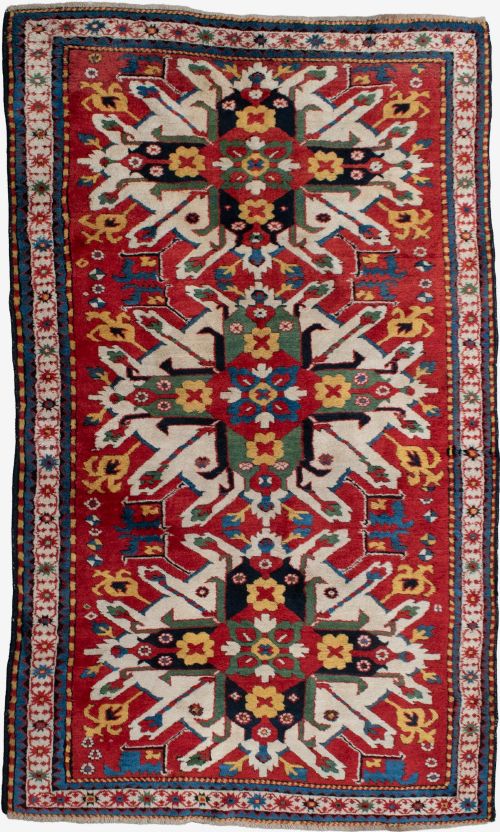
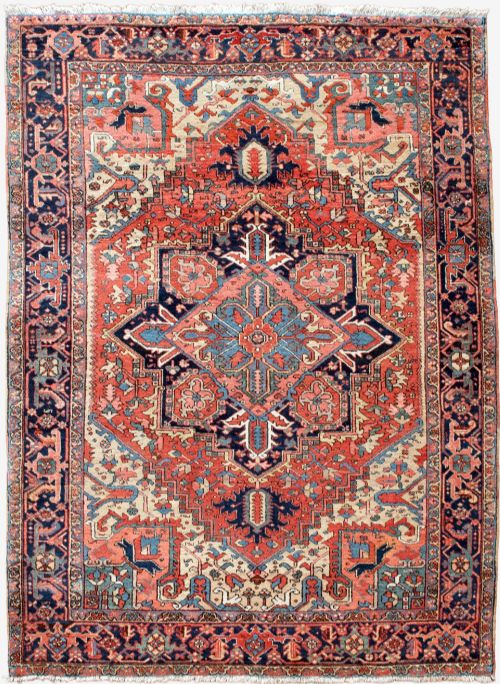
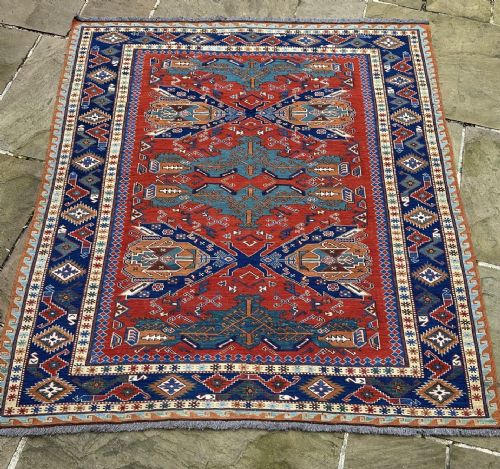
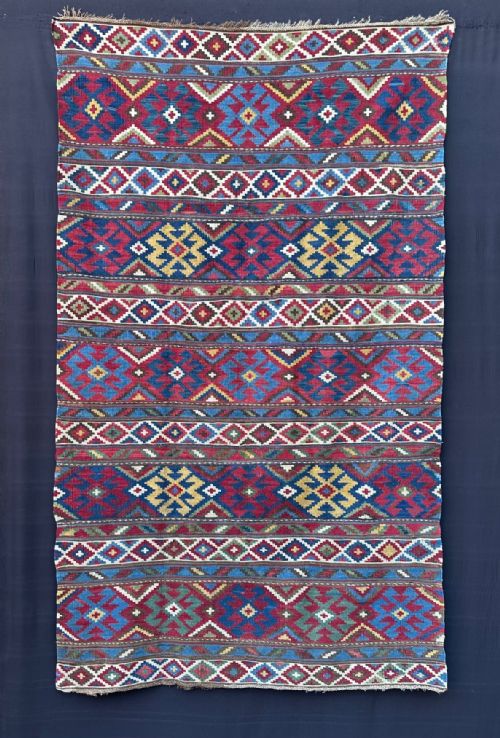
A red geometric area carpet is a floor covering defined by angular motifs, medallions, and lattice patterns rendered predominantly in red tones. When exploring this selection, buyers encounter regional village and tribal floor coverings originating from Persia, the Caucasus, Anatolia, and Central Asia.
The assortment spans pieces produced across the nineteenth and early twentieth centuries, alongside vintage examples. Common forms include large carpets, room-sized formats, runner dimensions, and square or prayer rug formats.
Most items reflect traditional tribal or village aesthetics, including Heriz, Kazak, Afshar, and Turkmen designs. These floor coverings bring distinct regional patterns and saturated hues into domestic spaces.
How they were made
These floor coverings were produced using hand-spun wool and cotton foundations, combined with traditional hand-knotting and flatweave techniques. Artisans utilised natural dyes to achieve deep red colour palettes across regional workshops and tribal tents.
Materials such as durable wool provided the pile, while cotton or wool served for the warps and wefts. The integration of hand-spun fibres and natural dyestuffs accounts for the tactile character and tonal variation visible across these textiles.
The listings span pieces from the 1870s through the 1930s, utilising wool, cotton, and natural dyes within Persian, Caucasian, and Anatolian traditions.
What varies in quality
Quality in these textiles depends upon the precision of the knotting, the handling of the geometric composition, and the depth of the natural dyes. Finer examples display crisp delineation in medallions and borders, alongside balanced proportions.
The integrity of the foundation materials and the handling of regional motifs distinguish finer village and tribal pieces from standard commercial production. Variations in wool quality and dye saturation directly influence the visual resonance of each piece.
The Red Geometric Area Carpet Glossary
- Prayer rug
- A small format textile featuring a mihrab or niche design, traditionally used for personal devotion. These pieces often display compact geometric layouts.
- Medallion
- A central ornamental motif set within the field of a carpet. In these pieces, medallions frequently take angular or cruciform shapes.
- Kilim
- A flatwoven textile produced without a pile. These items rely on interlocking weft techniques to form sharp geometric patterns.
- Warp
- The vertical foundation threads stretched lengthwise on the loom. Wefts are then beaten across these structural threads during construction.
- Natural dye
- Colourants derived from plant, insect, or mineral sources. These substances yield the nuanced red tones found in older regional rugs.
Red Geometric Area Carpet: Frequently Asked Questions
How do I identify regional tribal designs?
Regional attribution relies on specific colour palettes, border arrangements, and characteristic geometric motifs. Turkmen pieces often employ gul octagons, while Kazak examples favour bold primary colours and rectilinear polygons.
Examining the structure, knotting style, and secondary colours helps separate Caucasian village pieces from Persian Heriz or Afshar productions.
Where were these carpets originally used?
These textiles served practical flooring functions in domestic interiors, nomadic tents, and village dwellings across Central Asia, Persia, and the Caucasus. Larger formats anchored main living spaces, while smaller rugs functioned as prayer mats or hearth coverings.
Their sturdy wool construction provided insulation against cold stone or earth floors while displaying tribal identity through pattern.
How should I care for an antique rug?
Regular gentle vacuuming without a beater bar prevents dust accumulation within the wool pile. Professional cleaning tailored to antique textiles preserves the natural dyes and fibres.
Positioning the textile away from direct sunlight prevents uneven fading of the red wool grounds over time.
What defines a prayer rug format?
Prayer formats are distinguished by an arched mihrab motif at one end, indicating the direction of prayer. These smaller rugs often incorporate single or double prayer niches surrounded by geometric borders.
They were intended for individual use rather than covering large floor expanses.