




Red Framed Wall Mirror
A red framed wall mirror brings immediate warmth and saturated colour to a room, offering everything from Chinoiserie lacquer to Art Deco glass.
Red Framed Wall Mirror
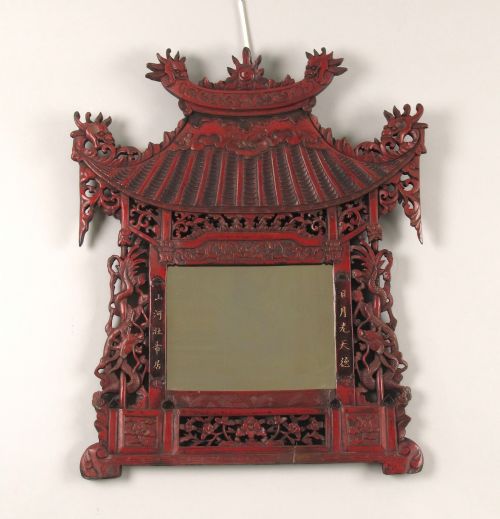
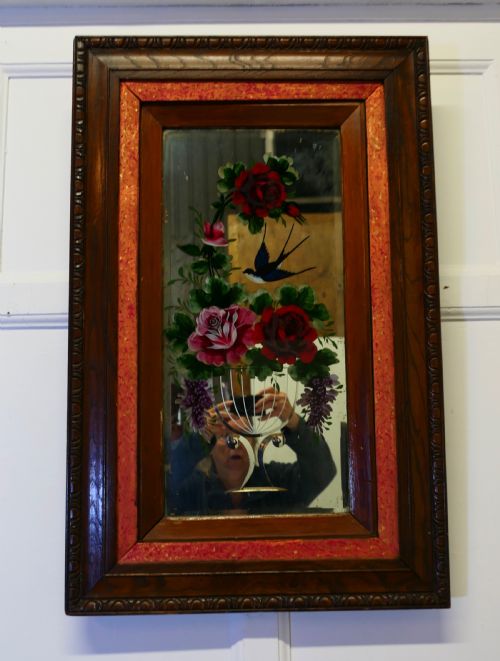
A red framed wall mirror encompasses a wide variety of forms and eras, stretching from nineteenth-century Chinese lacquer and Victorian painted pieces to 1930s Art Deco designs. When you search for a red framed wall mirror, you encounter pieces that rely on painted wood, scarlet japanning, ruby glass borders, and rich velvet coverings to create a striking focal point.
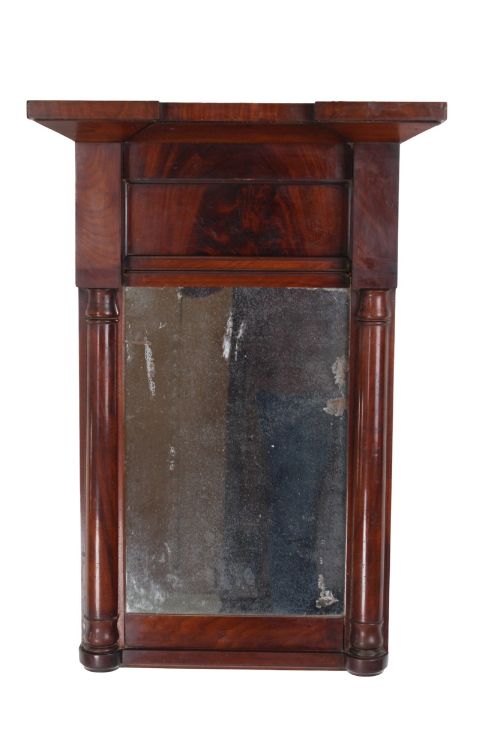
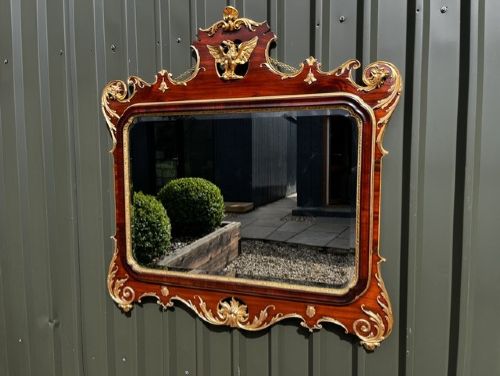
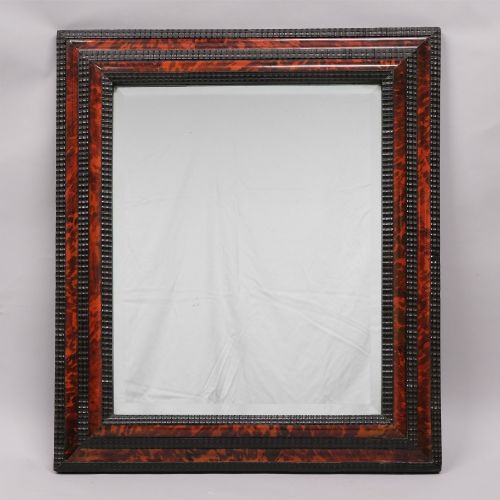
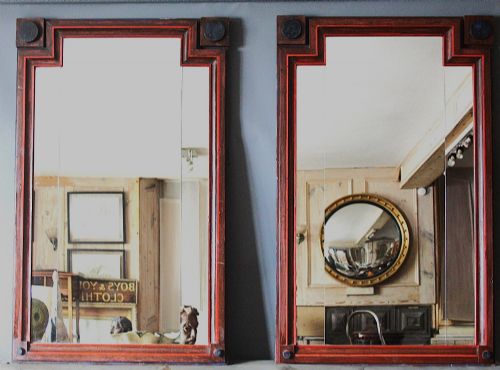
The selection on this page shows a strong leaning towards nineteenth-century craftsmanship, alongside Regency pier mirrors, Edwardian pairs, and twentieth-century Odeon styles. These pieces function as both practical looking glasses and decorative wall art, utilising contrasting gilt accents, tortoiseshell ripple moulding, or reverse painting.
Origin and style vary considerably across the pieces, ranging from English painted frames and French camel-crested designs to Italian Venetian cut glass and Asian Chinoiserie pagodas. The common thread is the commanding presence of the red frame, which transforms a standard wall mirror into a deliberate interior statement.
Materials and Construction
Makers constructed these frames from solid woods such as mahogany, applying specialised surface treatments including red lacquer, scarlet japanning, paint, and gesso. Giltwood and gilt-on-red techniques frequently appear, where layers of gold leaf sit atop a red bole base, allowing the warm undercoat to show through wear or intentional distressing.
Glass production and framing methods span several centuries, incorporating heavy bevelled mirror plates, multi-convex surfaces, and cut or etched glass borders. Velvet and tortoiseshell ripple mouldings introduce textural depth, while Chinese lacquer and reverse painting on glass require intricate hand-application by skilled artisans.
The furniture styles represented across these mirrors include Regency, Chippendale, Victorian, Art Deco, and Chinoiserie.
Assessing Quality and Execution
Quality in these mirrors rests upon the integrity of the surface finish and the depth of the framing work, whether one examines hand-carved mahogany fretwork or delicate Chinoiserie detailing. Superior pieces demonstrate crispness in etched glass, precision in japanning, and harmonious proportions between the mirror plate and its coloured surround.
The distinction between standard production and exceptional execution lies in the materials used and the preservation of original surfaces. Hand-painted decoration, genuine antique glass plates with authentic foxing, and substantial timber frames separate finer examples from simpler decorative alternatives.
The Red Framed Wall Mirror Glossary
- Japanning
- European imitation of East Asian lacquerwork, created by applying layers of varnish and resin then curing and polishing the surface. This technique produces the glossy red finishes seen on many period wall mirrors.
- Pier mirror
- A tall, narrow mirror designed specifically to hang on the pier of wall space between two windows. These pieces often feature mahogany or gilt frames suited to eighteenth and nineteenth-century interiors.
- Overmantel mirror
- A wide mirror designed to sit directly above a fireplace mantelpiece. They frequently incorporate architectural elements, elaborate framing, and proportions scaled to span the width of a hearth.
- Reverse painting
- An artistic technique where the design is painted directly onto the back of the glass panel so that it is viewed correctly from the front. Victorian makers utilised this method to add floral motifs and decorative borders.
Red Framed Wall Mirror: Frequently Asked Questions
How do I date a red framed mirror?
Dating relies on examining the construction of the wooden frame, the backing boards, and the characteristics of the mirror glass itself. Hand-bevewed edges, old fixings, and specific material trends like Victorian velvet or Art Deco geometry provide clear chronological markers.
Style indicators also help establish the period, comparing Regency mahogany proportions or Chinoiserie lacquer motifs against later twentieth-century interpretations.
Where should I hang a red framed mirror?
These mirrors suit spaces that benefit from a strong splash of colour and a reflective surface, such as an entrance hallway, above a fireplace, or across from a light source. Their saturated frames command attention and anchor surrounding neutral or complementary interior colour schemes.
Consider the scale of the piece relative to your wall space, ensuring large overmantel mirrors or tall pier mirrors have adequate structural support for their weight.
Are red framed mirrors authentic antiques?
The selection includes genuine pieces dating from the eighteenth, nineteenth, and early twentieth centuries, alongside later twentieth-century interpretations in specific revival styles. Each listing specifies the period or estimated date of manufacture to clarify its age.
Examining the materials, such as aged mahogany, original gilt-on-red bole, and period glass, helps verify the historical context of the piece.
How do I care for a painted or lacquered frame?
Maintenance requires gentle dusting with a soft, dry cloth to protect delicate lacquered, painted, or japanned surfaces from moisture and abrasion. Avoid chemical cleaners or excessive water, which can damage historic finishes and underlying gesso.
Glass plates can be cleaned using a minimal amount of glass cleaner applied to a cloth rather than sprayed directly onto the mirror, preventing seepage behind the frame.