


Red Floral Storage Box
A red floral storage box brings vibrant folk art colour and practical storage into a room.
Red Floral Storage Box
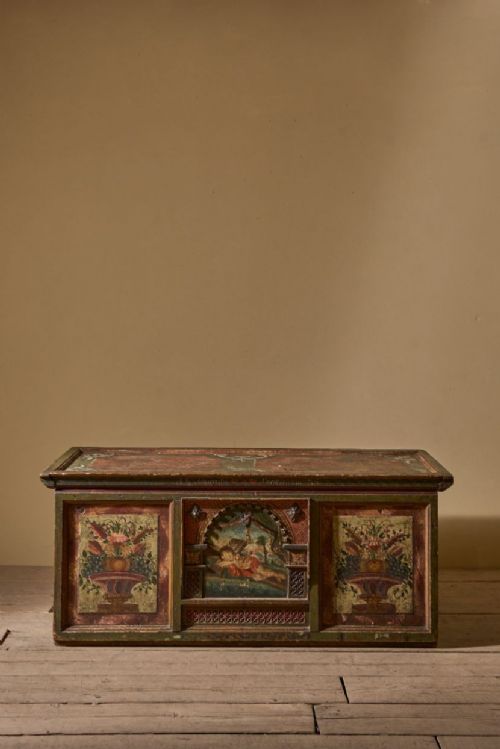
When you search for a red floral storage box, you encounter a diverse array of trunks, chests, and smaller caskets designed to hold household goods while displaying decorative painting. These items range from large marriage trunks to small graduated boxes, spanning European folk art traditions and global trade routes.
You are most likely to meet 19th century pine and wood pieces decorated with floral motifs, particularly from Hungarian, Scandinavian, and broader European folk art workshops. Alongside these European examples appear Chinese Export, Anglo-Indian, Qajar, and African leather travel trunks.
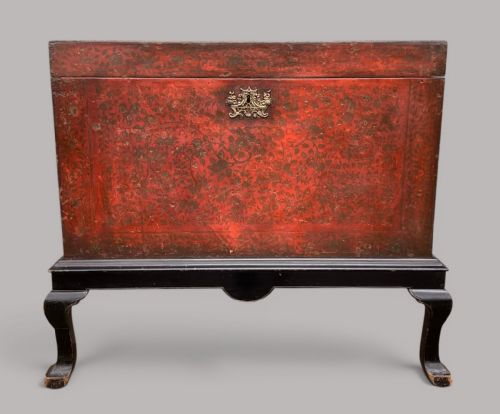
The forms vary considerably in scale and purpose, including chest on stand configurations, blanket boxes, coffers, and portable cashier boxes. Each version serves as a functional container while bearing distinct regional painted or lacquered surfaces.
How they were made
Makers constructed the core structures using solid timbers such as pine and camphor-wood, frequently reinforced with brass bindings or constructed from sturdy leather over a rigid frame. These materials provided the necessary durability for travel trunks, marriage chests, and daily domestic storage.
Surfaces received applied layers of paint, pigment, or lacquer, forming the distinct red backgrounds adorned with floral ornamentation. Artisans working within folk art traditions and export workshops utilised hand painting techniques to execute the detailed botanical designs.
The listings feature diverse materials including iron, paint, pine, wood, brass, pigment, lacquer, and leather across the nineteenth and early twentieth centuries.
What varies in quality
The primary distinction lies in the survival and execution of the original surface decoration, where finely preserved hand-painted floral motifs on early lacquer or pigment outclass heavily restored or later surfaces. The complexity of the object's construction, such as camphor-wood joinery with brass hardware or a dedicated stand, also elevates the piece.
Regional execution and artistic ambition separate standard utility items from masterworks of folk art, visible in the confident brushwork of Scandinavian, Hungarian, and Qajar workshops. The integrity of the underlying wood and leather materials determines the overall structural substance of each trunk or box.
The Red Floral Storage Box Glossary
- Folk art
- Artistic work produced from an indigenous culture or peasant society, characterised by a naive or utilitarian style. These pieces often feature hand-painted floral motifs directly onto pine or wood structures.
- Marriage trunk
- A large chest traditionally commissioned or gifted to mark a wedding, used to store dowry items. They frequently display prominent painted decoration and substantial iron or brass fastenings.
- Lacquer
- A clear or coloured varnish applied in multiple coats to wood or other materials, producing a hard and durable finish. Qajar and Chinese export pieces utilise this technique to achieve a glossy red surface.
- Coffer
- A chest or box used for holding valuables, typically hinged at the top. The listings include various regional coffer boxes finished with painted floral designs.
- Camphor-wood
- An aromatic timber native to Asia, prized for its insect-repellent properties and stability. It forms the primary body of specific trade trunks found in the inventory.
Red Floral Storage Box: Frequently Asked Questions
What were these boxes used for?
These boxes served multiple practical functions, ranging from large marriage trunks holding household linens to small cashier boxes and travel portmanteaus. Their sturdy construction in pine, leather, and camphor-wood protected belongings during transit and domestic storage.
Over time, many transitioned from utilitarian furniture into decorative display pieces. Their vibrant painted floral surfaces allowed them to add colour and character to living spaces while concealing everyday items.
How do I date a painted box?
Dating relies heavily on examining the materials, construction methods, and stylistic indicators of the period. Pieces attributed to the Georgian or Victorian eras often exhibit specific pine joinery and hand-mixed pigments characteristic of those decades.
Wear patterns on the wood, the type of hinges or brass hardware used, and the specific folk art conventions of regions like Scandinavia or Hungary further help narrow down the decade of manufacture.
Where were these painted boxes made?
The pieces originate from diverse geographical regions, reflecting both European folk art traditions and global trade routes. Hungarian, Swedish, and broader European workshops produced painted pine coffers and marriage chests.
At the same time, trade trunks and lacquer boxes arrived from China, India, Persia, and Africa. This wide geographic spread introduces distinct regional styles, from Scandinavian folk motifs to Qajar lacquer work.
How do I care for a painted wooden box?
Preserving these items involves protecting the delicate painted or lacquered surfaces from direct sunlight and extreme humidity fluctuations. Gentle dusting with a dry, soft cloth prevents particulate buildup without risking moisture damage to the pigment.
Avoiding harsh chemical cleaners ensures the historic paintwork and natural patination on the wood or leather remain intact. Stable indoor environments keep the timber from warping and secure the longevity of the decorative finish.