



Antique Circular Boxes
Antique circular boxes are small lidded containers shaped in the round, prized by collectors for holding everything from snuff to cosmetics.
Antique Circular Boxes
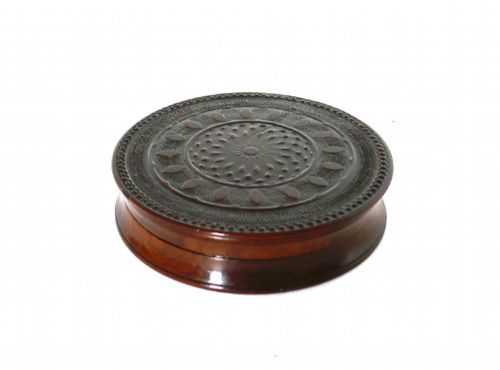
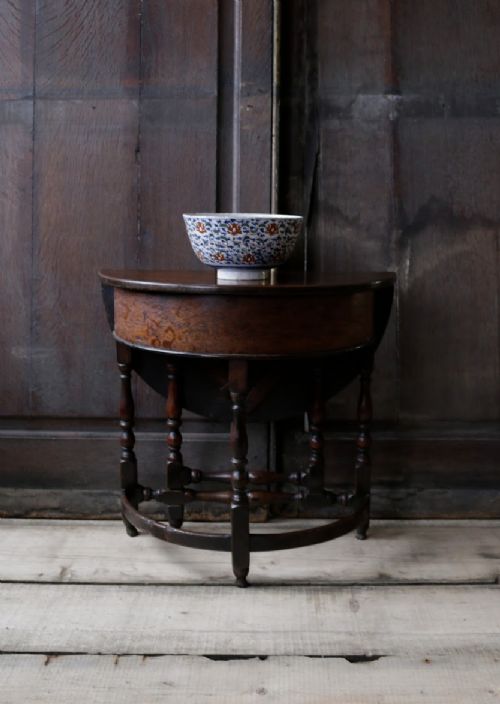
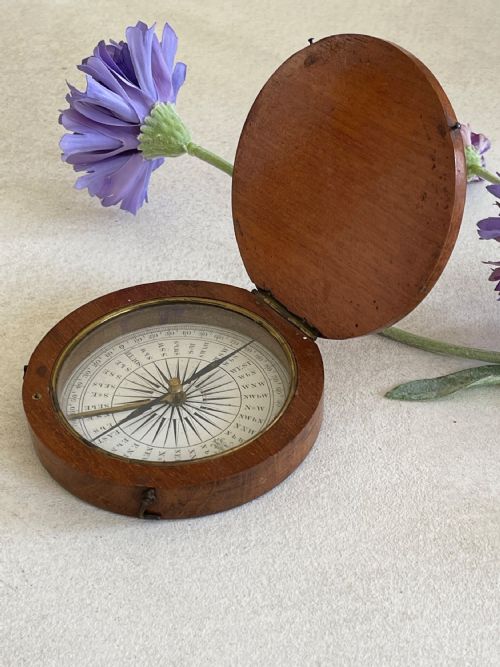
When you search for antique circular boxes, you encounter a diverse group of small vessels shaped around a round profile, historically used for personal grooming, tobacco, or valuables. These items range from pocket-sized pocket compasses and pill boxes to table-sized sewing stands and tea caddies.
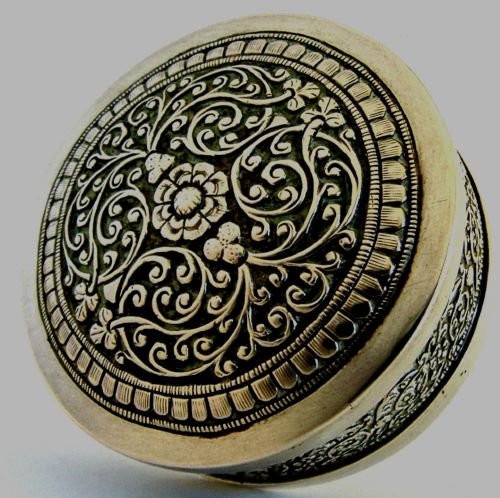
The pieces you meet most frequently on this page date from the Georgian and Victorian eras, alongside select examples from the seventeenth, eighteenth, and early twentieth centuries. They appear in materials as varied as turned wood, sterling silver, lacquer, and tortoiseshell, reflecting their varied domestic and personal uses.
How they were made
Many of these containers rely on turning on a lathe, particularly wooden examples fashioned from laburnum, mahogany, oak, or burr maple, which allows for precise, symmetrical round bodies and engine-turned surface patterns. Other methods involve skilled metalworking, such as sterling silver fabrication, bronze casting, and Old Sheffield plating.
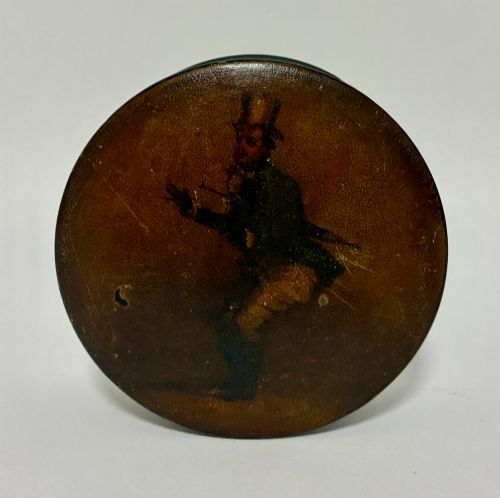
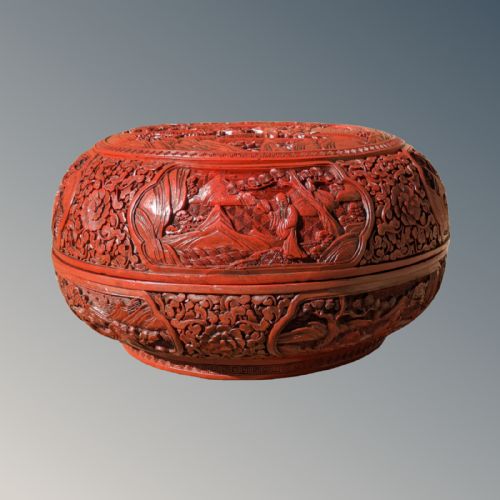
Surface decoration frequently employs specialist techniques like papier-mâché moulding, tortoiseshell inlay, delicate hand painting, and deep carving seen in Chinese cinnabar and bamboo pieces. Lacquerwork and pressed maple further demonstrate the range of traditional craft methods utilised by makers across different regions.
Period origins span the seventeenth, eighteenth, nineteenth, and early twentieth centuries, including specific dates from the 1820s to the 1930s.
What varies in quality
The standard of these containers depends heavily on the crispness of the turning and the precision of the lid fit, where tight, secure closures denote superior craftsmanship. The choice of materials also dictates worth, distinguishing solid precious metals, fine tortoiseshell, and dense hardwoods from simpler painted surfaces or base metal plating.
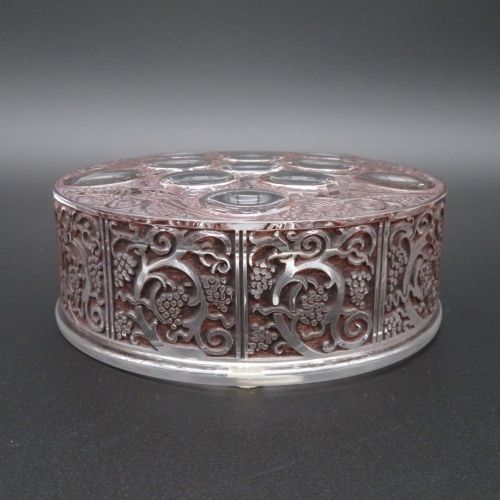
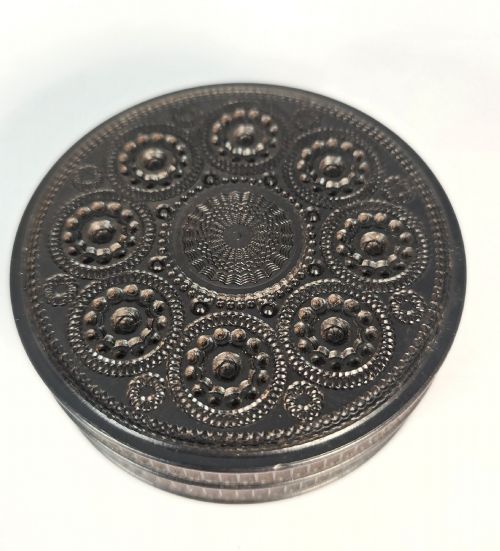
Execution of decorative detail separates ordinary domestic items from exceptional ones, such as finely worked engine-turning, profuse relief carving, or intricate mixed-metal inlay. Well-preserved original surfaces without heavy restoration command greater interest from discerning buyers.
J.B. Bennet·Wang Hing & Company·Smith
The Antique Circular Boxes Glossary
- Engine turned
- A method of mechanical decoration that cuts intricate geometric patterns into wood or metal using a lathe. This technique creates precise, repeating textures across the surface of snuff boxes and compacts.
- Snuff box
- A small lidded container designed specifically to hold powdered tobacco for inhalation. These portable vessels often feature tight-fitting lids to keep the contents dry.
- Treen
- Small handmade wooden household objects and utilitarian wares. This term encompasses turned items like laburnum and mahogany boxes produced before the twentieth century.
- Cinnabar
- A carved lacquer material built up in numerous layers before being deeply incised with designs. It is commonly found on Chinese lidded containers.
- Old Sheffield plated
- A composite metal made by fusing a thin layer of sterling silver to a thicker copper base. This technique was widely utilised for tea caddies and tableware before electroplating.
Antique Circular Boxes: Frequently Asked Questions
What were antique circular boxes used for?
These small vessels served a multitude of personal and domestic functions, primarily holding commodities like snuff, cosmetics, pills, and sewing notions. Many were carried on the person in pockets or reticules, while larger examples rested on tables for storage.
Over time, their uses adapted to changing fashions, accommodating items such as visiting cards, patches, or jewellery. Their round shape made them particularly suitable for items handled frequently in daily social rituals.
How do I date an antique circular box?
Dating relies on examining the materials, construction marks, style influences, and any hallmarks present on metal components. Georgian and Victorian pieces often display distinct decorative motifs, such as engine-turning or specific wood types characteristic of those periods.
Consulting the manufacturing techniques, such as early machine methods versus hand carving, helps narrow the decade of origin. Comparative study of known period forms provides further clarity on age.
How should I display them at home?
These containers look effective grouped on tabletops, shelves, or inside glass-fronted bijouterie cabinets where their varied textures can be appreciated. Mixing different materials like silver, lacquer, and turned wood creates visual depth.
Because many were designed to be handled, placing them within easy reach allows for closer inspection of their lids and interiors. Direct sunlight should be avoided to protect sensitive materials like tortoiseshell and painted lacquer.
Are these boxes durable for daily use?
While many were built for robust everyday carrying or domestic service, the durability depends entirely on the material and age. Solid silver, sturdy hardwoods, and thick brass tolerate careful handling well.
Fragile surfaces such as papier-mâché, delicate crystal, or thin lacquer require a more gentle touch to prevent chipping or wear. Assessing the structural integrity of the hinge and lid helps determine suitability for frequent handling.