
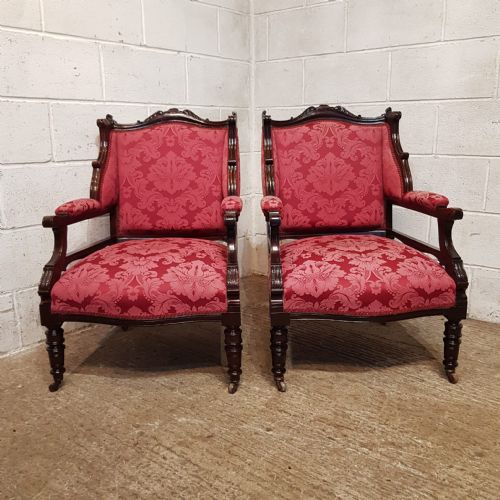
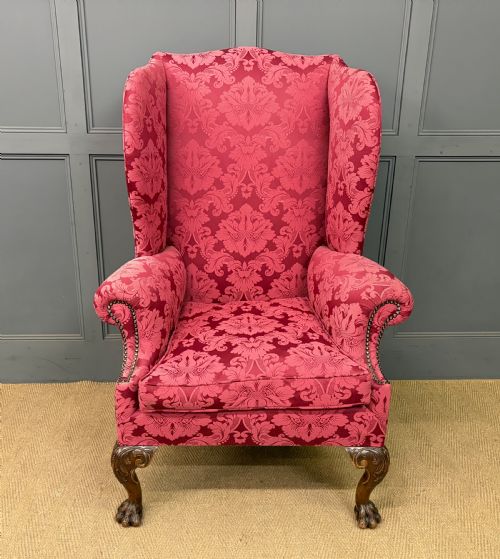


Red Damask Chairs
Red damask chairs combine rich patterned textiles with traditional timber frames, offering enduring comfort and strong historical character for period interiors.
Red Damask Chairs
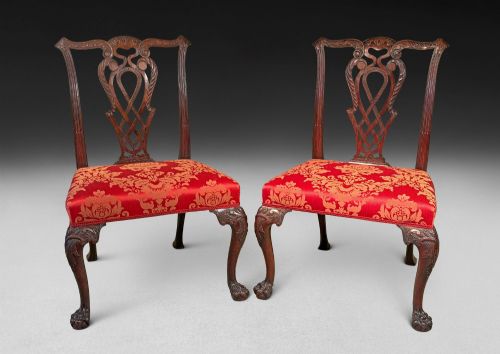
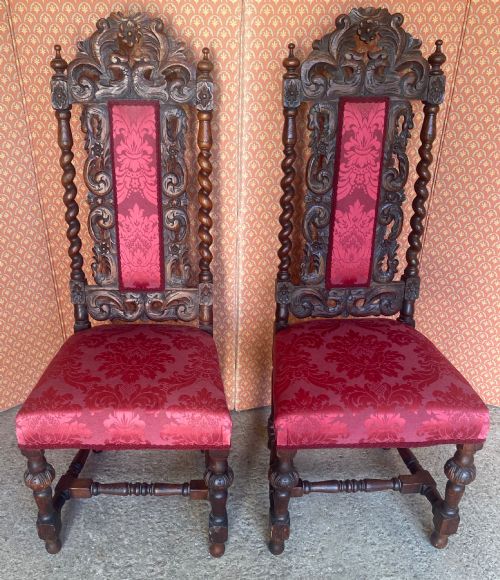
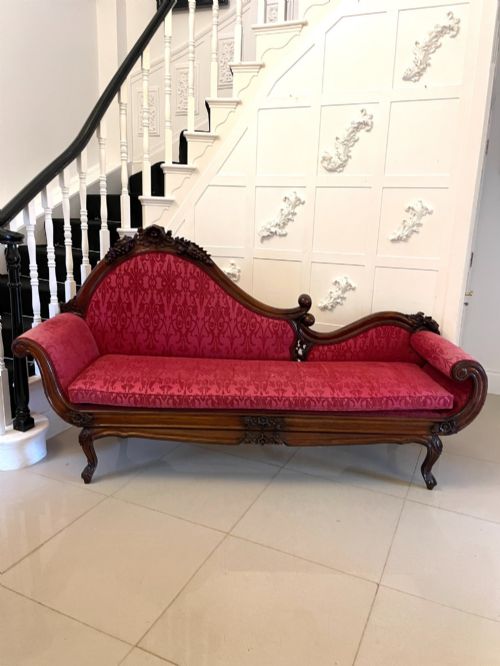
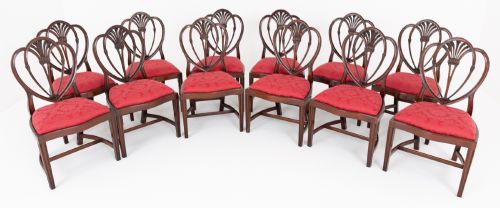
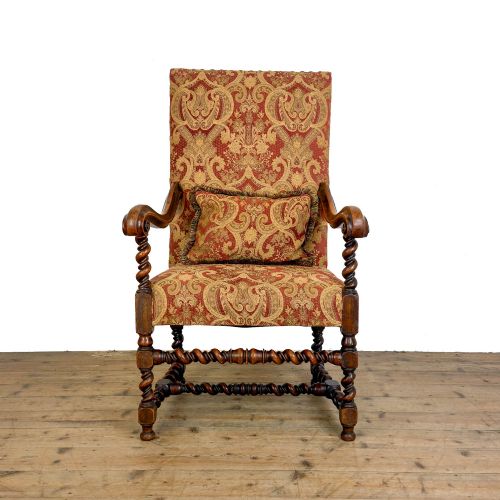
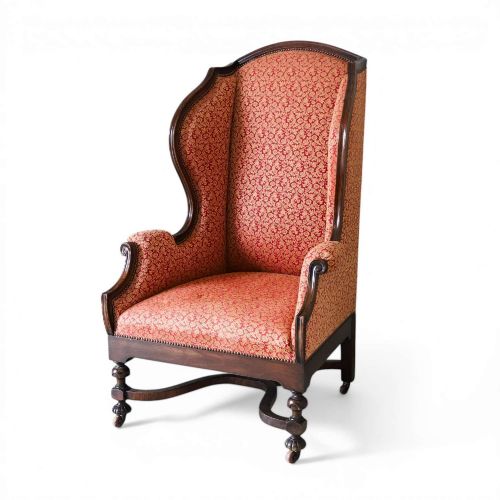
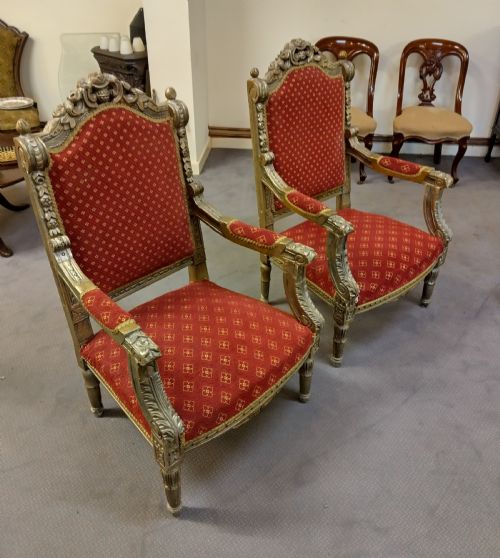
Red damask chairs encompass a variety of seating forms, most frequently appearing as nineteenth-century armchairs, eighteenth-century dining sets, and revival styles upholstered in patterned fabrics.
Buyers seeking red damask chairs will encounter mahogany, walnut, and giltwood frames spanning the Georgian, Victorian, and Edwardian periods.
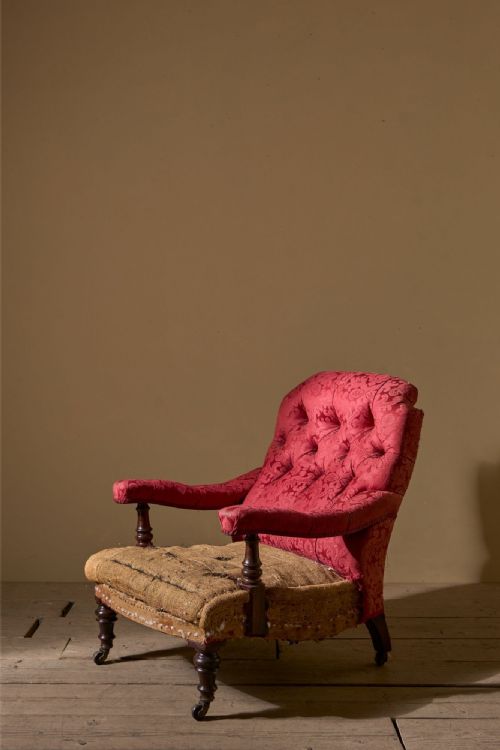
The selection ranges from single library armchairs and Gainsborough chairs to large sets of dining chairs and French-influenced fauteuils.
How they were made
Carpenters and cabinetmakers constructed the timber frames using solid hardwoods like mahogany and walnut, often applying detailed hand-carvings and brass accents.
Upholstery techniques combined traditional stuffing methods with silk, wool, and woven damask fabrics secured to the frames.
Some past armchairs arrived wrapped in rich red wool moquette accompanied by long tassels for that extra dramatic flair.
What varies in quality
The standard of carving on the timber frames distinguishes standard seating from exceptional examples, with crisp detail indicating superior craftsmanship.
The choice and execution of the upholstery textile, alongside the integrity of the underlying frame construction, set the baseline for each piece.
White, Allom & Co.
The Red Damask Chairs Glossary
- Fauteuil
- An open-armed upholstered armchair with exposed wooden sides originating in France. These seats typically feature carved walnut or giltwood frames.
- Gainsborough chair
- A wide, upholstered armchair with open arms and a low seat, designed for writing desks or libraries during the eighteenth century.
- Giltwood
- Wood coated with a thin layer of gold leaf or gilt finish. This treatment was common on decorative revival frames.
- Bergere
- An enclosed upholstered armchair with wooden sides filled with cane or fabric. This French form provides deep seating comfort.
Red Damask Chairs: Frequently Asked Questions
How do I clean red damask fabric?
Vacuum textile upholstery gently with a soft brush attachment to remove surface dust. Avoid harsh chemical cleaners that might damage woven threads.
Consult a professional textile conservator for deeper cleaning of antique fabric.
Are these chairs suitable for daily dining?
Dining sets from the eighteenth and nineteenth centuries were built for robust daily use. Sturdy mahogany and walnut frames handle regular seating well.
Ensure joints remain tight before placing antique chairs into active service around a table.
How can I identify a Georgian frame?
Look for timber selection dominated by dense mahogany and proportioned cabriole or straight legs. Joinery methods typically employ traditional hand-cut tenons.
Design motifs reflect prevailing classical influences of the eighteenth century without later revival exaggerations.
Where should I place a library armchair?
Library armchairs suit studies, drawing rooms, or reading corners where their low seats provide comfortable lounging. Pair them beside a desk or fireplace.
Keep upholstered pieces away from direct sunlight to preserve the red damask colour.