
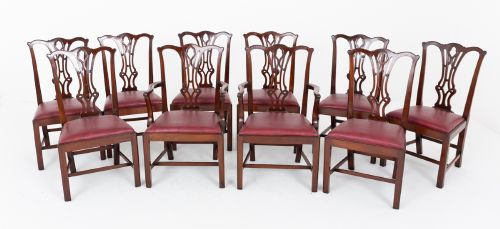
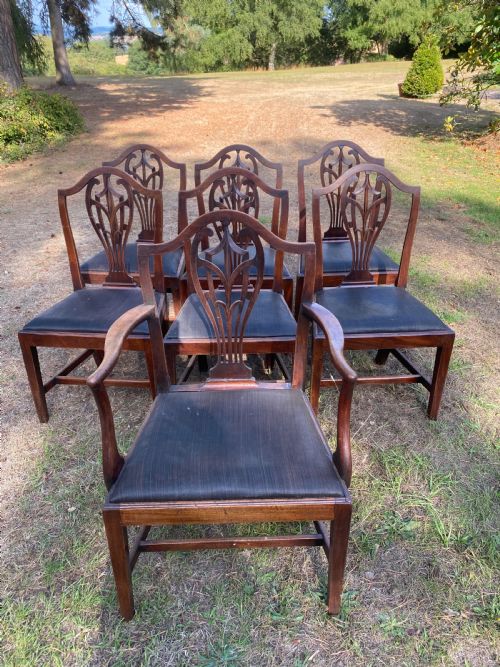
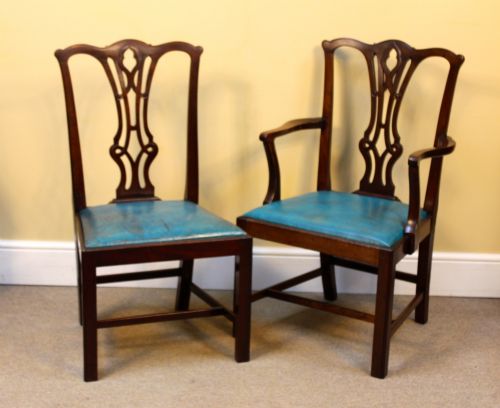
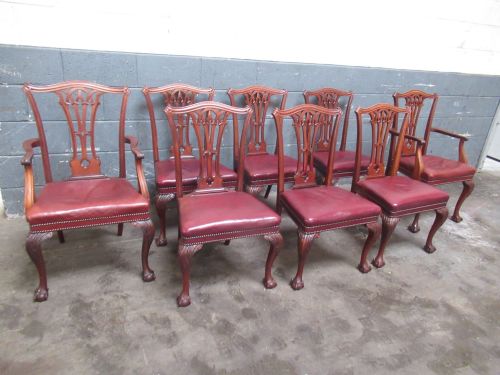
Georgian Chippendale Carver
A georgian chippendale carver brings substance and historic detail to a room through solid timber and robust carved joinery.
Georgian Chippendale Carver
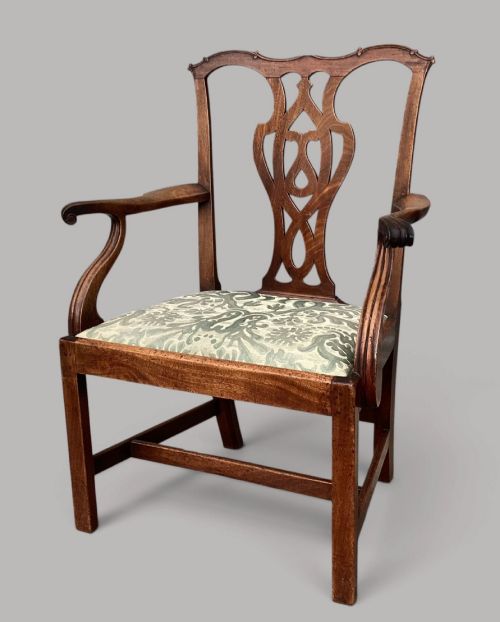
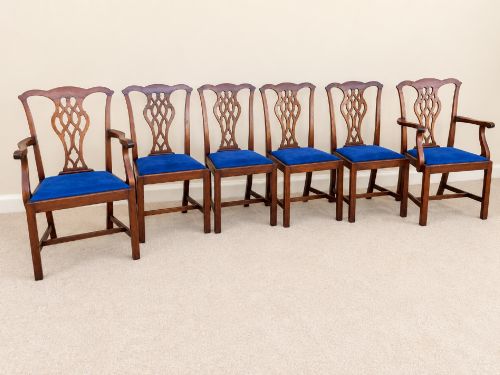
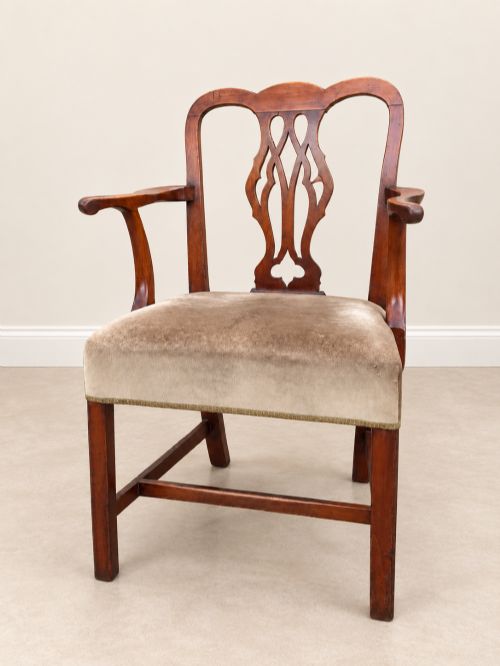
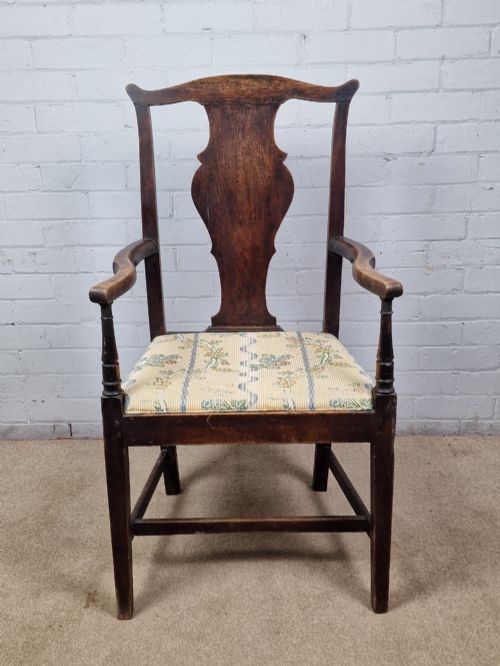
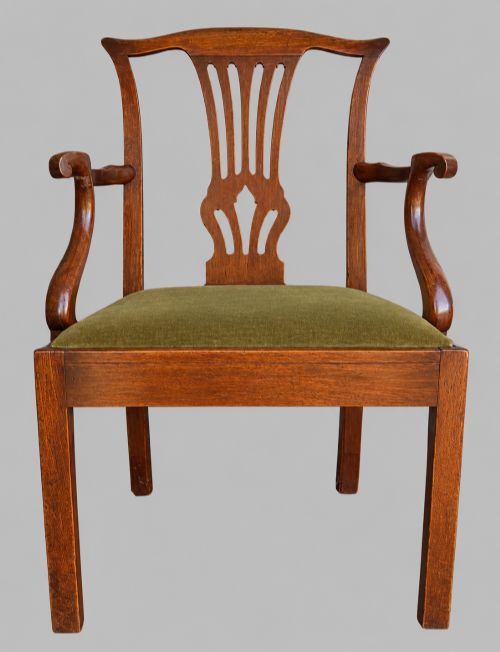
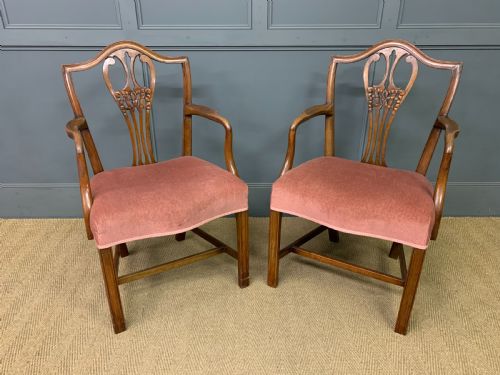
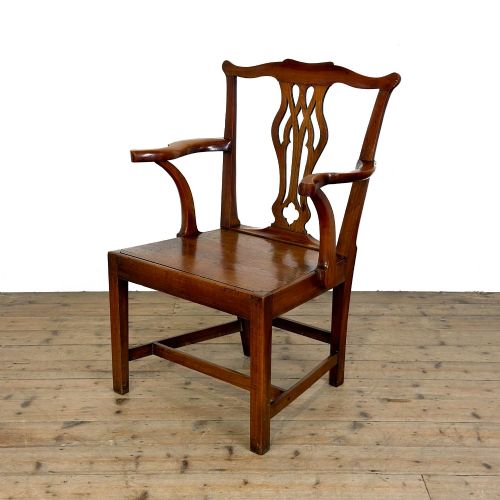
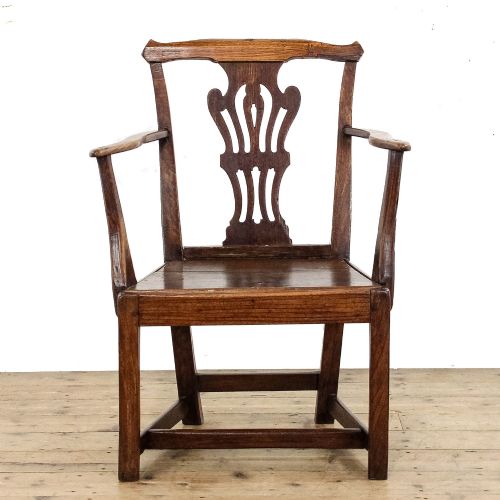
A georgian chippendale carver is an armchair designed for the head of a dining table or for use at a desk, defined by its sturdy arm supports and pierced splat back.
The version most commonly met on this page is the mahogany armchair from the eighteenth or nineteenth century, though walnut, elm, fruitwood, and oak examples also appear.
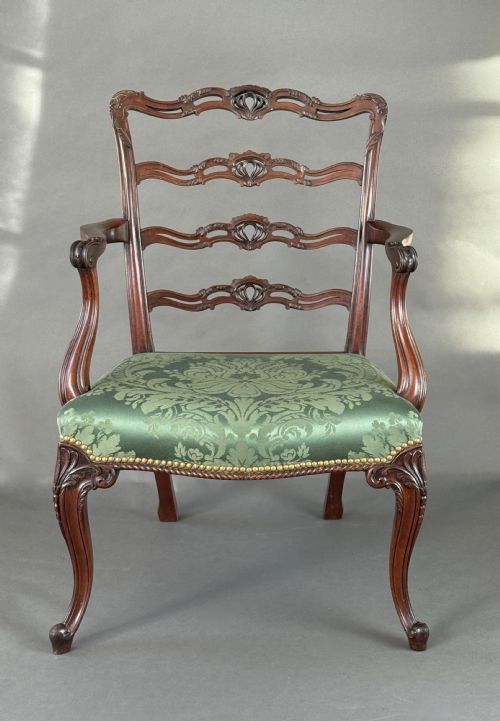
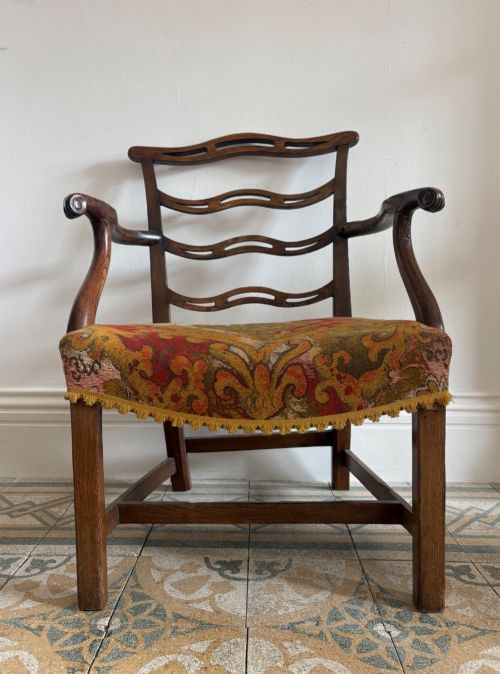
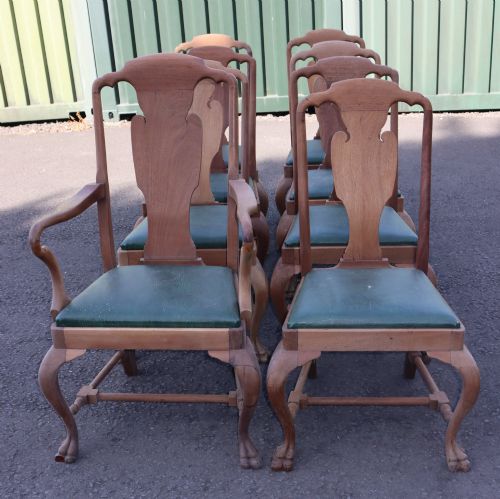
These seating pieces encompass formal dining carvers, library desk chairs, and country ladder-back variants originating from Georgian through to revival periods.
Materials and Construction Techniques
Makers relied primarily on dense mahogany, complemented by walnut, fruitwood, and elm, shaping the timbers with hand tools to form the characteristic interlaced splats and robust frames.
Joinery techniques such as mortise and tenon secured the arms and legs, while drop-in seats or fixed pads were upholstered in leather, fabric, velvet, or tapestry supported by webbing.
Listings feature mahogany, walnut, oak, elm, and fruitwood chairs spanning the eighteenth, nineteenth, and early twentieth centuries.
Assessing Quality and Execution
The standard of carving defines the distinction between pieces, with crisp, deeply undercut foliage and ribbon motifs separating superior examples from simpler workshops.
Proportion and timber selection dictate overall merit, where dense grain, patinated surfaces, and balanced structural proportions elevate a chair above standard production.
The Georgian Chippendale Carver Glossary
- Carver
- An armchair designed to match a set of dining chairs, usually positioned at the head of the table.
- Splati
- The vertical wooden slat in the centre of the chair back, often intricately pierced and carved in these models.
- Elbow Chair
- A traditional term for an armchair, frequently used interchangeably with carver in period descriptions.
- Claw and Ball
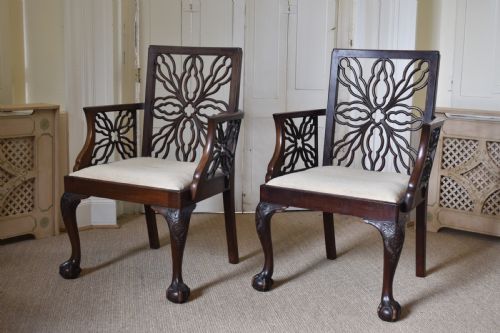
- A furniture foot carved to resemble an animal's talons gripping a sphere, typical of mid-eighteenth-century design.
- Cockpen
- A lattice-backed chair style inspired by Chinese Chippendale design, featuring geometric openwork wooden grids.
Georgian Chippendale Carver: Frequently Asked Questions
What is a carver chair?
A carver chair is an armchair built with arms to match a set of dining chairs. It was traditionally assigned to the head of the household at the dining table.
Today, these chairs function equally well as desk seats or accent pieces in a study or hallway.
How do I date a chair?
Dating relies on examining the timber species, joinery methods, tool marks, and the evolution of the carved details. Eighteenth-century pieces display hand-cut joinery and dense patinated grain.
Revival pieces from later centuries often utilise machine-sawn components and show subtle differences in proportion and timber preparation.
Are these chairs comfortable for daily use?
These armchairs were built with generous proportions to accommodate historical attire, providing a wide seat and supportive armrests. Their comfort depends largely on the height of the desk or table and the firmness of the upholstered drop-in pad.
Modern users often pair them with writing desks or keep them as occasional seating where upright posture is preferred.
What wood was used?
Mahogany is the predominant timber found in these listings, valued for its strength and suitability for intricate carving. Walnut, elm, oak, and fruitwood also appear, particularly in country workshop variants.
Each timber species brings a distinct weight and surface grain to the finished frame.