


Red Chinoiserie Lamp
These red chinoiserie lamp pieces bring painted lacquer and gilt ornament into a room through standard, floor, and table lamp forms.
Red Chinoiserie Lamp
A red chinoiserie lamp combines European decorative lighting forms with hand painted Oriental motifs, appearing frequently as tall standard lamps or smaller table lamps. The phrase covers pieces originating from the eighteenth century up to the nineteen twenties, with Edwardian and nineteen twenties examples occurring most often.
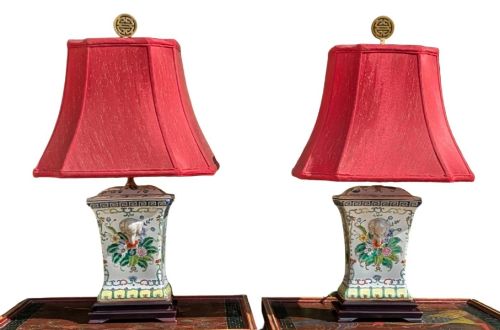
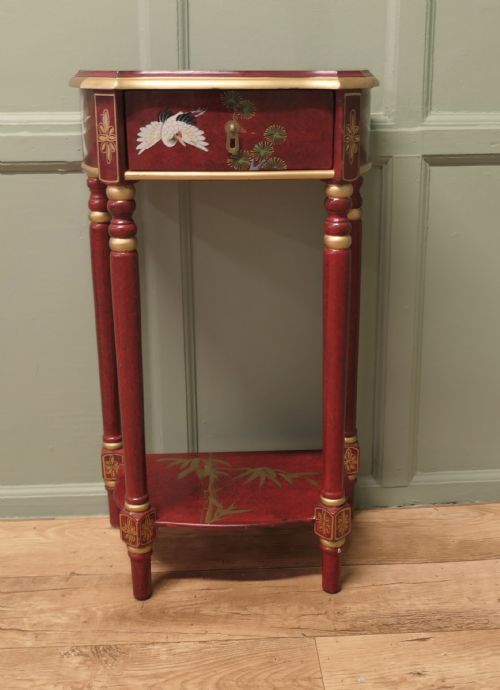
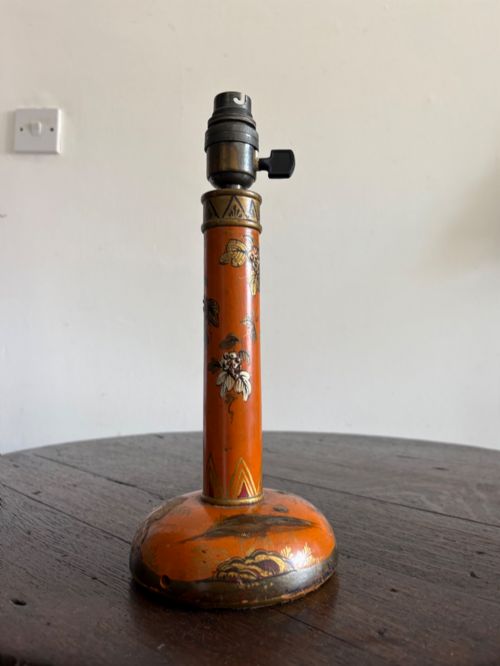
Makers and manufacturers adapted various objects into lighting, utilising Chinese porcelain vases, rootwood carvings, and toleware alongside purpose built wooden stands. Alongside lamps, related side cabinets, bedside cabinets, and occasional tables turn up in matching lacquer finishes.
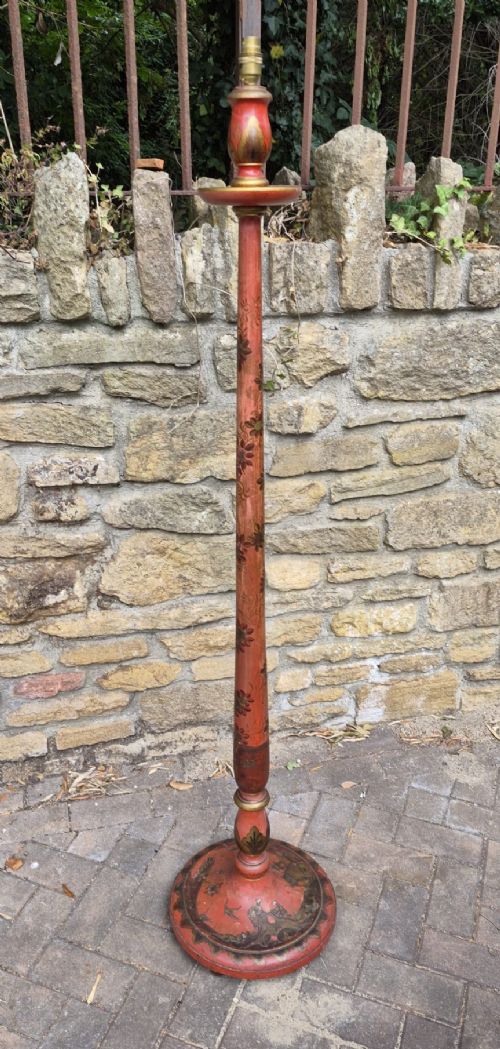
The decorative scheme relies heavily on red, black, or green lacquer backgrounds enriched with gilt details depicting figures, landscapes, and floral scenes. These pieces draw on Regency and Victorian design traditions that reinterpreted East Asian aesthetics for Western interiors.
How they were made
Wood serves as the primary substrate for standard lamps, occasional tables, and cabinets, receiving multiple layers of red or black lacquer paint. Artisans applied hand painted decoration directly onto the lacquered surfaces, frequently incorporating gilt highlights to define the oriental motifs.
Porcelain and pottery elements, such as Arita Imari vases and baluster form vessels, were drilled and fitted with brass mounts to function as bases for lighting. Bamboo and rootwood additionally provide organic structural forms for standard and table lamps.
Some standard lamps hide their wiring inside towering painted bamboo stalks.
What varies in quality
Quality rests on the depth and execution of the hand painted lacquer work, where finely drawn gilt details and layered pigments separate superior examples from simpler painted decoration. The integrity of the underlying timber and the crispness of turned wood standards or carved rootwood elements dictate the overall standing of a piece.
Integration of original mounts, brass fittings, and matching pairs influences desirability, as matched sets of table lamps or floor lamps demand greater skill to maintain uniform decoration across multiple objects.
Heals
The Red Chinoiserie Lamp Glossary
- Chinoiserie
- European decorative style inspired by Chinese and East Asian art, characterised by painted scenes, figures, and architectural motifs. This aesthetic dominated fashionable interiors during various periods from the eighteenth century onwards.
- Lacquer
- A durable resin or varnish applied in multiple coats to wood or metal surfaces to create a smooth, polished finish. Red and black lacquer grounds form the basis for painted chinoiserie decoration.
- Standard Lamp
- A tall floor standing lamp designed to illuminate a room from a standing position. These tall wooden shafts frequently feature elaborate lacquered and painted chinoiserie decoration.
- Toleware
- Painted or enamelled sheet metal objects produced in various decorative forms. These metal items occasionally find conversion into lamp bases.
- Imari
- A style of Japanese porcelain featuring underglaze blue and overglaze red, gold, and green decorations. These exported ceramic vessels appear mounted as lamp bases.
Red Chinoiserie Lamp: Frequently Asked Questions
What periods do these lamps date from?
The available pieces span from the eighteenth century through the Victorian era and into the nineteen twenties. Edwardian examples from around nineteen ten appear with notable frequency.
Earlier items include eighteenth century porcelain vases later fitted as lamps, alongside Regency and Victorian lacquered pieces.
How do I identify a standard lamp?
A standard lamp is a tall floor standing lighting fixture designed to sit directly on the floor. They feature long wooden shafts that often display elaborate red chinoiserie lacquer and painted motifs.
These tall forms contrast with smaller table lamps and bedside cabinet lamps seen in the same decorative styles.
What materials are used in these pieces?
Construction relies predominantly on wood and lacquered wood finished with red, black, or green paint and gilt details. Brass mounts appear alongside fabric elements and handmade shades.
Porcelain, rootwood, bamboo, and toleware provide alternative bases and structures across different table and floor lamp examples.
Are matching pairs available?
Listings include matched pairs of table lamps, floor lamps, and bedside cabinets featuring corresponding lacquered finishes. These pairs share identical colour schemes and painted chinoiserie motifs.
Single standard lamps and standalone occasional tables also form part of the selection.