


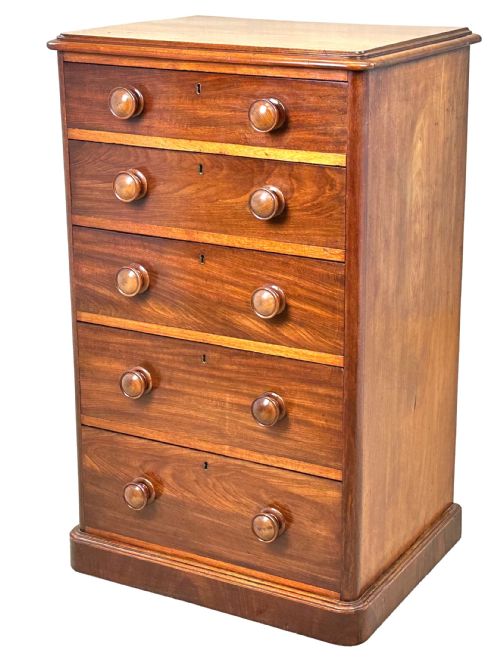

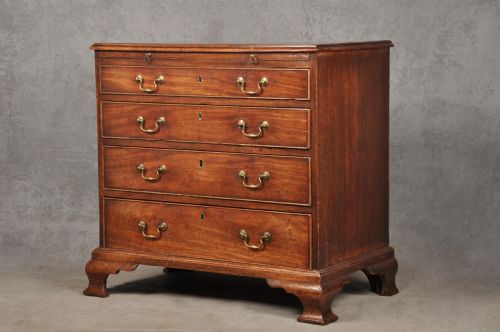


Red Brown Mahogany Dresser
A red brown mahogany dresser is a solid timber storage chest built for bedroom use, prized for rich warm grain and enduring joinery.
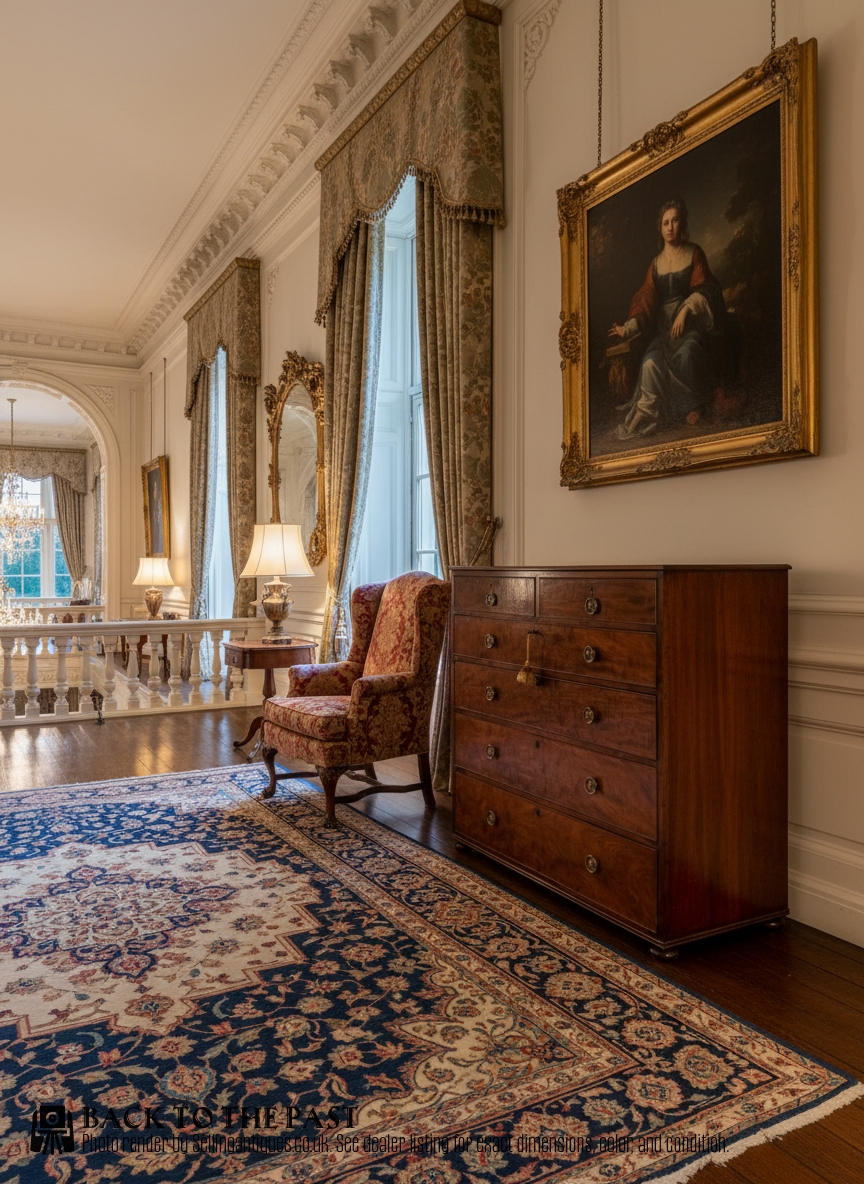
Red Brown Mahogany Dresser
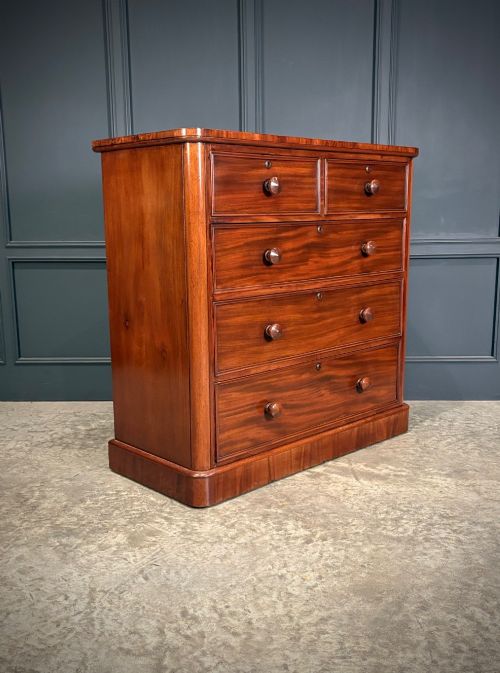
A red brown mahogany dresser most commonly takes the form of a chest of drawers, spanning periods from the eighteenth century through the Victorian era. These pieces serve as practical bedroom storage while displaying the deep reddish-brown tones characteristic of the timber.
The selection on this page centres on Georgian, George III, and Victorian examples, ranging from tall chests to compact bowfront designs and pieces fitted with a pull-out slide. Cabinets from the eighteenth century often display clean Georgian proportions, whereas nineteenth-century versions continue the tradition with sturdy chest forms.
Buyers encounter variations such as serpentine fronts and flame mahogany veneers, alongside simpler upright chests constructed with pine or oak drawer linings. Each object reflects the utilitarian needs of its period alongside the cabinetmaker's choice of dense tropical hardwoods.
How they were made
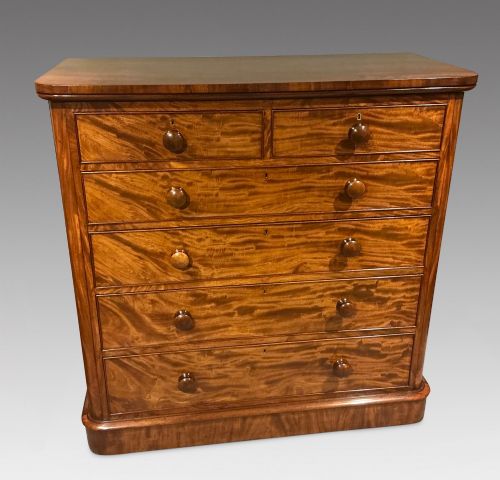
These chests rely on solid mahogany and flame mahogany veneer applied over secondary timbers like pine and oak. Cabinetmakers selected figured veneers for drawer fronts to create striking grain patterns, while utilising solid timber for the structural carcase and framing.
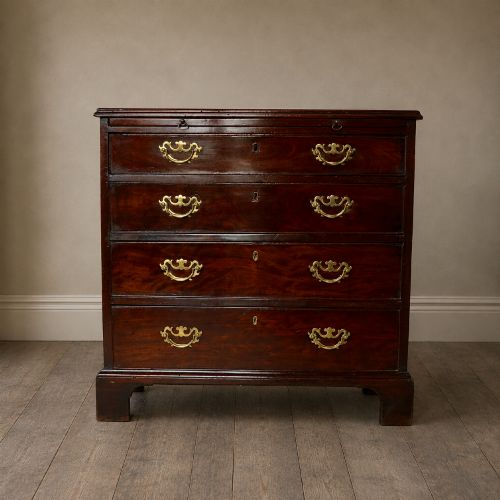
Metalwork played a functional role in construction, with brass handles and escutcheons fitted to secure drawers. Joinery techniques from the eighteenth and nineteenth centuries ensured robust construction, allowing these heavy timber chests to survive through centuries of daily use.
The listings span the eighteenth and nineteenth centuries, featuring Georgian, George III, and Victorian styles built from mahogany, brass, pine, and oak.
What varies in quality
The distinction between standard storage chests and finer examples lies in the selection of timber and the sophistication of the outline. Pieces featuring figured flame mahogany veneer or shaped outlines like the serpentine and bowfront demonstrate greater ambition from the cabinetmaker.
Proportion and specialised elements also differentiate the range, such as the inclusion of a pull-out slide beneath the top surface. The crispness of the mouldings and the retention of original brass hardware further separate everyday utility pieces from finer vernacular items.
The Red Brown Mahogany Dresser Glossary
- Flame mahogany
- A veneer cut from timber where the branches join the trunk, producing a rippling, flame-like grain pattern. This decorative surface is frequently reserved for the primary drawer fronts of finer chests.
- Bowfront
- A curved furniture front where the central section swells outward in a convex arc. This style softens the boxy appearance of a standard chest of drawers.
- Serpentine
- A front profile defined by a central convex curve flanked by two concave sweeps. It requires considerable skill from the woodworker to shape accurately.
- Slide
- A pull-out board integrated into the furniture frame above the top drawer. Historically used as a surface for sorting linens or writing.
- Carcase
- The main structural body or framework of a piece of furniture, excluding the drawers and doors. Secondary woods like pine or oak are often found inside this structure.
Red Brown Mahogany Dresser: Frequently Asked Questions
What is a red brown mahogany dresser?
A red brown mahogany dresser is a traditional chest of drawers constructed primarily from mahogany timber, valued for deep colour and robust storage capacity.
These pieces date from the Georgian and Victorian periods, offering deep drawers housed within sturdy wooden carcases.
How do I identify a Georgian chest?
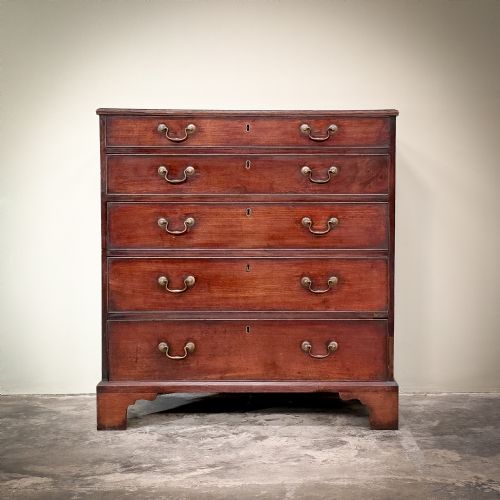
Georgian chests typically display restrained classical proportions, solid brass handles, and straight or bracket feet.
They often feature dense mahogany timber with secondary woods like oak visible within the drawer construction.
What is a bachelor's chest?
A bachelor's chest is a compact mahogany drawer unit that incorporates a pull-out wooden slide directly beneath the top board.
This slide served as a convenient surface for writing or folding garments in smaller bedchambers.
How do I care for mahogany furniture?
Mahogany furniture requires stable indoor humidity away from direct heat sources to prevent timber movement and veneer lifting.
Routine dusting with a dry cloth preserves the finish, while occasional wax application maintains the natural lustre of the wood.