
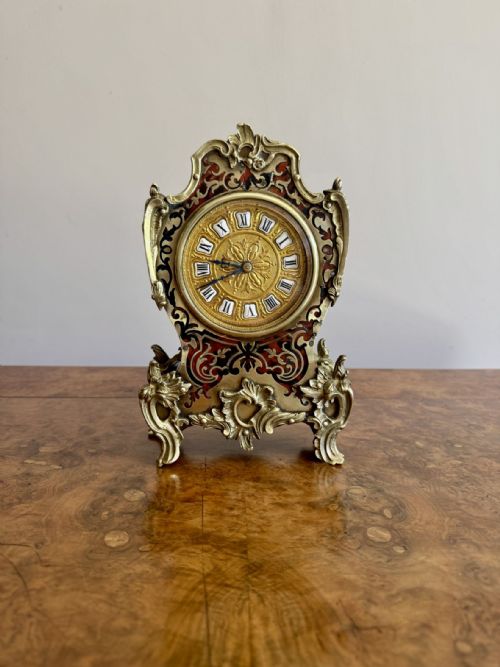

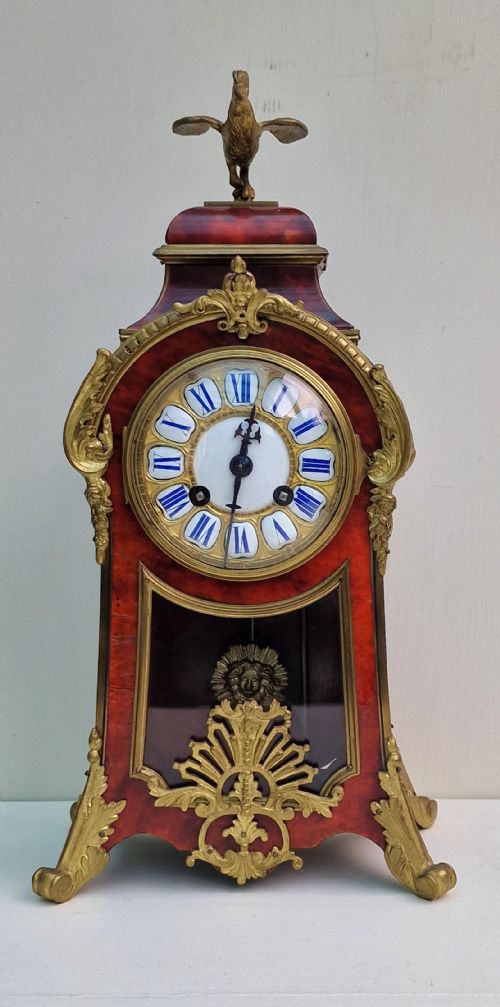


Red Boulle Table
A red boulle table brings nineteenth-century French luxury into a room through rich tortoiseshell and polished brass.
Red Boulle Table
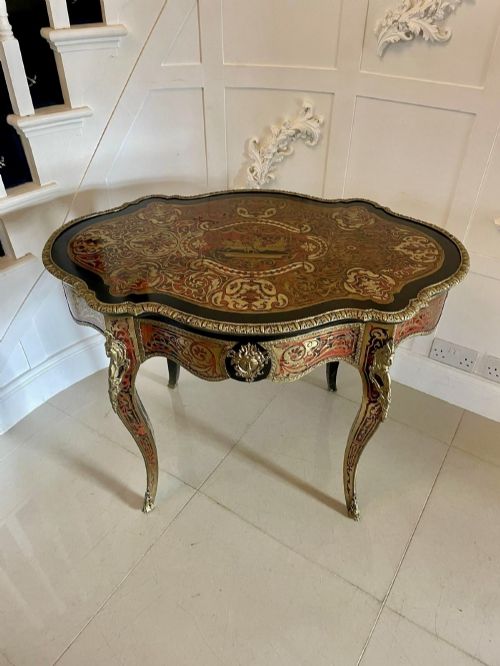
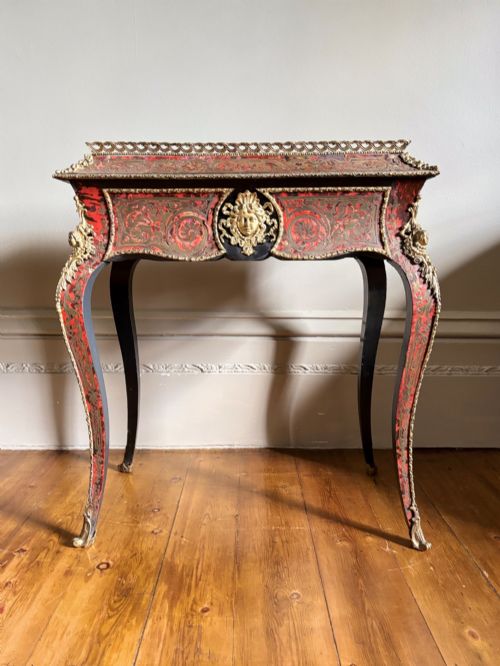
When you search for a red boulle table, you encounter nineteenth-century French furniture decorated with intricate marquetry. These pieces include centre tables, writing desks, and card tables produced during the Victorian era and periods such as Napoleon III, Louis XV revival, and Regency.
The version you are most likely to meet on this page is a centre table or a writing desk displaying the distinctive red tortoiseshell background paired with brass inlay. Such pieces often draw from French Baroque and Rococo revival styles, showing elaborate forms suited to grand interiors.
How they were made
The makers of these items used a technique of sawing together fitted sheets of brass and red tortoiseshell to create opposing patterns of inlay. Ebonised wood often serves as the dark structural base that contrasts with the bright metallic elements.
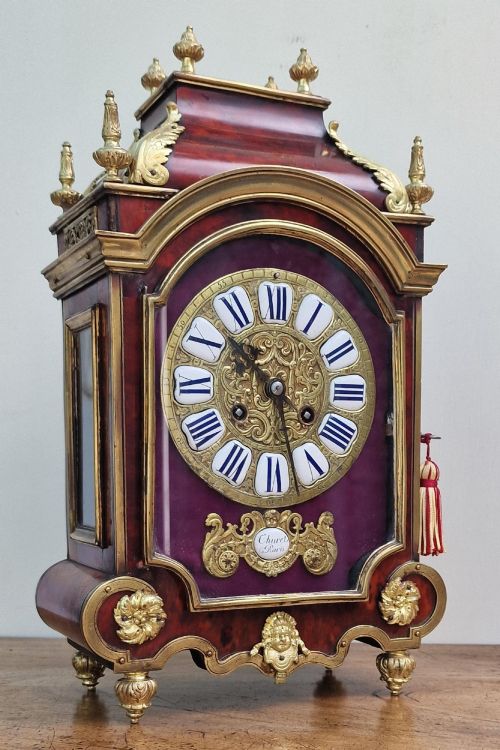
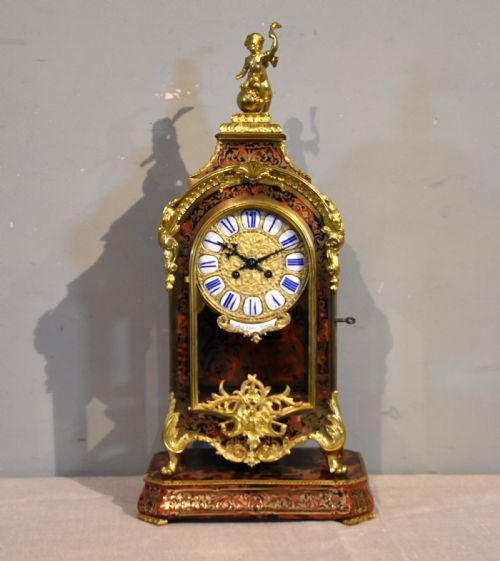
Ormolu mounts, cast in bronze and then gilded, accent the corners and edges of the furniture. Glass surfaces and enamel details occasionally appear on related pieces such as clocks and candlesticks that share the same workshop traditions.
Tortoiseshell and brass were sometimes cut simultaneously while clamped together, meaning two opposing tables could theoretically emerge as mirror images from the same workbench.
What varies in quality
The precision of the marquetry cuts separates standard items from finer examples. Tighter joints between the brass and the red tortoiseshell demonstrate greater skill by the cabinetmaker.
The crispness of the ormolu mounts also dictates the calibre of the piece. Finer castings show sharper relief and deeper chasing in the bronze work before gilding is applied.
Edwards & Roberts·Thuret
The Red Boulle Table Glossary
- Boulle
- A marquetry technique using brass and tortoiseshell developed in France and named after André-Charles Boulle. It creates intricate patterns of dark and metallic contrast.
- Ormolu
- Gilded bronze used for decorative mounts and furniture feet. The term derives from the French for milled gold.
- Marquetry
- The art of applying pieces of veneer to a structure to form decorative designs. On these tables, it incorporates metal and shell.
- Ebonised wood
- Timber treated to resemble ebony, providing a dark background. This finish highlights the bright brass and red tortoiseshell inlay.
- Bureau plat
- A flat-topped writing desk fitted with drawers. These tables often feature elaborate surface decoration.
Red Boulle Table: Frequently Asked Questions
What is a red boulle table?
A red boulle table is a nineteenth-century French furniture piece decorated with brass and red tortoiseshell marquetry. These items reflect revival styles popular during the Victorian period.
Such tables function as centrepieces, card tables, or writing desks in formal rooms. Their surfaces display contrasting patterns created by skilled cabinetmakers.
How do I date a boulle table?
Dating relies on the stylistic cues of the nineteenth century, including Victorian influences and specific French revivals like Louis XV or Napoleon III. Construction methods and wood types also provide chronological clues.
Most surviving examples date from the mid to late nineteenth century. Makers often incorporated contemporary revival tastes into traditional seventeenth-century techniques.
How should I clean red tortoiseshell?
Red tortoiseshell requires gentle dusting with a soft, dry cloth to prevent scratching the polished surface. Moisture and harsh cleaning agents can damage both the shell and the underlying wood.
Keep these tables away from direct sunlight to preserve the red hue of the shell. Wax designed for antique furniture helps maintain the lustre of the ebonised wood.
What styles influence these tables?
French Baroque, Louis XIV, and Louis XV revival styles heavily influence the design of these tables. Makers drew inspiration from earlier royal courts to satisfy nineteenth-century buyers.
Curved lines, cabriole legs, and elaborate floral or geometric brass inlay define these aesthetics. The combination of ormolu mounts further enhances the theatrical appearance.