


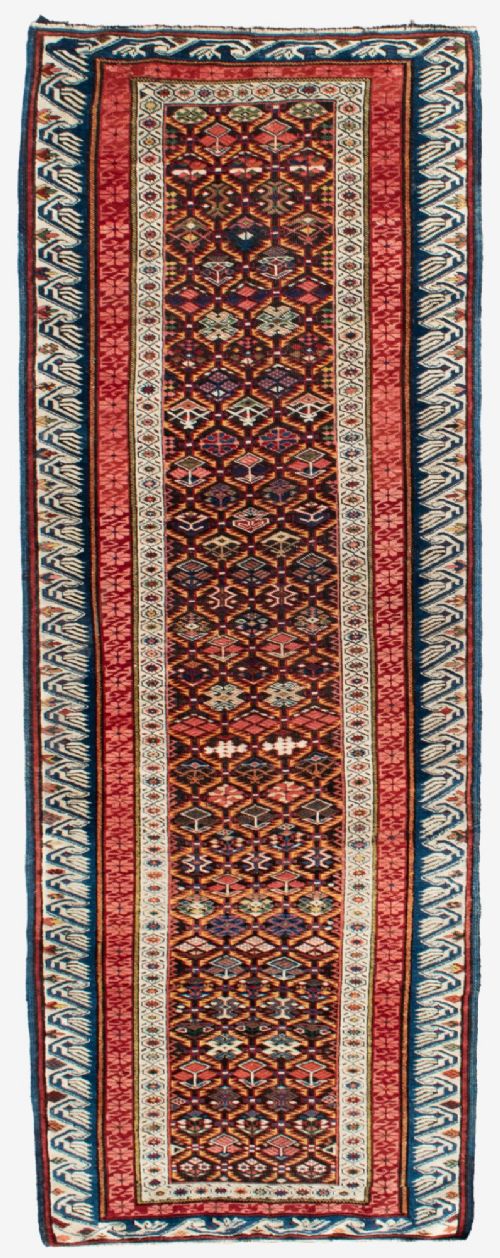
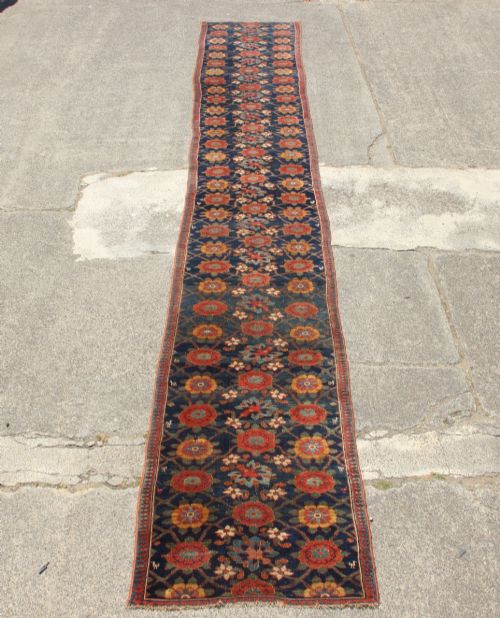
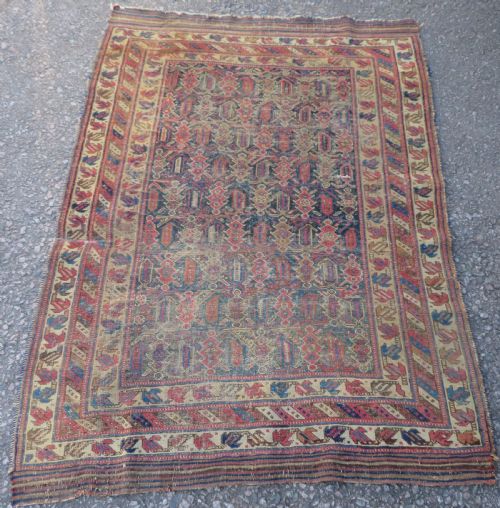

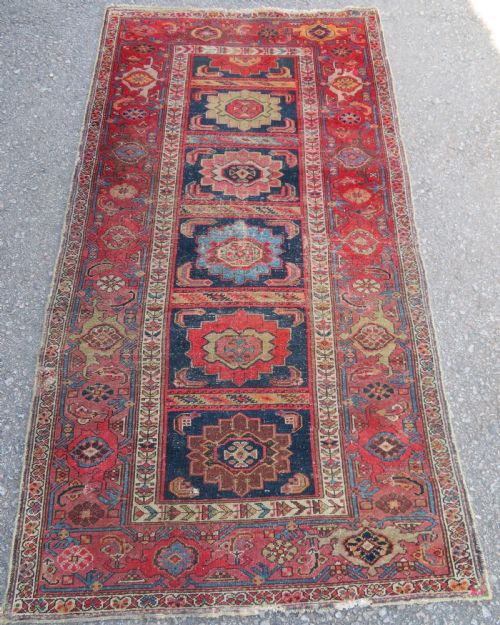
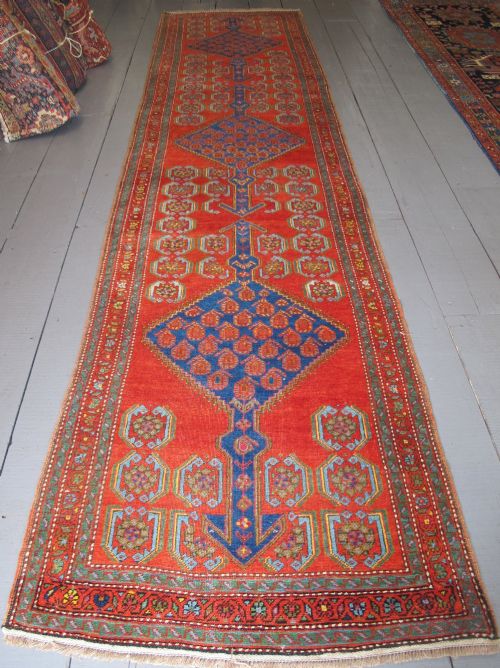
Red Blue Hallway Runner
A red blue hallway runner brings rich tribal geometry and centuries of weaving tradition straight to narrow passageways.
Red Blue Hallway Runner
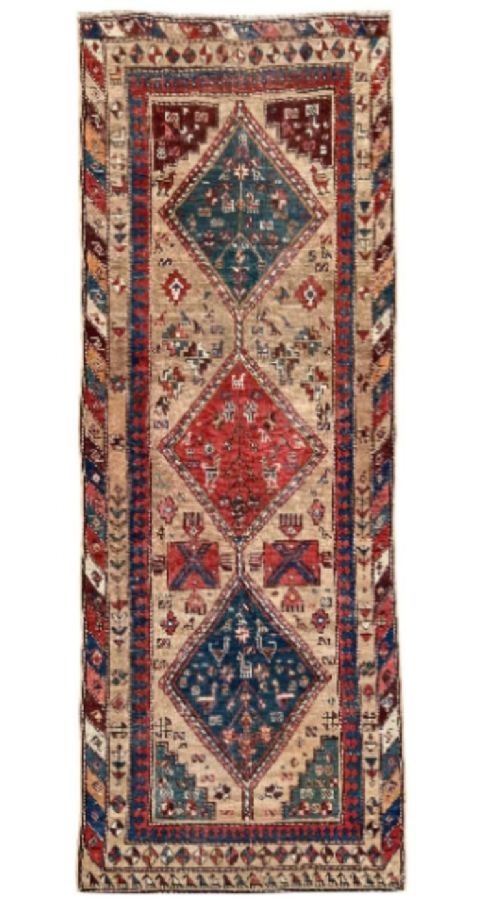
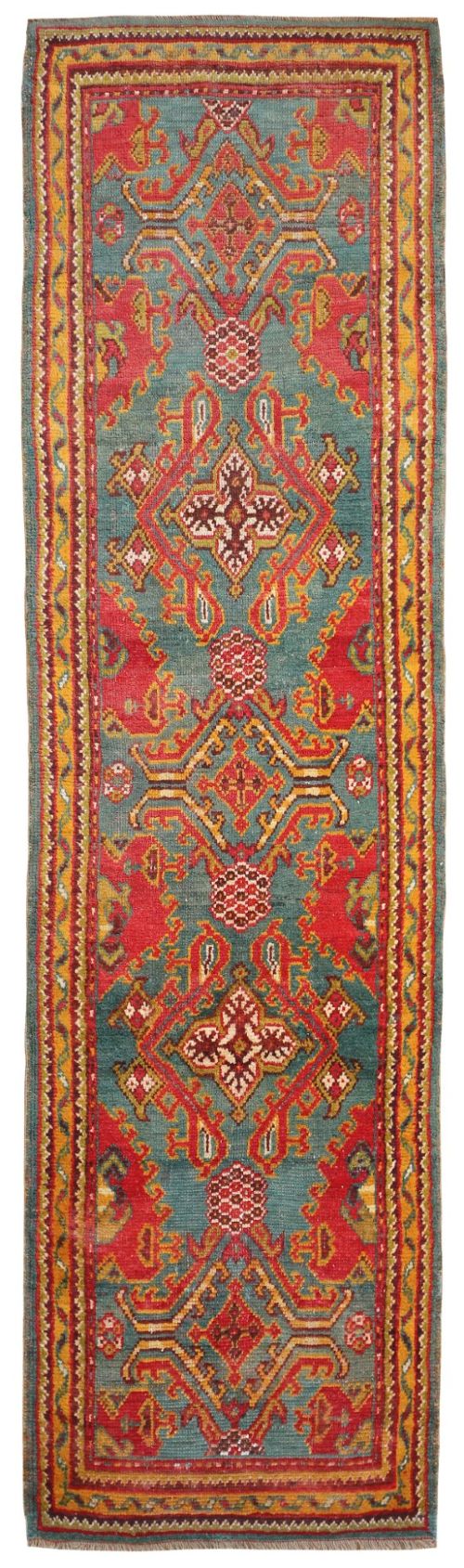
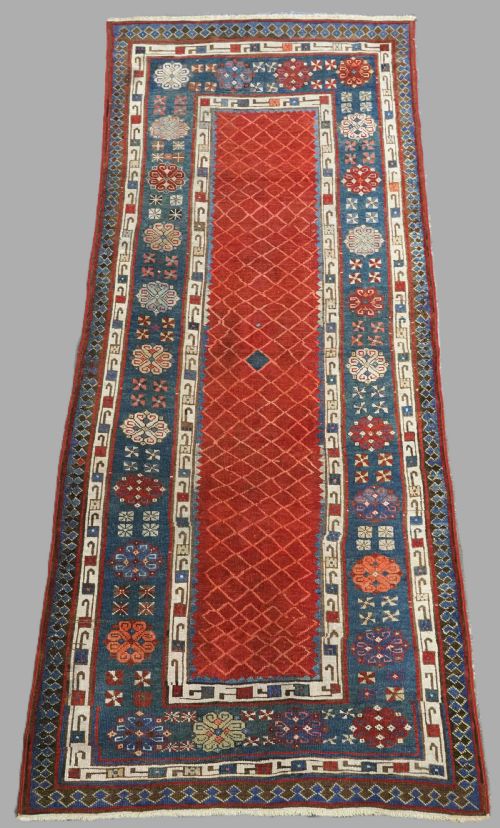
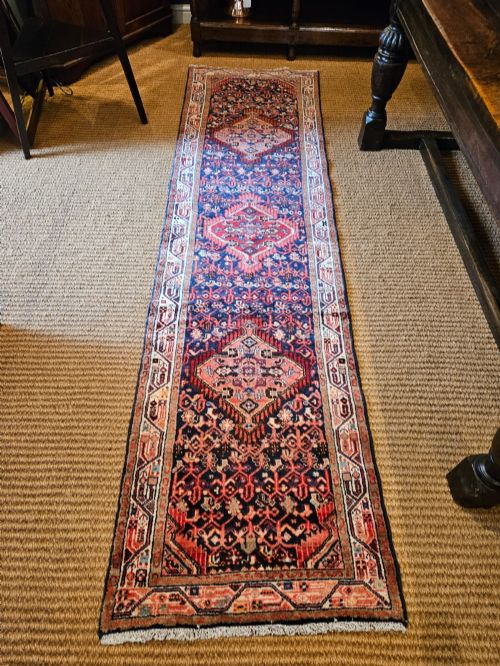
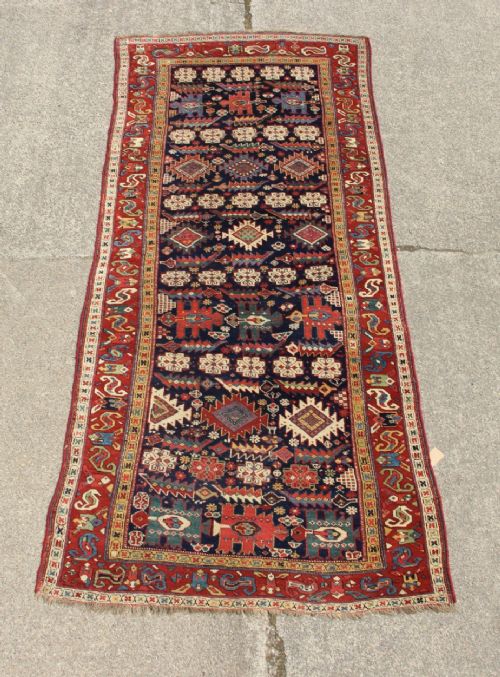
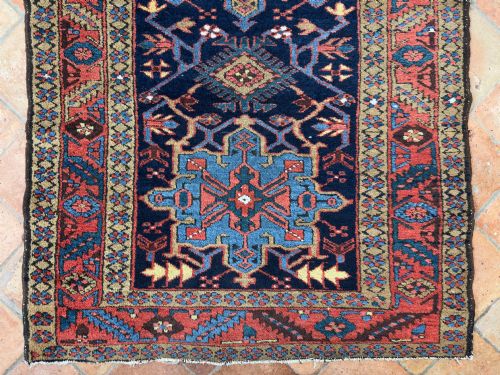
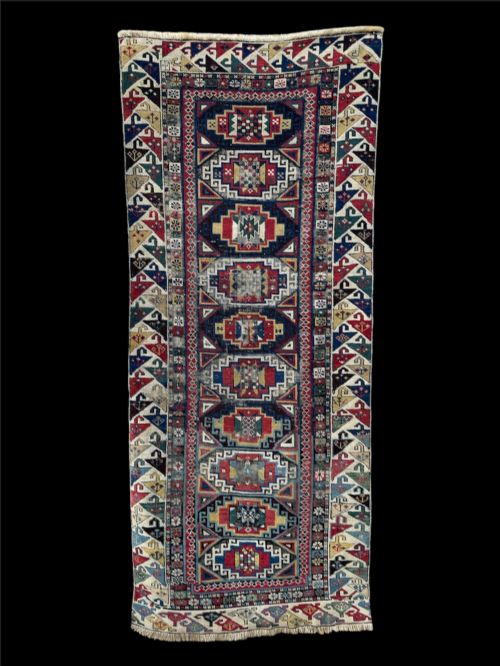
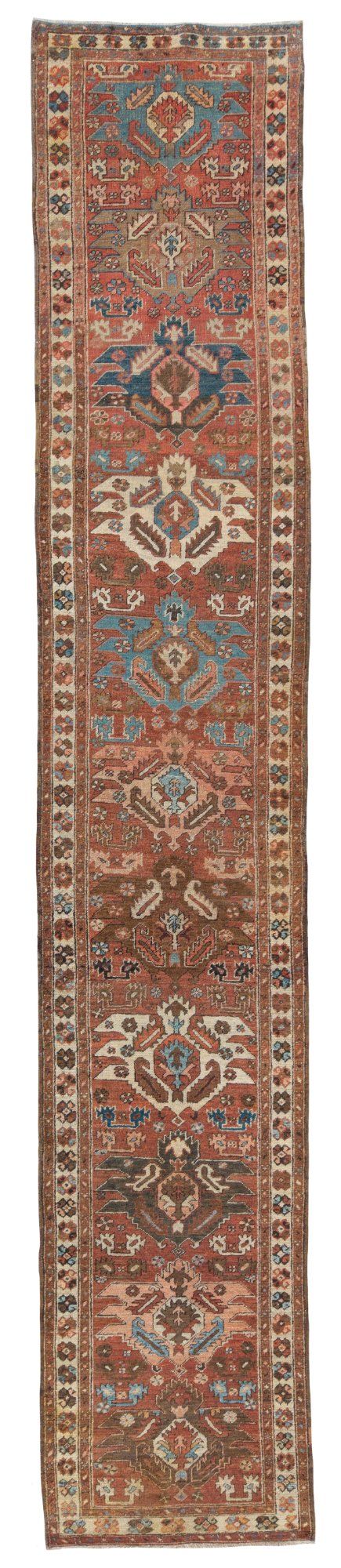
A red blue hallway runner bridges domestic utility and artistic expression, anchoring long corridors with striking linear compositions. When searching for a red blue hallway runner, buyers encounter hand-knotted village and tribal floor coverings originating from Persia, the Caucasus, and Anatolia. These pieces date predominantly from the late nineteenth century through to the early decades of the twentieth century.
The format is purposefully narrow and elongated to suit corridors, landings, and galleries where standard carpets fail to fit. Persian Heriz, Caucasian Kazak, and Kurdish weaves dominate the selection, bringing distinct regional motifs and time-tested durability to domestic spaces. Each red blue hallway runner functions as a practical floor covering while displaying the signature palette of indigo blues and madder reds characteristic of traditional dyeing.
Materials and construction
The foundation and pile rely on natural fibres, utilising wool and hand-spun wool knotted onto cotton or wool warps. Weavers employed natural dyes derived from plants and minerals, creating rich variations in tone that develop a soft patina over decades of foot traffic.
Village workshops and nomadic weavers knotted these long formats by hand, using sturdy wool structures designed to endure heavy daily use in busy corridors. The combination of dense wool pile and robust vegetable dyes ensures the structural integrity of each piece remains intact across generations.
Listings feature traditional styles including Persian Heriz, Caucasian Tribal, and Anatolian motifs spanning from 1860 to the 1930s.
Factors determining quality
Quality rests upon the fineness of the knot density and the precision of the tribal geometry executed across the narrow format. Pieces featuring deeply saturated natural dyes and crisp, balanced designs occupy the higher end of the range, showing superior wool quality and careful finishing along the side cords.
The handled handle and drape of the textile indicate the skill of the weaver and the preparation of the wool. Tighter knotting and well-proportioned medallion or lattice layouts distinguish exceptional tribal weaving from more standard commercial production.
The Red Blue Hallway Runner Glossary
- Runner
- A long, narrow carpet format specifically designed for hallways, corridors, and staircases. These pieces measure significantly longer than they are wide to fit restricted spatial dimensions.
- Natural Dyes
- Colourants extracted from plants, insects, and minerals rather than synthetic chemical sources. These dyes age gracefully and develop subtle tonal variations known as abrash.
- Warp
- The vertical foundation threads stretched lengthwise on the loom before knotting begins. The fringe of the rug typically forms from the exposed ends of these threads.
- Weft
- The horizontal threads passed between the rows of knots to bind the structure together. Tightly beaten wefts contribute to the firmness and durability of the finished rug.
- Abrash
- Variations in colour shade within a single field of the rug, caused by changes in dye batches or hand-spun wool lots. Collectors value this feature as evidence of traditional crafting methods.
Red Blue Hallway Runner: Frequently Asked Questions
How do I choose the right size runner?
Measure your hallway carefully, leaving a border of exposed floorboards or tiles around the perimeter of the rug. Ensure doors can swing freely over the pile without catching the edges.
Account for sufficient clearance at thresholds and stair approaches so the runner sits flat and secure in the space.
Are these runners suitable for heavy traffic?
Traditional wool runners woven with dense piles are naturally resilient and designed to withstand regular foot traffic in domestic corridors. The lanolin present in natural wool helps repel dirt and cushions against wear.
Using a quality underlay beneath the runner prevents slipping and cushions the fibres against hard subfloors, extending the lifespan of the textile.
How do I clean an antique runner?
Regular gentle vacuuming without the beater bar engaged removes surface dust and grit from the wool pile. Professional specialist cleaning remains essential for deep washing to protect natural dyes and fragile foundations.
Avoid chemical spot treatments or excessive moisture, which can damage hand-spun wool and cause colour bleeding in older vegetable dyes.
What is the difference between Persian and Caucasian designs?
Persian runners often feature flowing floral motifs, curvilinear medallions, and intricate border systems developed in regional workshops. Examples include Heriz, Hamadan, and Senneh structures.
Caucasian designs favour bold geometric shapes, sharp angles, tribal symbols, and stark primary colour contrasts. Types such as Kazak, Shirvan, and Talish showcase these striking linear arrangements.