


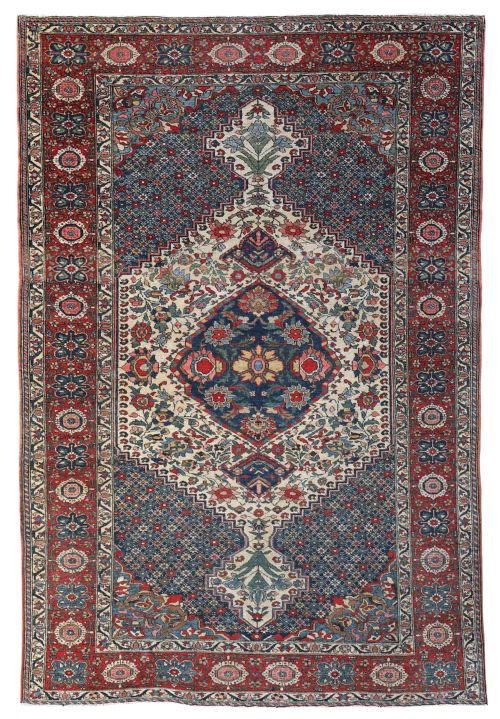
Red Bakhtiari Rug
A red bakhtiari rug brings the dense, geometric patterns and rich natural dyes of Western Persia directly into your home.
Red Bakhtiari Rug
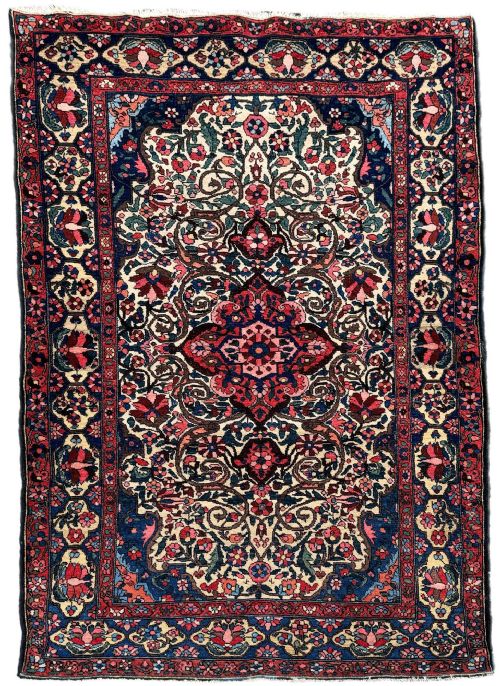
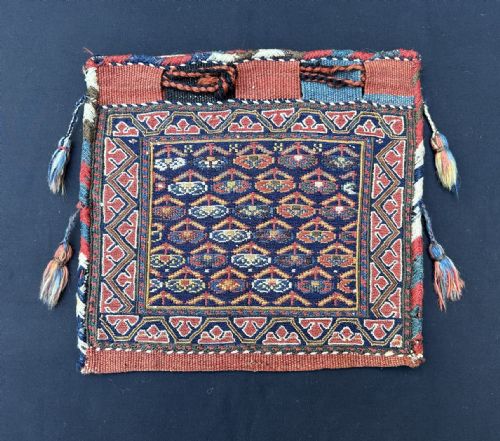
A red bakhtiari rug represents the traditional weaving output of tribal groups and village communities based in the Chahar Mahal region of Western Persia. When exploring this phrase, buyers encounter various formats ranging from large carpets and runners to smaller tribal items like saddle bags, bread sofreh, and tacheh sacks.
The material record spans the late nineteenth century through to the 1930s, encompassing pieces attributed to Lori-Bakhtiari and Kurdish tribes. These floor coverings and flat weaves reflect regional Persian styles, often incorporating garden motifs and floral medallions into their layouts.
Materials and construction
Weavers constructed these textiles primarily using wool, hand-spun wool, and cotton foundations, occasionally incorporating goat hair for durability along the selvedges. The application of natural dyes yielded the characteristic deep red tones and contrasting hues seen across the surviving pieces.
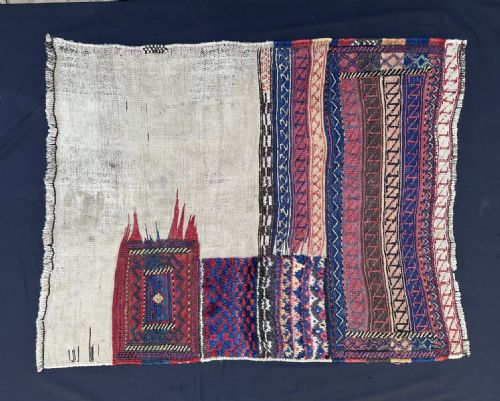
Production methods included knotted pile carpets as well as flat weaves such as jajim and kilim structures. These techniques allowed nomadic and village makers to produce both heavy-duty floor coverings and functional household textiles.
Listings span production dates from the nineteenth century up to the 1930s, executed in wool, cotton, and hand-spun wool.
Assessing quality and character
Quality in these textiles depends heavily on the fineness of the weave and the complexity of the design, such as intricate garden compartment layouts versus simpler field patterns. The depth and saturation of the natural dyes also play a major role in the visual impact of the piece.
Preservation of the original wool pile, structural integrity along the edges, and the crispness of the tribal motifs distinguish superior examples from heavily worn or altered specimens.
The Red Bakhtiari Rug Glossary
- Chahar Mahal
- The high-altitude valley region in Western Persia where Bakhtiari and associated tribal weavers produced these textiles. This area is renowned for its distinctive village and nomadic rug production.
- Sofreh
- A flat-woven spread or cloth traditionally used for food preparation and serving bread. These utilitarian textiles display striking geometric compositions.
- Tacheh
- A specific type of nomadic storage bag or grain sack woven by tribes in the region. They often feature dense patterns adapted from larger carpet designs.
- Kelleh
- A long, narrow format of carpet traditionally suited for specific room dimensions in Persian domestic architecture. These runners provide substantial length while maintaining narrower widths.
- Natural Dyes
- Colourants derived from plant and mineral sources prior to the widespread adoption of synthetic alternatives. They impart the subtle variations and rich patination valued in older Persian weaving.
Red Bakhtiari Rug: Frequently Asked Questions
Where were these rugs made?
These textiles originate from the Chahar Mahal valley region and surrounding areas in Western Persia. Nomadic and village groups, including Bakhtiari and Kurdish tribes, produced them within their local communities.
Production took place across various settlements and encampments in the nineteenth and early twentieth centuries, utilising locally sourced materials and traditional regional designs.
How do I date an old rug?
Dating relies on stylistic clues, structural analysis, and material characteristics such as hand-spun wool and natural dye palettes. Pieces from the nineteenth century often exhibit distinct wear patterns and specific tribal motifs that evolved over subsequent decades.
Comparing construction techniques with dated examples helps place a textile within periods like the 1900s or 1920s. Experts also evaluate the evolution of design patterns from geometric tribal layouts towards more formal garden carpet formats.
What is a garden design?
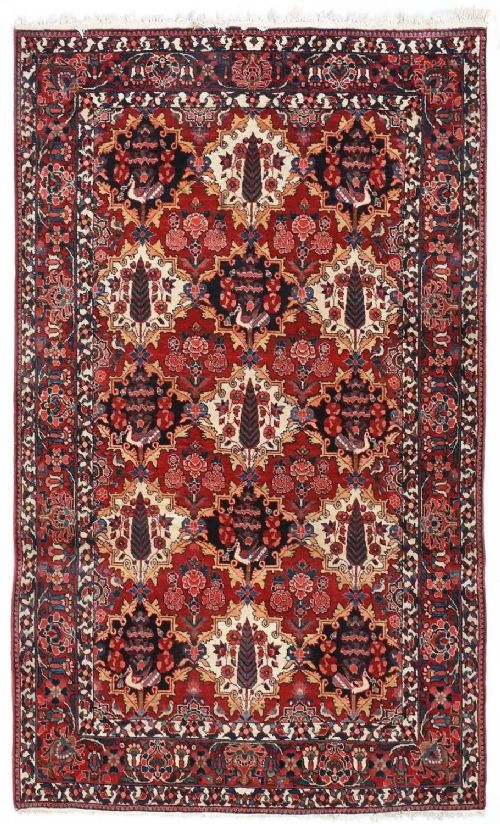
The garden design refers to a structured compartment layout, often called panel or patch format, dividing the rug field into geometric squares or rectangles. Each compartment typically contains floral motifs, trees, or stylized shrubbery representing walled Persian paradise gardens.
This classic layout demonstrates the sophisticated design repertoire of village weavers in the Chahar Mahal region. It remains one of the most recognizable and sought-after patterns in Bakhtiari carpet weaving.
Are these rugs suitable for heavy use?
Constructed with sturdy wool pile and robust cotton or wool foundations, these textiles were built for daily domestic life. Many examples survived decades of foot traffic because of the inherent durability of hand-spun materials and tight knotting.
Placing an appropriate underlay beneath the carpet helps protect the historic foundation fibres from excessive friction. Regular gentle vacuuming and rotation ensure the wool pile remains well-preserved over time.