
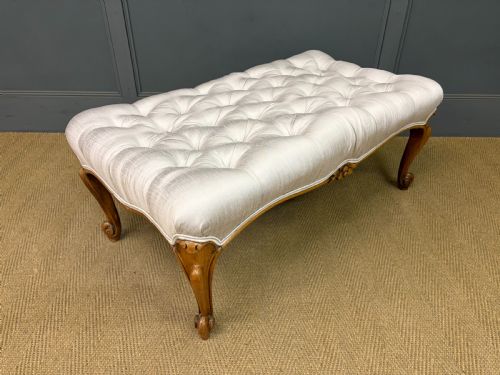
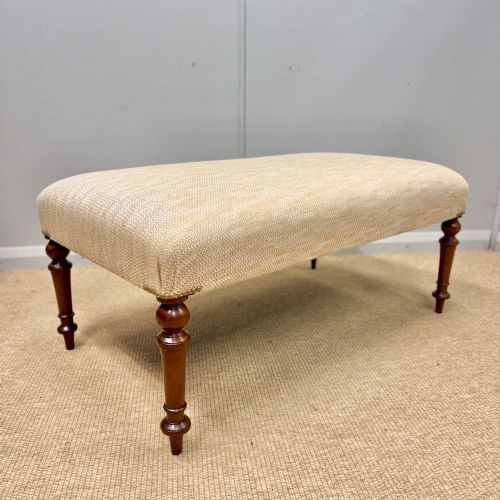
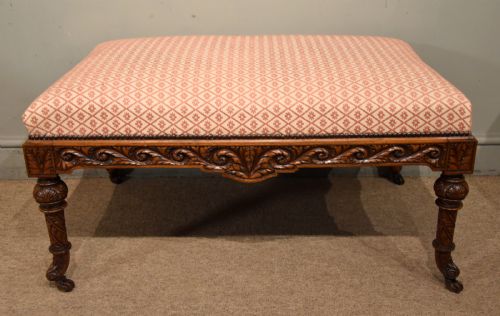
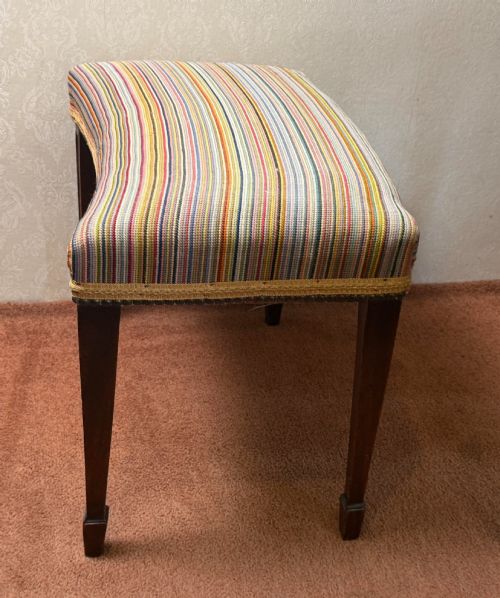



Rectangular Upholstered Footstool
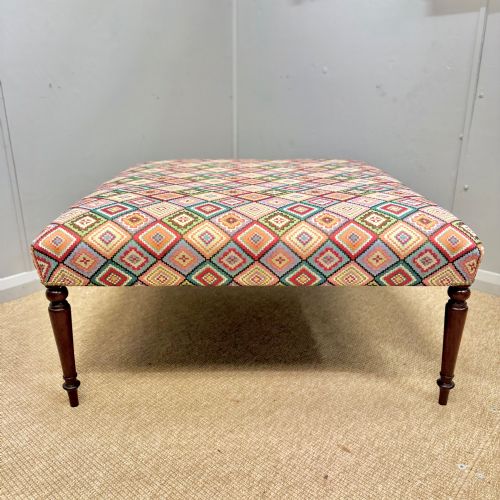
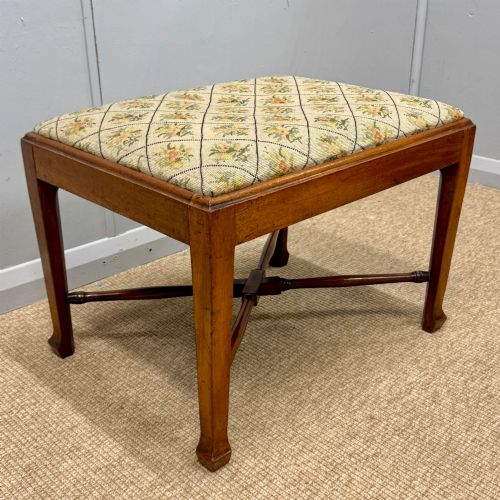
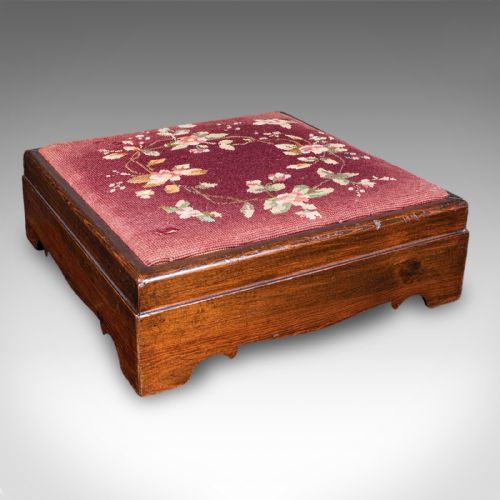
These rectangular upholstered footstool examples combine solid timber frames with traditional textile tops, offering genuine period character for a sitting room.

Rectangular Upholstered Footstool
A rectangular upholstered footstool serves as a low seat or rest, appearing frequently across Victorian, Edwardian, and eighteenth-century periods. These pieces take various forms, including dressing stools, fireside seats, and larger ottomans designed for domestic comfort.
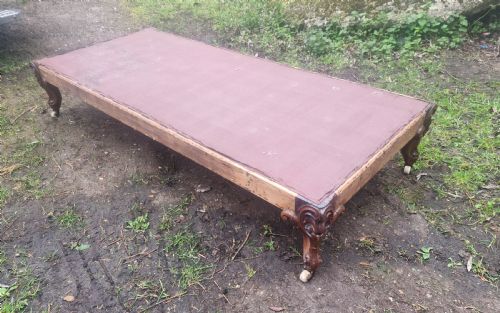
Most examples found here utilise sturdy wooden frames made from mahogany, rosewood, walnut, or oak, topped with padded surfaces. Buyers will encounter both modest domestic items and larger country house pieces resting on castors or carved legs.
How they were made
Cabinet makers constructed the foundational frames using hardwoods such as mahogany, walnut, and oak, often incorporating carved details, cross stretchers, or square tapering legs. Joinery methods relied on traditional mortise and tenon techniques to ensure structural stability under daily use.
The upper sections combined timber bases with webbing, stuffing, and various textile coverings including tapestry, damask, leather, and woven rattan. Brass castors frequently appeared on nineteenth-century examples to facilitate movement across carpeted rooms.
Several heavy nineteenth-century stools roll quietly into position on their original brass castors.
What varies in quality
The degree of hand-carving on the wooden frame distinguishes standard workshop production from finer pieces influenced by specific historical styles. Crisp detailing on rosewood or mahogany legs indicates superior craftsmanship.
Proportion and scale also define the work, ranging from compact dressing stools to substantial salon ottomans. The choice of primary timber and the structural integration of stretchers or brass hardware affect the overall integrity of the piece.
Howard and Sons
The Rectangular Upholstered Footstool Glossary
- Cross stretcher
- An intersecting set of wooden bars running between the legs of a stool to provide extra rigidity. They are often shaped or carved in period pieces.
- Giltwood
- Timber that has been coated with a thin layer of gold leaf. This finish appears on decorative nineteenth-century salon pieces.
- Lift-out seat
- A removable drop-in seat frame that sits inside the main wooden structure. This design allowed for easier reupholstering without dismantling the base.
- Damask
- A reversible figured fabric traditionally woven on a jacquard loom. It provides a formal patterned textile surface for seating.
Rectangular Upholstered Footstool: Frequently Asked Questions
What periods do these footstools come from?
The selection spans from the eighteenth century through the Victorian era and into the early twentieth century. Many pieces date from the nineteenth century, reflecting various revival styles.
Craftsmen of each era utilised prevailing timbers like mahogany and walnut while adapting traditional seating forms for domestic interiors.
How were these stools used originally?
These pieces served multiple functions in period homes, acting as fireside footrests, dressing table seats, and low centre stools. Larger examples functioned as ottomans in country house settings.
Their sturdy timber construction allowed them to support regular seating as well as resting tired feet after long days.
Are the upholstery coverings original?
Upholstery on antique stools frequently dates from later restorations rather than the original date of manufacture. Many pieces are listed with recent coverings or specifically noted as ready for reupholstering.
Original textiles survive only rarely, meaning buyers often select pieces based on the merit of the wooden frame.
What woods are used in the frames?
Makers relied on durable hardwoods including mahogany, rosewood, walnut, oak, and pitch pine. The choice of timber often corresponds to the date and stylistic influence of the piece.
Dark hardwoods were frequently polished or carved to match other principal furniture in Victorian and Georgian rooms.