


Antique Fireside Footrest
An antique fireside footrest provides low, comfortable support by the hearth, combining sturdy timber frames with traditional needlepoint, textile, or leather upholstery.
Antique Fireside Footrest
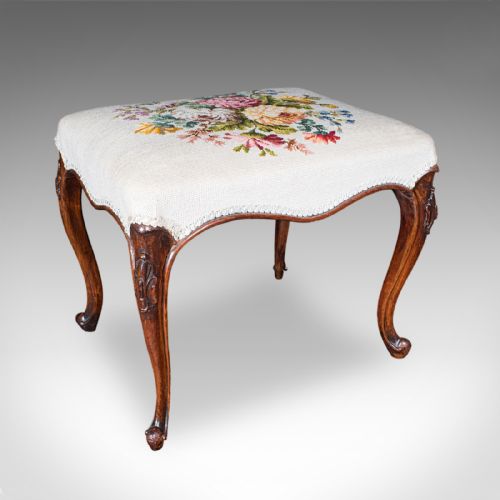
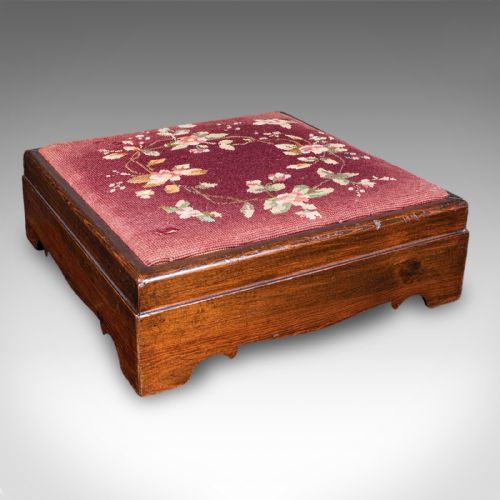
When you search for an antique fireside footrest, you encounter low stools designed specifically for warmth and comfort near a fireplace. These pieces appear most frequently in Victorian and Edwardian forms, utilising solid timbers like mahogany, walnut, oak, and pitch pine.
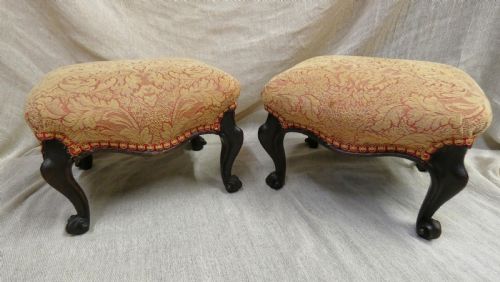
The assortment on this page spans from early Victorian needlepoint examples to Edwardian leather-topped designs and Georgian carriage stools. Sturdy wooden frames support seats upholstered in wool, tapestry, fabric, and tweed, reflecting the domestic habits of past centuries.
How they were made
Craftsmen built the structural frames of these footstools using traditional cabinet-making timbers such as mahogany, walnut, and oak, often shaping the wood with carved details. Joinery methods varied from joint construction to turned legs and framed supports.
Upholstery formed the upper section, utilising durable textiles including wool, needlepoint tapestry, tweed, and leather stretched over padded foundations. These materials provided both resilience for daily use and decorative warmth suited to a sitting room.
Some nineteenth-century occupants kept their feet warm by resting them on a stool upholstered in hand-stitched wool needlepoint.
What varies in quality
Quality in these footrests rests primarily on the integrity of the timber frame and the skill evident in any carved or turned woodwork. Finer pieces display carefully selected walnut or mahogany, tight joinery, and well-proportioned legs.
The upholstery work also distinguishes standard examples from superior ones, particularly where hand-stitched needlepoint or quality leather remains intact. Original textile coverings and harmonious proportions indicate a higher grade of domestic furnishing.
The Antique Fireside Footrest Glossary
- Needlepoint
- A form of canvas work embroidery used for upholstery. It provides a durable and decorative surface featuring traditional patterns.
- Joint Stool
- A sturdy wooden stool constructed with mortise and tenon joints. This form provides a solid foundation often associated with earlier periods.
- Carved Frame
- A wooden support decorated with sculpted details such as scrolling foliage or moulding. It indicates greater labour in the manufacture of the piece.
- Carriage Stool
- A compact form of footrest originally designed for travel or small spaces. These pieces share the low profile suited to fireside use.
Antique Fireside Footrest: Frequently Asked Questions
What is an antique fireside footrest?
An antique fireside footrest is a low stool designed to elevate the feet while sitting near a fireplace. These pieces combine wooden frames with upholstered tops.
They reflect the domestic styles of periods ranging from the eighteenth century through the Edwardian era, utilising materials like mahogany, walnut, and needlepoint.
How were these stools used?
These stools were placed beside hearths to keep feet away from cold draughts flowing across floorboards. They served as functional accessories in everyday sitting rooms.
Their compact size allowed them to be easily moved around the fireside as needed for comfort.
How do I distinguish Victorian from Edwardian pieces?
Victorian footrests often feature denser timbers like walnut and mahogany, frequently paired with needlepoint or heavy fabric upholstery. Carved frames and turned legs are common.
Edwardian examples tend to utilise lighter woods such as pitch pine or oak, sometimes featuring simpler lines or leather upholstery reflecting later domestic tastes.
Are these footrests suitable for daily use?
These stools remain sturdy enough for gentle daily use when the wooden frame and upholstery are stable. Their traditional construction has endured across generations.
Placing them by a modern fireplace continues their original domestic purpose.