



Recamier Day Bed
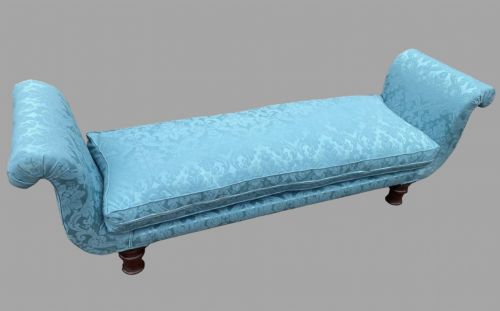
A recamier day bed brings neoclassical elegance to a room, offering a long, reclining seat designed for daytime resting with characteristic raised ends.
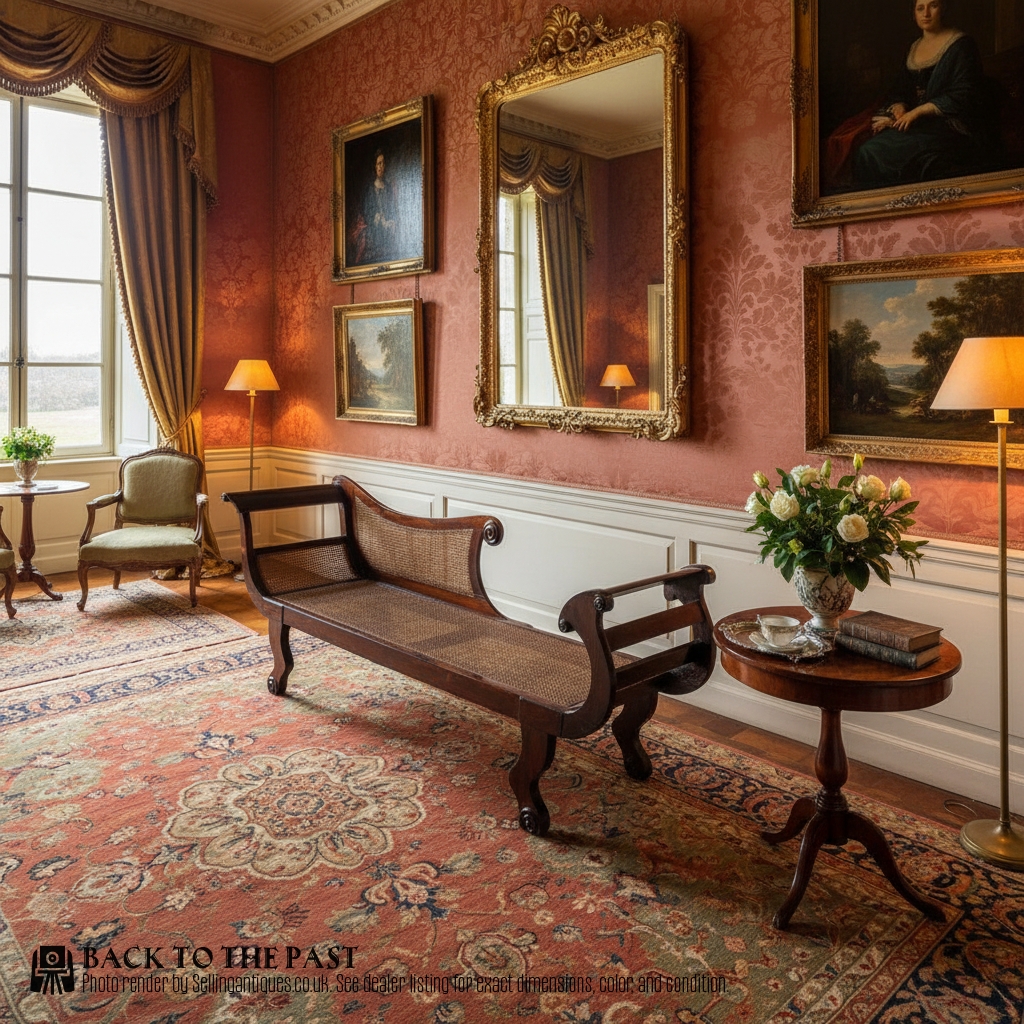
Recamier Day Bed
A recamier day bed merges the comfort of a chair with the length of a bed, primarily taking the form of a chaise longue or day bed. These pieces serve as sculptural seating arrangements intended for reclining rather than full sleeping.
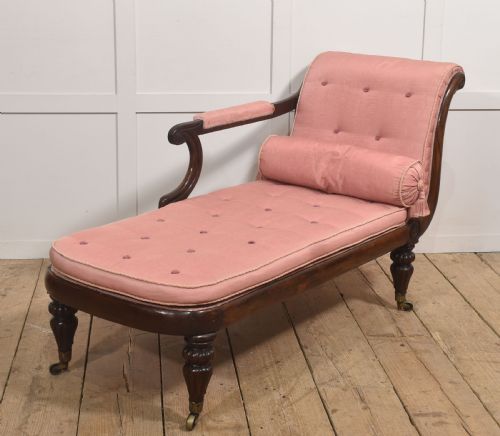
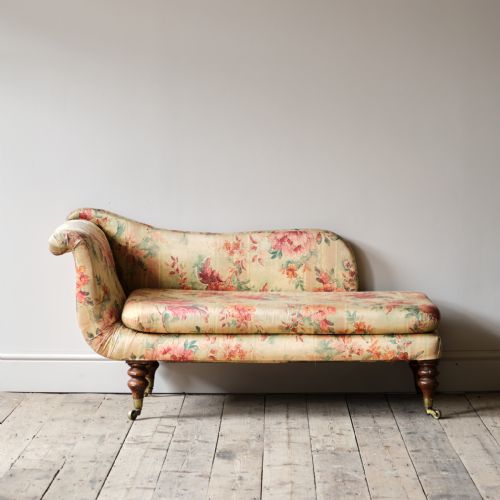
The examples gathered here span from the Regency era through to the early twentieth century, taking in French Empire, William IV, and Victorian interpretations. Buyers will frequently encounter mahogany and rosewood timber frames, alongside ebonised wood and painted Scandinavian finishes.
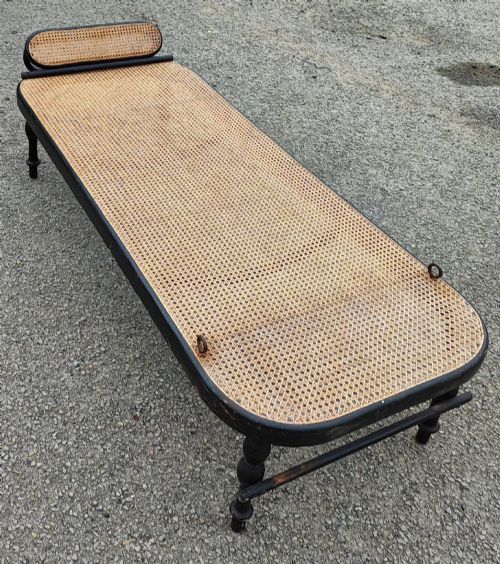
Makers and workshops of the nineteenth century favoured sweeping scroll ends and cane seating or upholstered cushions in velvet and plain fabric. From solid rio rosewood frames to surrealist twentieth-century iterations, the selection reveals varied regional expressions of a classic form.
Materials and construction
Frames rely on dense timbers such as mahogany, rosewood, and ebonised wood to support the weight and tension of the long seat structure. Joinery techniques of the period ensure the curved ends and scroll backs remain stable under daily use.
Seating surfaces utilise traditional cane work or sprung upholstery covered in fabric or velvet. Painted finishes appear on specific Scandinavian revival pieces, applied over timber frames to alter the visual weight of the furniture.
Early nineteenth-century makers occasionally built these beds with only one raised end, assuming nobility would only recline facing left.
Judging quality in a recamier day bed
Quality rests in the sculptural integrity of the timber frame and the crispness of any carved detailing along the rails and scroll ends. Richness of grain in woods like rio rosewood or mahogany elevates the presence of the piece.
The condition and execution of secondary materials, such as hand-woven cane seating or robust upholstery foundations, distinguish standard workshop output from exceptional cabinet work.
Miles & Edwards·Willian Trotter
The Recamier Day Bed Glossary
- Chaise Longue
- A long reclining chair that functions as a seat and a day bed, featuring a backrest and often one or two raised ends.
- Lit Bateau
- A French boat bed style with symmetrically or asymmetrically raised head and footboards, often adapted for daytime lounging.
- Ebonised Wood
- Timber treated with a dark stain or finish to imitate expensive ebony, popular during the nineteenth century.
- Caning
- Woven rattan material used to create resilient, breathable seating panels within a wooden frame.
- Empire Revival
- A nineteenth or early twentieth-century design movement drawing directly from the neoclassical motifs of the French Empire period.
Recamier Day Bed: Frequently Asked Questions
Where should I place a recamier day bed?
A recamier day bed looks best floating in a spacious room or positioned against a long wall where its silhouette can be fully appreciated. Because these pieces are finished on all sides or feature distinct directional ends, they dictate the flow of a seating layout.
Ensure there is enough walking space around the frame to accommodate the extended length. They suit drawing rooms, studies, or large bedrooms intended for quiet reading and resting.
How do I care for wooden frames and cane?
Dust timber frames regularly with a dry cloth and feed the polished wood with a traditional wax periodically to maintain the finish. Avoid placing the furniture near direct heat sources that might dry out the timber.
Cane seating requires gentle cleaning with a slightly damp cloth to keep the natural fibres supple. Avoid pressing heavy or sharp objects directly onto woven cane panels to prevent snapping.
Can I use a day bed for sleeping overnight?
These pieces are built primarily for daytime lounging and reclining rather than continuous night-time sleeping. The narrow proportions and decorative ends restrict standard mattress placement.
While occasional resting is entirely appropriate, relying on them as a primary bed may cause excessive wear to the antique upholstery foundations or wooden side rails.
How do I identify a Regency day bed?
Regency day beds typically feature classical neoclassical influences, rich mahogany or rosewood timbers, and scroll-carved ends. The lines lean toward architectural symmetry and restrained ornamentation.
Look for robust joinery, saber legs, and period-appropriate wood patination that distinguishes early nineteenth-century production from later revival pieces.