


Scrolled Rosewood Daybed
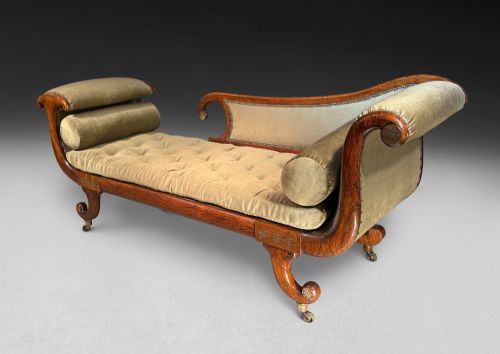
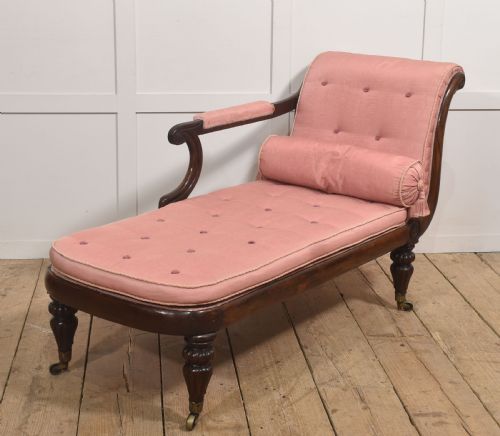
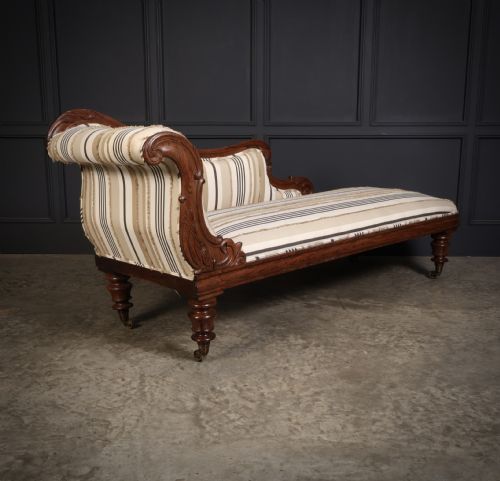
These scrolled rosewood daybed examples offer sweeping classical lines and rich timber tones, making them striking centrepieces for a traditional interior.
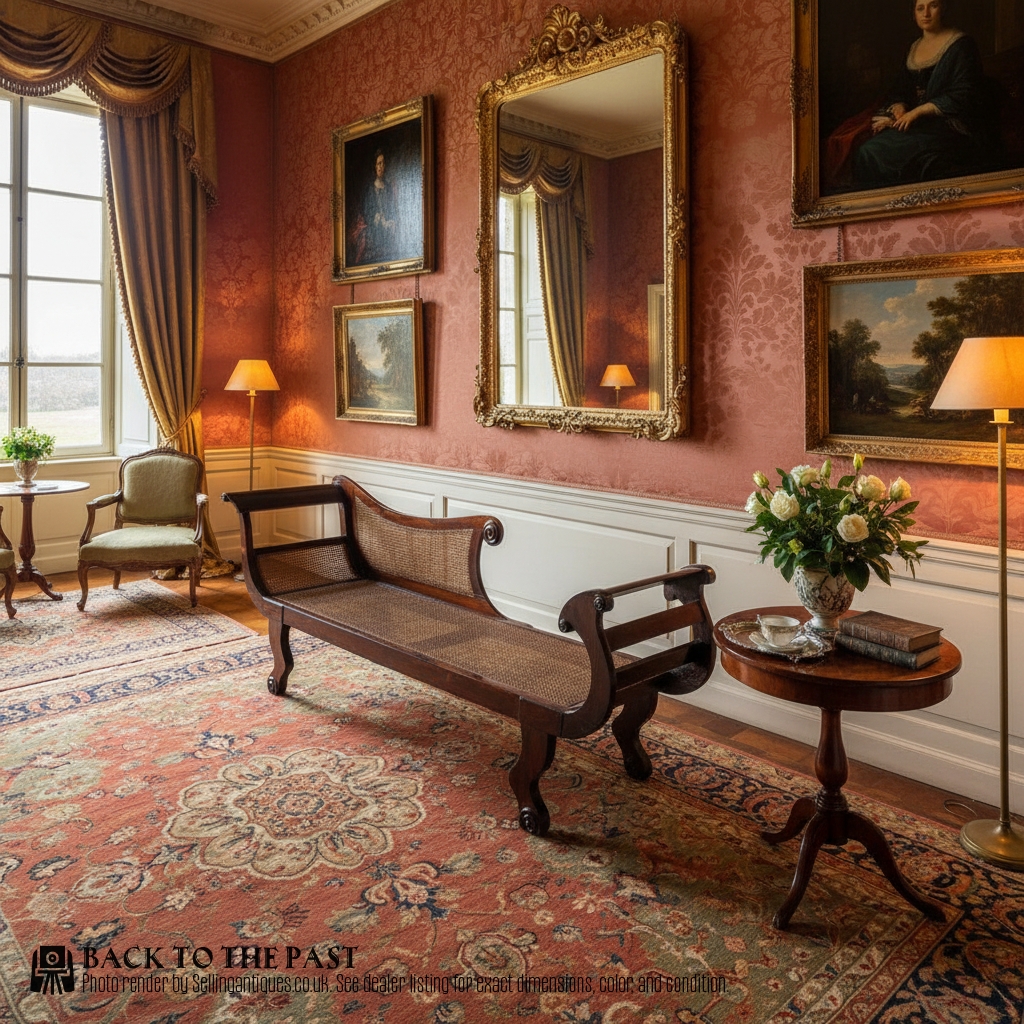
Scrolled Rosewood Daybed
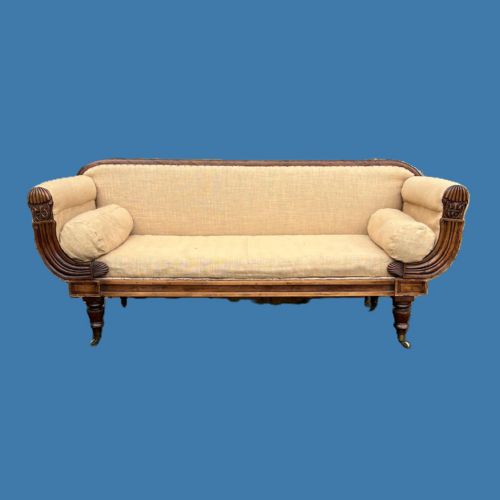
A scrolled rosewood daybed brings together nineteenth-century lounging forms, with pieces spanning Regency, William IV, George IV, and Victorian periods. Buyers investigating a scrolled rosewood daybed most frequently encounter nineteenth-century chaise longues and sofas shaped with characteristic scroll ends.
The material vocabulary ranges from solid rosewood and simulated rosewood to huali wood on Chinese Qing Dynasty kang tables, alongside related Anglo-Indian carved benches. These objects serve primarily as daybeds, chaise longues, and scroll-back settees designed for reclining in formal rooms.
How they were made
Cabinetmakers worked dense timber, utilising both solid rosewood and simulated grain effects on alternative hardwoods to achieve rich dark surfaces. Brass inlay and detailed hand-carving frequently ornamented the frame structures, particularly around the sweeping scroll ends.
Upholstery varied from traditional fabric and velvet coverings to woven cane seating, supported by hardwood frames. Brass castors and mounts often finished the feet of Regency and Victorian examples to aid movement.
Opium tables meet British daybeds on this page, proving that every culture independently decided to put scrolls on things you lie down on.
What varies in quality
The refinement of the carving on the scroll terminals dictates much of the visual distinction across these pieces. Crisp, deep relief work on nineteenth-century examples separates superior cabinetmaking from plainer execution.
The choice of primary timber also sets pieces apart, with solid Rio rosewood and intricate brass inlay commanding greater presence than simulated alternatives, while original cane or period upholstery integrity influences historical authenticity.
The Scrolled Rosewood Daybed Glossary
- Regency
- A British design period spanning the early nineteenth century defined by classical restraint and Grecian influence. Pieces from this era often feature bold scrolled forms and brass details.
- William IV
- A stylistic phase bridging late Regency and early Victorian periods, characterised by heavier proportions and robust scrollwork. Furniture makers embraced rich rosewood veneers during these decades.
- Simulated Rosewood
- A painted or stained finish applied to a less costly hardwood to imitate the distinctive grain and deep colour of true rosewood. This technique was common in Regency workshops.
- Kang Table
- A low Chinese platform table used for sitting or resting, often featuring scroll ends. Qing Dynasty examples utilise dense Asian hardwoods such as huali.
Scrolled Rosewood Daybed: Frequently Asked Questions
What is a scrolled rosewood daybed used for?
These pieces functioned historically as formal reclining furniture in drawing rooms and parlours, allowing occupants to rest in a half-sitting position during the day.
Modern interiors utilise them as statement seating in hallways, studies, or living spaces where low profiles and sweeping ends create a strong visual focus.
How do I identify a Regency daybed?
Regency daybeds typically display clean classical lines inspired by ancient Greek and Roman furniture, often incorporating bold scroll ends and sabre legs.
Cabinetmakers of this period frequently added brass inlay or simulated rosewood finishes to achieve an opulent appearance without using solid exotic timber.
What is the difference between solid and simulated rosewood?
Solid rosewood furniture utilises the natural hardwood throughout the construction, displaying deep grain patterns and substantial weight inherent to the timber.
Simulated rosewood involves applying paint, stain, or graining techniques to a secondary hardwood substrate to mimic the appearance of the expensive imported material.
How do I care for rosewood furniture?
Rosewood surfaces benefit from minimal interference, requiring only dusting with a soft cloth and protection from direct sunlight and extreme temperature shifts.
Ainoid polishes or harsh chemical cleaners should be avoided to preserve the original patina of nineteenth-century French polished or waxed finishes.