
Reading Chair with Castors
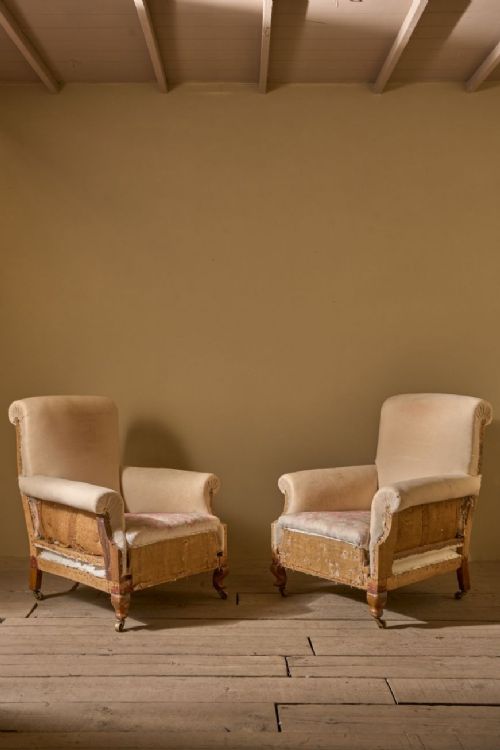
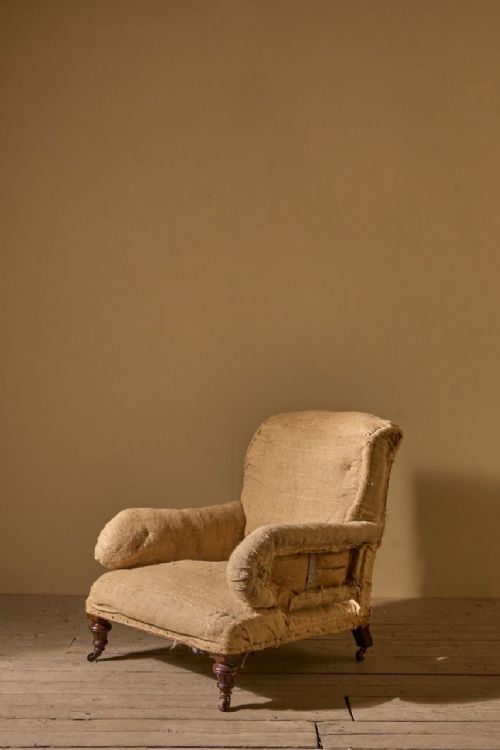
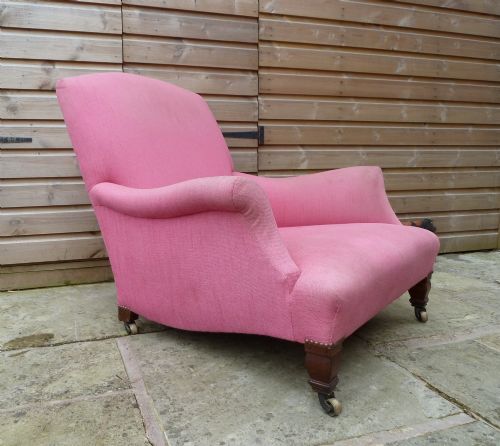
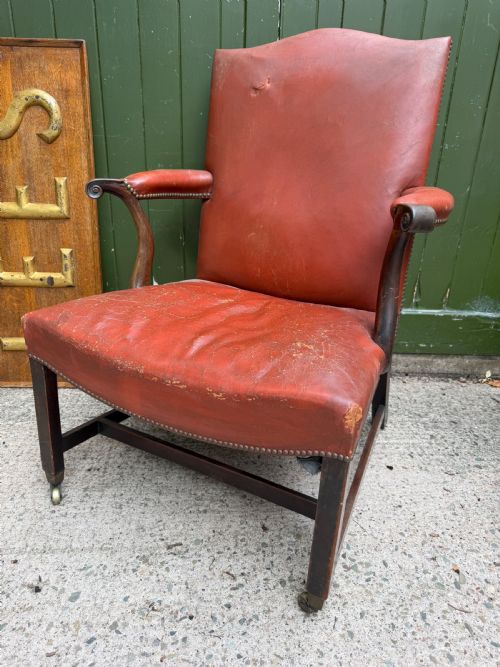
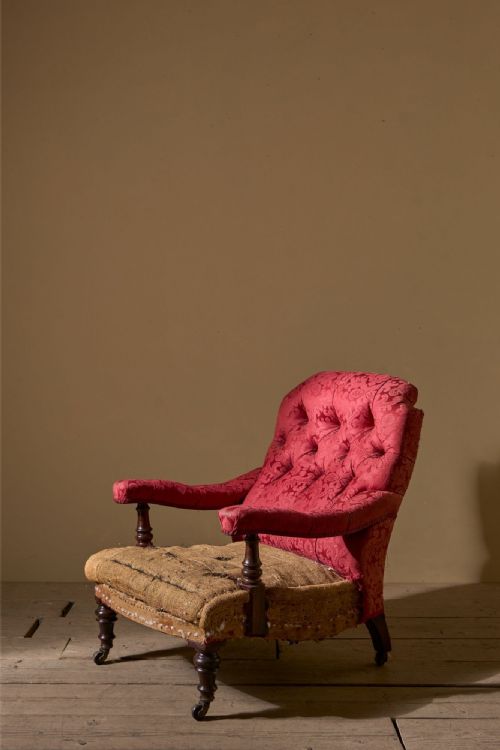
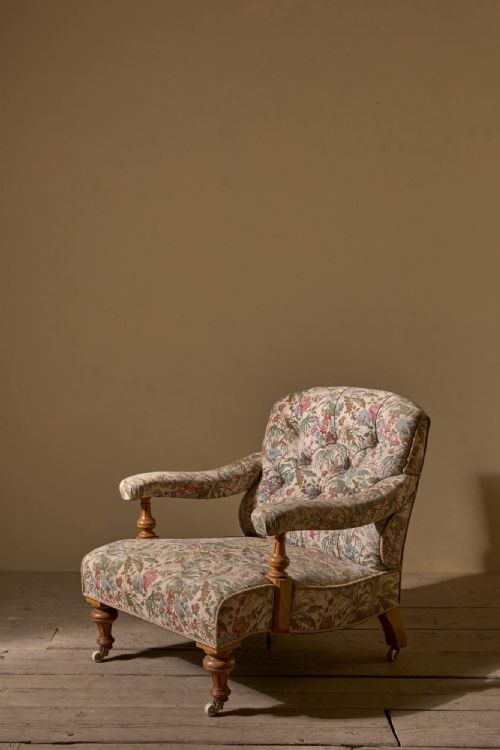
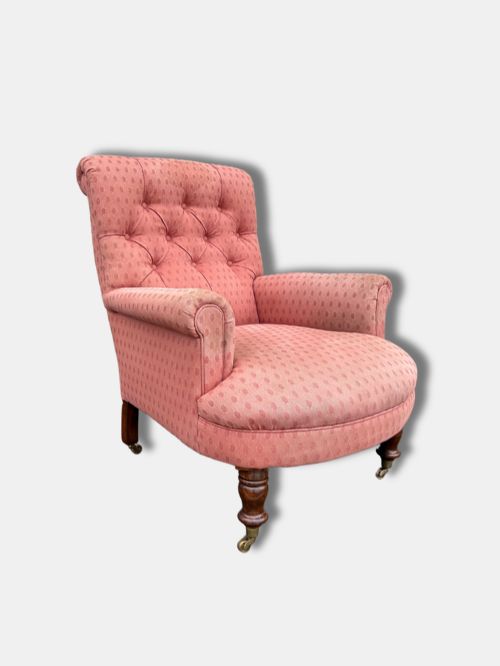
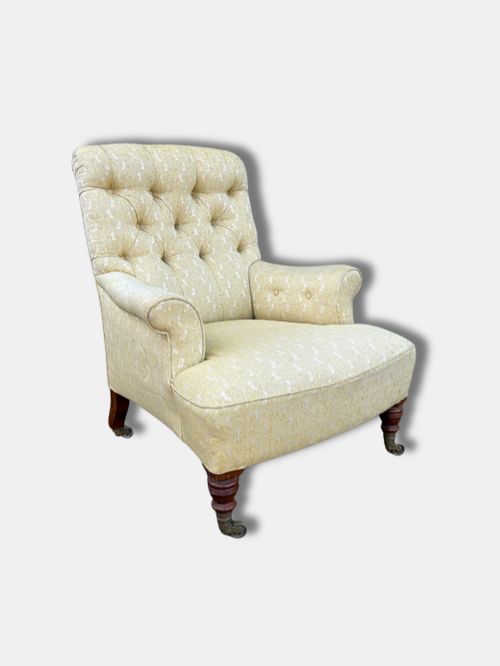
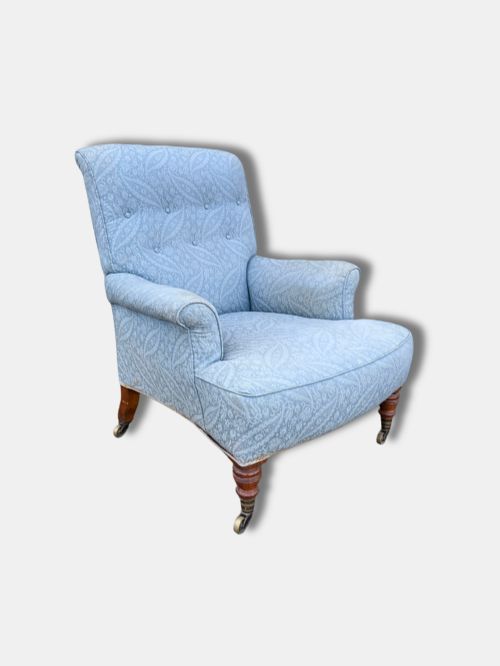
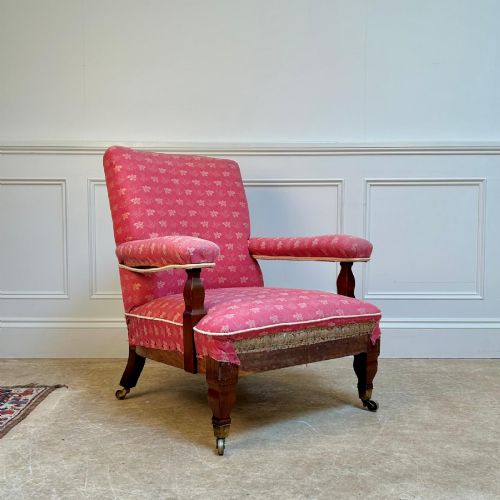
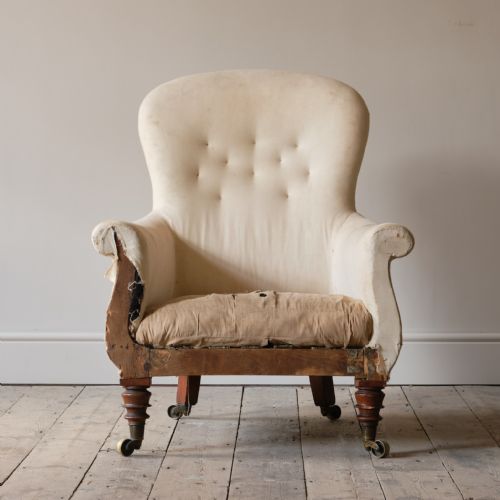
A reading chair with castors brings generous proportions and mobility to a study, combining supportive upholstery with the ease of wheel-mounted legs.
Reading Chair with Castors
A reading chair with castors is typically encountered in nineteenth-century and early twentieth-century forms, spanning Regency, Victorian, and Edwardian periods. These seating pieces serve studies, libraries, and drawing rooms where mobility and comfort are required.
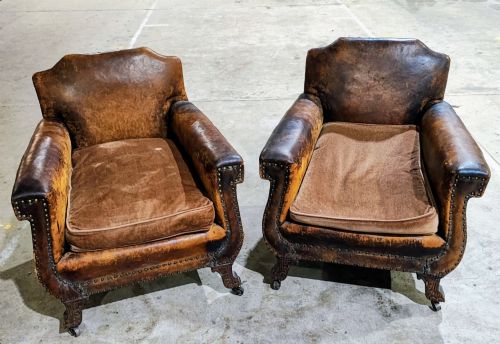
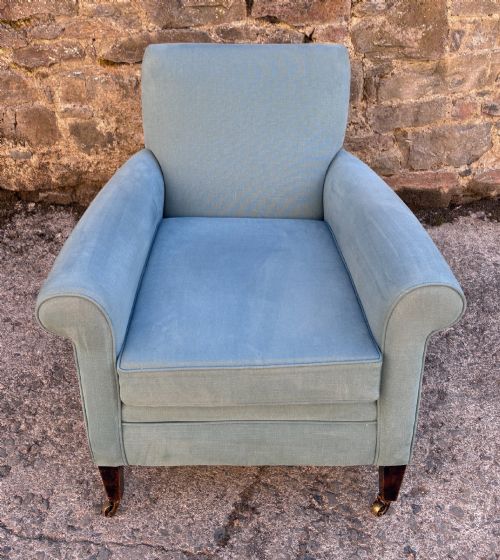
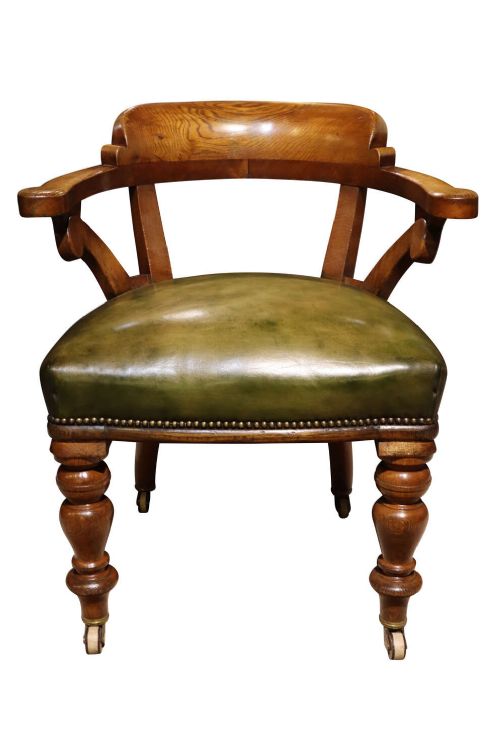
The selection includes library armchairs, bergères, club arm chairs, and deep-buttoned fireside models. Mahogany, rosewood, walnut, and oak provide the structural framework for these diverse armchair variants.
Makers such as Howard & Sons, James Shoolbred, J. Mills, and CVS appear among the nineteenth-century and Edwardian examples. Many pieces arrive upholstered in leather, velvet, cotton, or kilim fabric.
Materials and construction
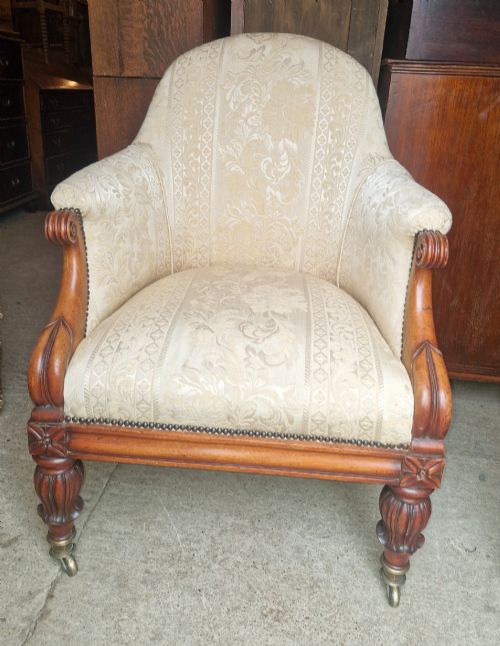
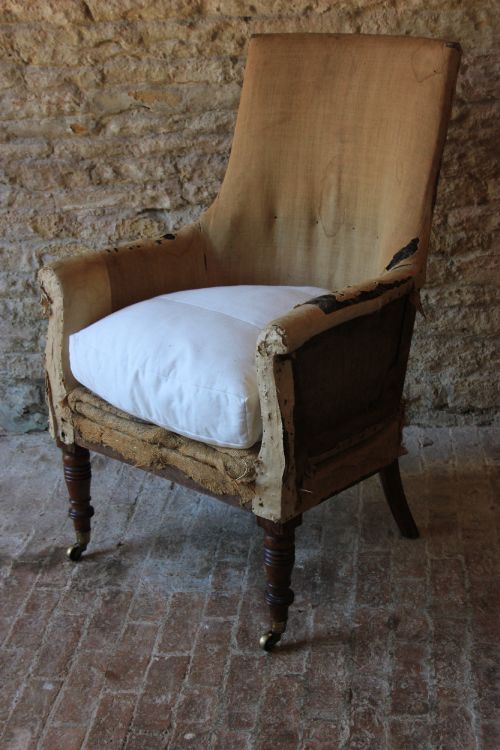
Frames are constructed from dense timbers like mahogany, walnut, rosewood, and polished oak. These hardwoods support deep buttoned backs, sprung upholstery, and cane panels in bergere models.
Brass castors are fitted to the base of the legs to allow smooth movement across carpets and wooden floors. Upholstery materials include leather, velvet, cotton, and cane work.
Listings feature timbers including mahogany, rosewood, walnut, and oak, paired with brass castors and fabrics such as velvet, leather, and kilim.
Distinguishing quality
Quality rests in the fidelity of the timber framing, the integrity of the original castors, and the depth of the proportions. Well-drawn frames with generous seating dimensions and stable joinery represent the upper tier of the range.
Maker stamps and fully stamped structural elements elevate historical value significantly. The precision of buttoning, the quality of the timber grain, and the preservation of original or sympathetic upholstery distinguish superior examples.
Howard & Sons·James Shoolbred·J. Mills·CVS
The Reading Chair with Castors Glossary
- Bergère
- A closed-arm armchair with cane or upholstered sides and back panels. These originated in France and gained popularity in Regency libraries.
- Castor
- A small wheel mounted on a swivel attached to the foot of a chair leg. It allows the seated person to reposition the heavy timber frame easily.
- Button back
- An upholstery technique where depressions are formed in the padding by stitches pulled tight and secured with buttons. This secures internal stuffing and creates a diamond pattern.
- Aesthetic movement
- A late nineteenth-century design style emphasising art for art's sake, often reflected in specific leg turning and decorative motifs on seating.
Reading Chair with Castors: Frequently Asked Questions
How do I identify a Regency reading chair?
Regency reading chairs typically feature mahogany frames, elegant turnings, and specific library chair proportions. Many incorporate cane panels or low backs designed for study use.
Look for brass castors and generous seating dimensions that mark the period's preference for functional elegance.
What is a Howard style armchair?
Howard style armchairs are deep, comfortable seats associated with late nineteenth and early twentieth-century manufacture. They often feature low arms and substantial sprung upholstery.
Original pieces by the firm carry specific stamps on the castors and frame legs.
Can I use these chairs on modern carpets?
The brass castors fitted to these reading chairs run smoothly on low-pile carpets and hardwood floors. Their original purpose was to reposition heavy timber furniture in a library without lifting.
Care should be taken on thick modern carpets to avoid straining the leg joints.
How do I care for leather upholstery?
Leather-upholstered reading chairs, such as cockfighting chairs and club arm chairs, require gentle cleaning and conditioning to maintain the material. Avoid placing them near direct heat sources.
Regular dusting and appropriate leather balms preserve the red and dark leather finishes seen on nineteenth-century examples.