


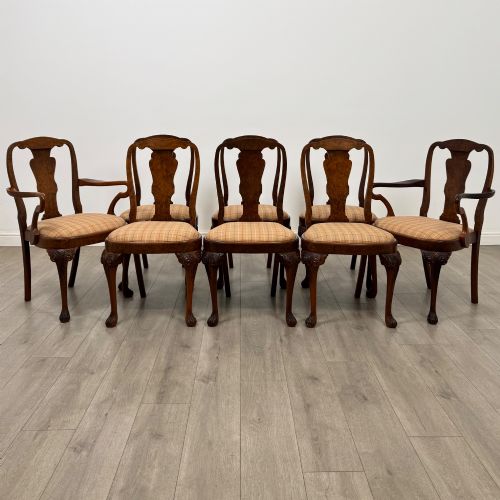
Queen Anne Style Seats
Queen Anne style seats bring together walnut frames and cabriole legs, offering substantial comfort for dining rooms and libraries.
Queen Anne Style Seats
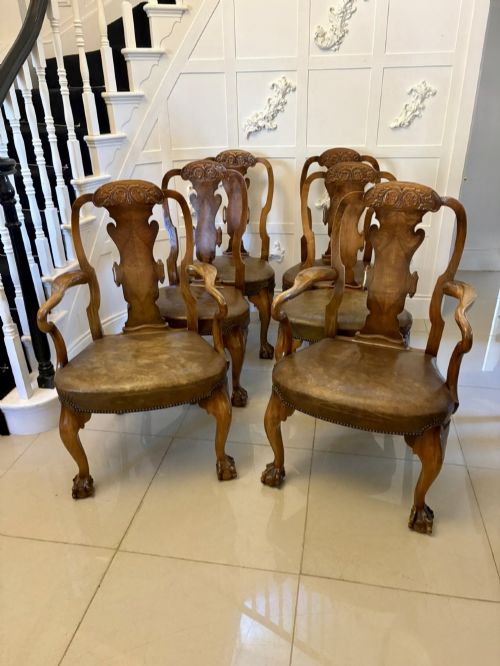
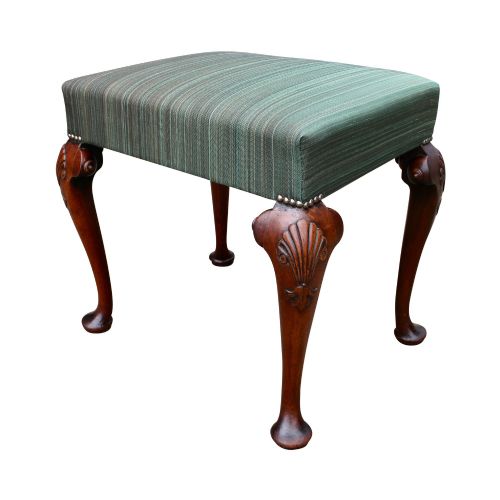
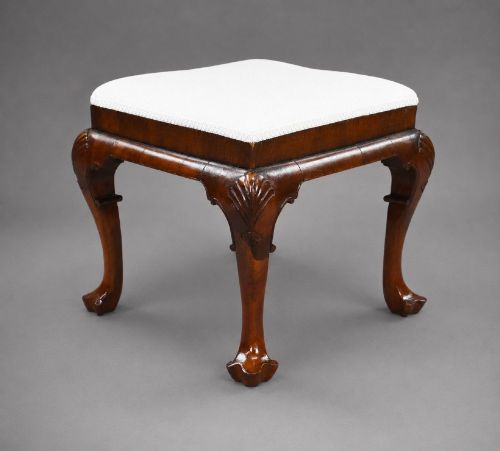
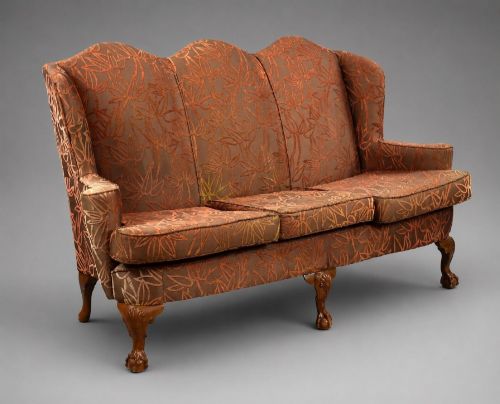
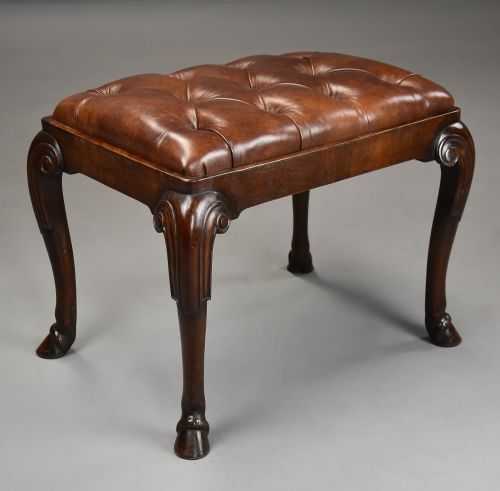
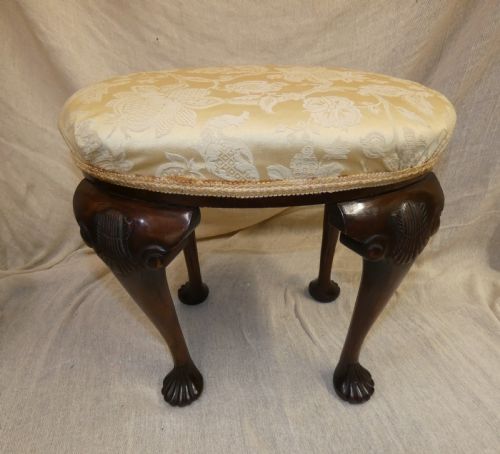
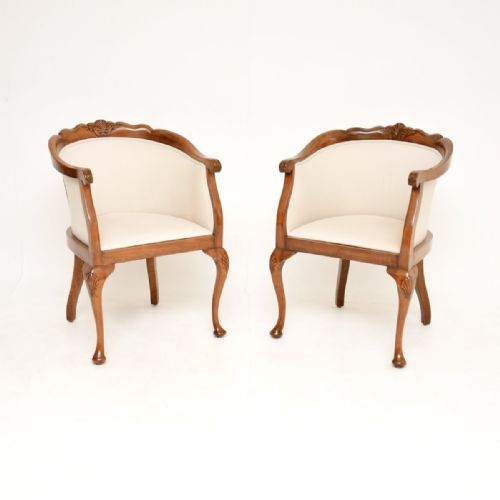
Queen Anne style seats encompass dining chairs, armchairs, stools, settees and sofas. Walnut forms the primary wood across these pieces, alongside mahogany, oak, elm and cherry.
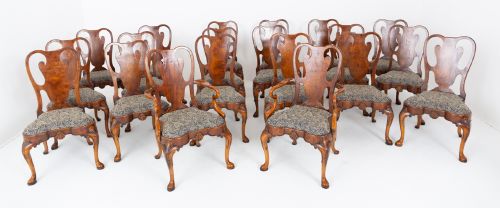
Most examples found here date from the twentieth century, including the 1920s and 1930s, alongside nineteenth century interpretations and 18th century originals. Buyers frequently encounter sets of dining chairs and individual walnut stools.
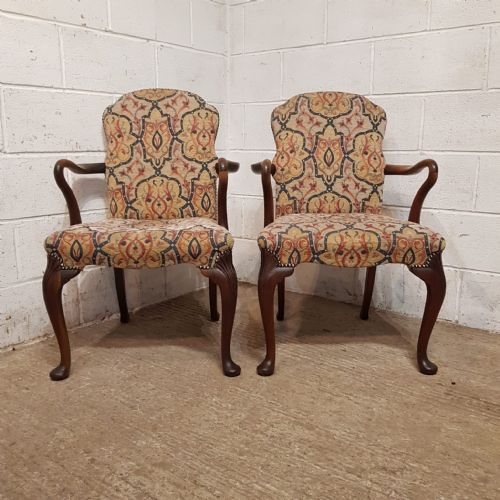
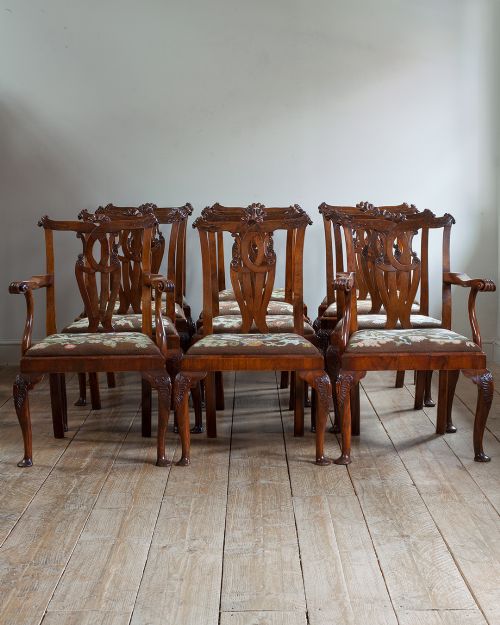
Forms range from high back dining chairs and library armchairs to duet piano stools and three seat sofas. These pieces suit period interiors and traditional reception rooms.
How they were made
Cabinetmakers constructed the frames predominantly from solid walnut and burr walnut, utilising mahogany and oak for alternative iterations. Artisans shaped the timber to form characteristic curved profiles and supportive backs.
Upholstery methods involved textile, fabric, leather, velvet and needle point coverings secured over padding. Brass details occasionally appeared on specific forms such as piano stools.
Listings feature walnut, burr walnut, mahogany, oak, elm and cherry across dining chairs, armchairs, stools and settees.
What varies in quality
The choice of wood grain sets pieces apart, with figured burr walnut commanding attention over plain timber frames. Carved ornamentation on the knees and crest rails demonstrates the hand of a skilled maker.
Integrity of construction and the standard of upholstery define the upper tier of the range. Original period examples exhibit greater age-related patination compared to later revival pieces.
Charles Tozer
The Queen Anne Style Seats Glossary
- Cabriole leg
- A furniture leg that bends outward at the knee and tapers inward to an ankle or foot. This curved form defines much of the seating associated with the period.
- Wing armchair
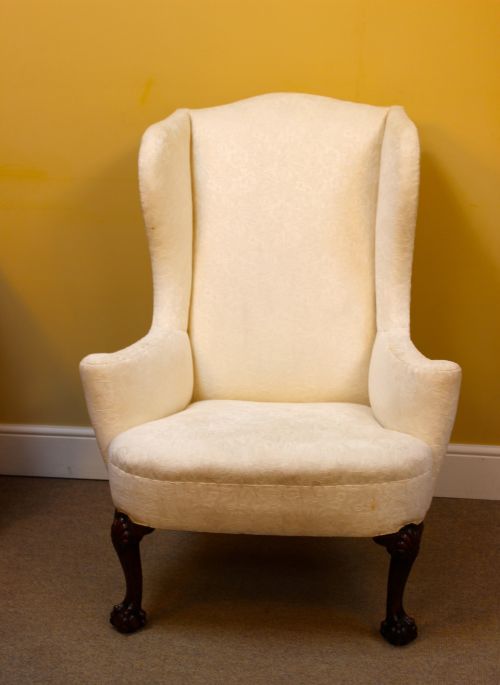
- An upholstered chair with side panels attached to the back to shield the sitter from drafts. These pieces often feature prominent walnut frames and deep padding.
- Burr walnut
- Wood taken from a walnut tree growth that produces intricate, swirling grain patterns. Cabinetmakers utilised this veneer on high quality chair backs and stool tops.
- Duet piano stool
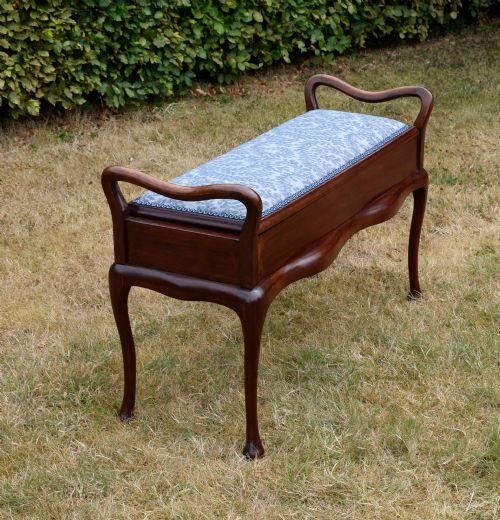
- A wide seat designed for two people playing a keyboard instrument together. These items frequently incorporate upholstered tops and mahogany or walnut structures.
- Needle point
- A type of counted thread embroidery used historically to cover stool seats and chair pads. This textile work provides a textured surface for traditional seating.
Queen Anne Style Seats: Frequently Asked Questions
How do I identify a Queen Anne style seat?
Look for the characteristic cabriole leg, spooned backrest, and walnut framing. These elements define the core aesthetic of the seating.
Revival pieces from the nineteenth and twentieth centuries often emulate these 18th century design principles closely.
Are these seats suitable for everyday dining?
Many sets of dining chairs are built for regular daily use around a dining table. Their sturdy wood frames and supportive upholstery provide practical comfort.
Sturdiness varies depending on the age and construction of the individual chair frame.
What is the difference between original and revival pieces?
Original 18th century pieces bear the patina and structural markers of genuine antique manufacture. Revival items date from later periods such as the Edwardian era or the 1920s and 1930s.
Both categories utilise walnut and traditional joinery methods to achieve the designated style.
How should I care for walnut chair frames?
Dust the wood regularly with a soft cloth and avoid placing wooden furniture near direct heat sources or strong sunlight. Proper environmental conditions prevent the walnut from drying out.
Upholstery requires gentle vacuuming or professional cleaning depending on the textile material used.