


Brown Burr Walnut Chairs
These brown burr walnut chairs bring warmth and figured grain to any room, ranging from Edwardian sets to Art Deco suites.
Brown Burr Walnut Chairs
When you search for brown burr walnut chairs, you encounter seating fashioned from a highly figured timber known for its intricate knot patterns and rich tones. The listings on this page span several eras, including the 18th century, the Victorian period, the Edwardian era, and the 19th century.
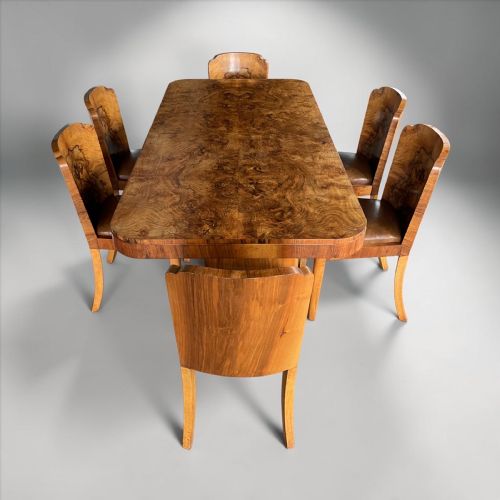
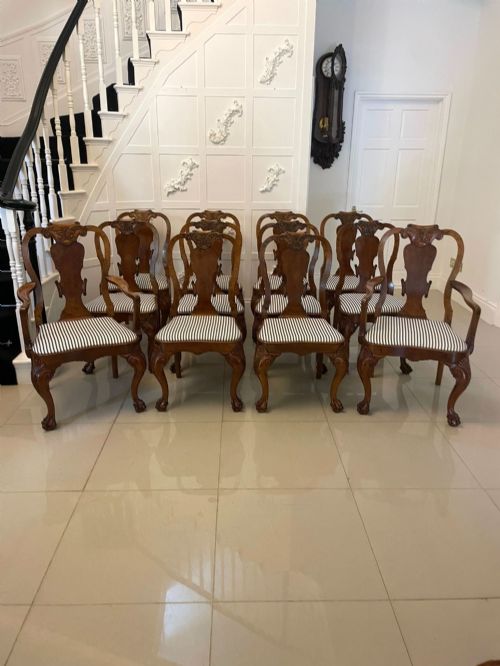
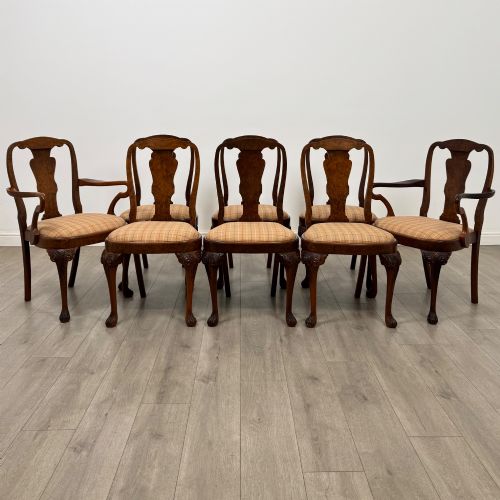
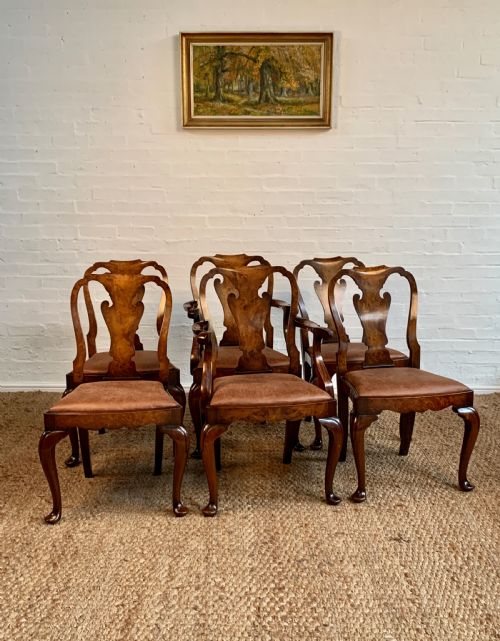
You are most likely to meet dining chairs and side chairs finished in this timber, often appearing in sets of six, eight, or twelve. The selection also includes armchairs, settees, nursery chairs, and complete lounge suites alongside dining tables.
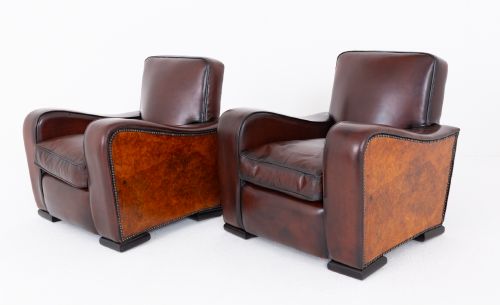
The styles range from traditional Queen Anne style and George II designs to striking Art Deco pieces. Makers drew on historic revival aesthetics as well as modernist lines to showcase the natural patterning of the walnut burl.
How they were made
Cabinet makers utilised burr walnut veneers, prized for their swirling grain patterns, applied over a supportive hardwood carcase. The timber requires careful selection and application to highlight the natural figuration across the backsplats and seats.
Upholstery forms an essential part of the construction, utilising materials such as leather, velvet, fabric, and textile upholstery. Traditional padding supports the seat bases, whether the chair is a single side chair or part of a larger dining set.
What varies in quality
The distinction between standard examples and the finest pieces often rests upon the consistency and visual impact of the burr walnut veneer across the set. Matched grain patterns running uniformly through a set of dining chairs indicate a higher tier of craftsmanship.
Carving detail and adherence to historic proportions also dictate quality, particularly in revival pieces referencing George II or Queen Anne styles. The integration of solid framing timbers with the decorative veneer determines the structural integrity of each chair.
The Brown Burr Walnut Chairs Glossary
- Burr walnut
- A veneer taken from the growth excrescence on a walnut tree, producing highly decorative, swirling grain patterns. This timber forms the primary visual feature of the chairs on this page.
- Art Deco
- A design style from the early twentieth century characterised by sleek lines, geometric forms, and stylised motifs. Pieces from this period often pair rich wood veneers with leather or smooth fabric.
- Queen Anne style
- A traditional design aesthetic featuring curved lines, cabriole legs, and spoon backs. Revival versions of this style appear frequently in twentieth-century dining sets.
- Upholstery
- The padded and covered components of a chair seat or back. Materials seen across these listings include leather, velvet, and various textile fabrics.
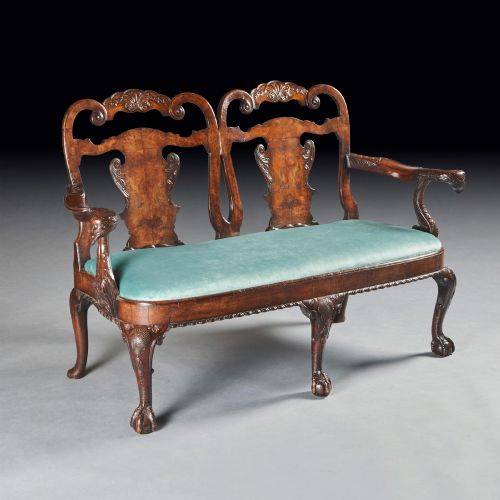
- Twin chair back sofa
- A settee featuring a backrest design that mirrors the double configuration of paired dining chairs. This form appears in nineteenth-century seating influenced by earlier furniture designs.
Brown Burr Walnut Chairs: Frequently Asked Questions
Are these chairs suitable for daily dining?
Many of the listed sets, particularly those from the Victorian and Edwardian periods, were built for daily use around a dining table. Their sturdy hardwood frames provide the necessary support for regular seating.
For older or more delicate 18th-century examples, consider reserving them for lighter use or occasional gatherings to preserve their historic condition.
What is the difference between side chairs and armchairs?
Side chairs are built without armrests, designed primarily to tuck neatly around a dining table or sit against a wall. They offer a compact footprint while showcasing the patterned burr walnut backs.
Armchairs feature supportive side rests, providing a more enclosed and comfortable seat for lounges or occasional placement in a room.
How do I identify an Art Deco piece?
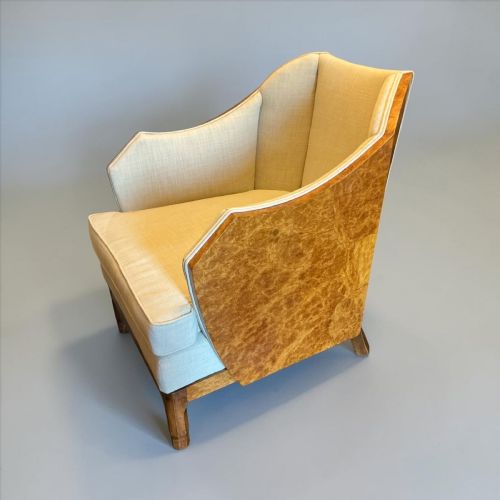
Art Deco chairs typically feature streamlined silhouettes, smooth curves, and bold geometric forms that break away from traditional revival styles. They often incorporate smooth leather or distinct textured fabrics.
Look for symmetrical club chair designs or matching suite configurations that emphasise modern luxury rather than historic ornamentation.