


Queen Anne Style Bookcase
A queen anne style bookcase brings architectural warmth and figured wood to a room, offering practical storage for volumes.
Queen Anne Style Bookcase
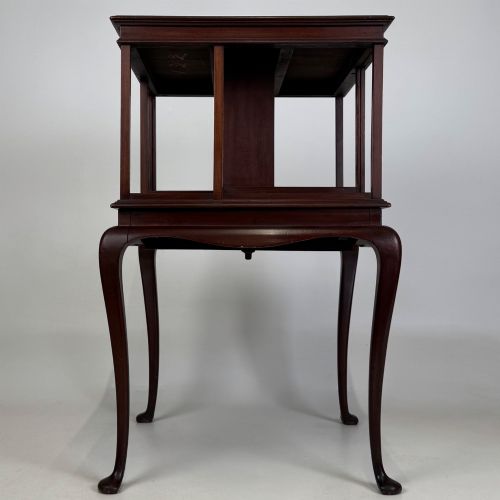
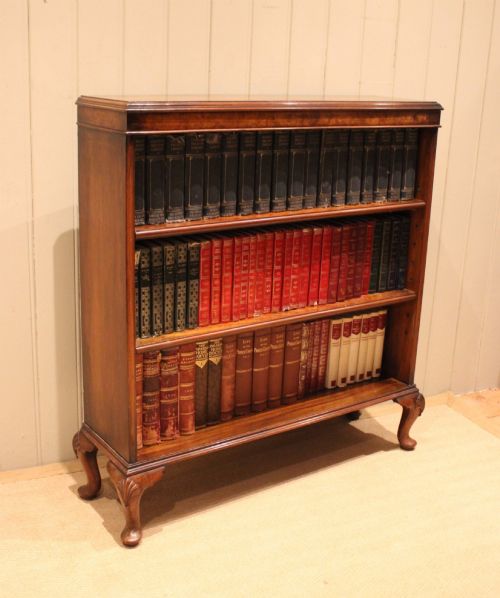
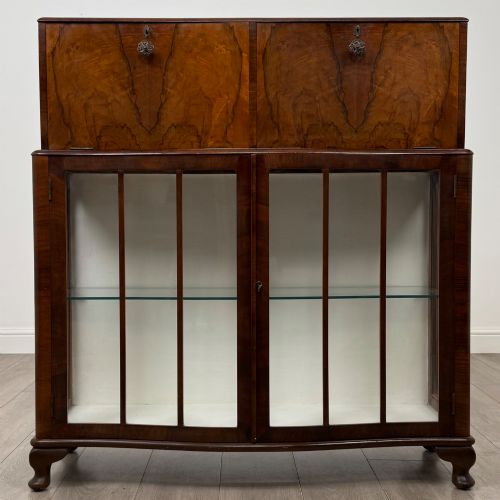
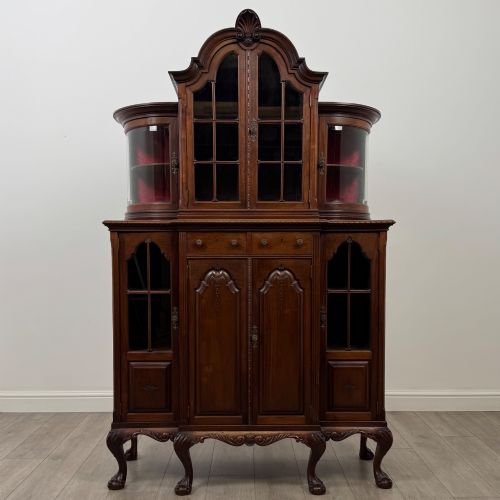
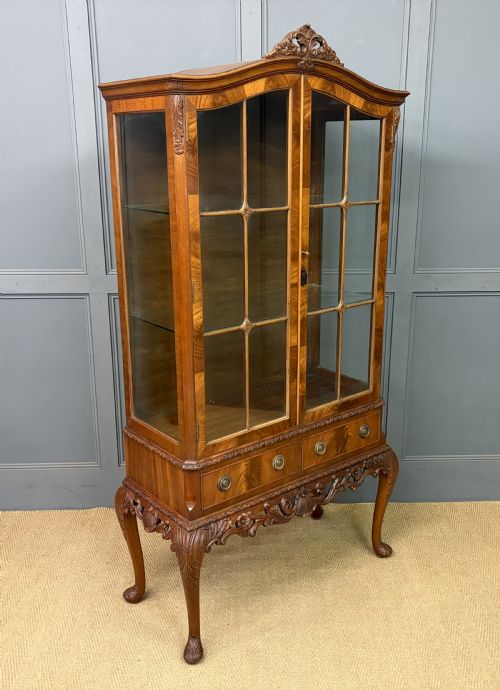
A queen anne style bookcase combines traditional storage forms with curved lines and prominent wood grains, originating mostly from revival periods rather than the original reign. The listings show examples ranging from open shelves to complex bureau cabinets and glazed display pieces.
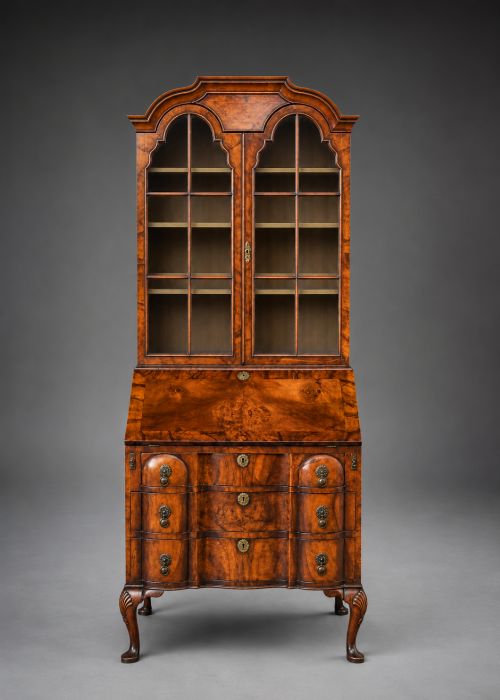
The version most commonly met on this page is the walnut or burr walnut bureau bookcase dating from the Edwardian era up to the nineteen-thirties. These pieces pair a sloping writing flap with enclosed shelving above, resting on cabriole supports or bracket feet.
Makers and cabinet-makers embraced revival aesthetics across the nineteenth and twentieth centuries, producing smaller proportions alongside large breakfront designs. Buyers encounter corner cupboards and cascading forms as well as standard double-dome configurations.
Materials and construction methods
Walnut dominates the material palette, utilised either as solid timber or more frequently as burr and figured veneers applied over secondary woods. Cabinet-makers selected these veneers for their complex grain patterns, arranging them symmetrically across bureau falls and cabinet doors.
Glass panels are fitted into wooden frame doors for display sections, whilst brass hardware such as drop handles and escutcheons secures drawers and cupboards. Secondary details include adjustable wooden shelving and occasional leather writing surfaces inside bureau compartments.
Red lacquered finishes occasionally appear among the walnut, proving that cabinet-makers loved to surprise polite society with oriental flair.
Factors separating different examples
The visual strength of the burr walnut veneer defines the primary tier of quality, where book-matched grain patterns flow evenly across the front elevation. Lesser examples rely on plain timber or show mismatched veneer sections that interrupt the design.
Proportion and cabinet-making detail separate standard production items from finer workshops. Crisp moulding profiles, well-fitted internal pigeonholes, and substantial carcase construction indicate superior execution by the original maker.
Maple & Co.·Waring & Gillow
The Queen Anne Style Bookcase Glossary
- Burr walnut
- A wood veneer taken from the wart-like growths on walnut trees, prized for its swirling, mottled grain patterns. It forms the decorative surface on many revival cabinets.
- Bureau bookcase
- A dual-purpose piece combining a sloping desk compartment with shelving or display space above. The writing flap folds down to reveal small drawers and pigeonholes.
- Break-front
- A cabinet design where the central section projects forward from the flanking wings. This architectural arrangement adds depth and shadow to large bookcases.
- Cabriole leg
- A furniture support curving outward at the knee and inward at the ankle, ending in a pad or foot. It is a defining characteristic of the revival aesthetic.
- Double-dome
- A top section featuring two rounded arches side by side. This profile appears frequently on the upper cornices of tall bureau bookcases.
Queen Anne Style Bookcase: Frequently Asked Questions
How do I date a queen anne style bookcase?
Most pieces on this market date from the Edwardian period through to nineteen-thirty, reflecting major revival phases. Construction clues like machine-cut screws, modern glues, and plywood backs point to these twentieth-century dates rather than the eighteenth century.
Older examples from the nineteenth century show different secondary timbers and hand-cut dovetails. Examining the interior drawer linings and the nature of the walnut veneers helps clarify the exact manufacturing era.
Where should I place a bureau bookcase?
These tall cabinets require stable wall placement and adequate clearance for doors that open outward. Bureau sections need space in front of the drop-down flap for a chair or standing access.
Avoid positioning walnut furniture in direct sunlight or beside active heat sources to prevent veneer lifting and timber splitting. Room humidity should remain relatively stable throughout the year.
Are the shelves adjustable?
Many open bookcases and display cabinets feature adjustable wooden shelving supported on traditional wooden racks or metal pins. This allows storage for books of varying heights.
Older bureau compartments and fitted interiors have fixed dividers designed for specific paper sizes and volumes. Checking the internal layout confirms whether shelves can be repositioned.
What is the difference between a bureau bookcase and a display cabinet?
A bureau bookcase incorporates a folding desk flap with internal compartments for writing materials, positioned beneath glazed or panelled upper shelves. This serves both storage and writing functions.
A display cabinet focuses entirely on exhibiting china or books behind glass doors without any writing surface. Both variants often share the same walnut veneers and revival styling.