


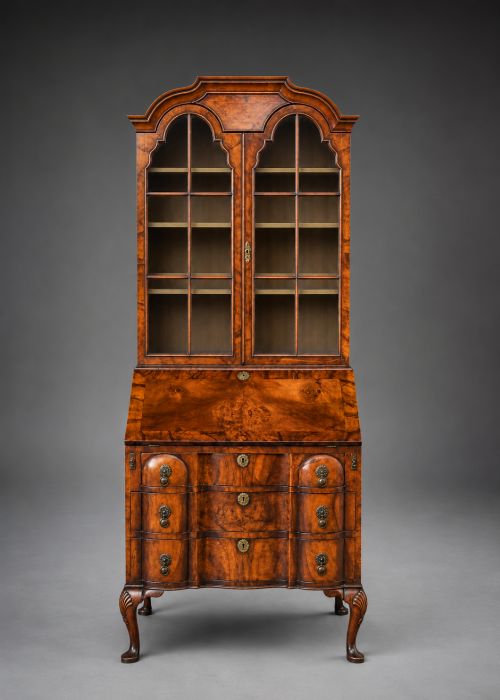
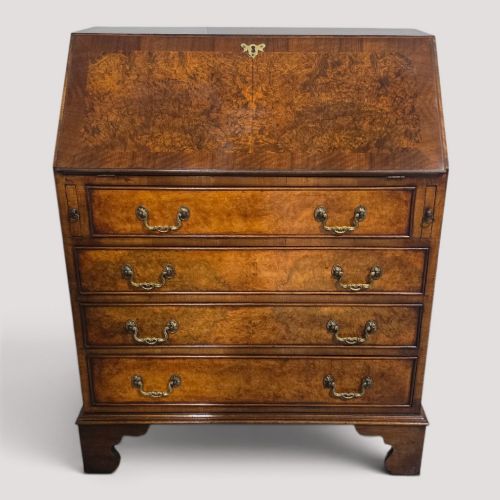
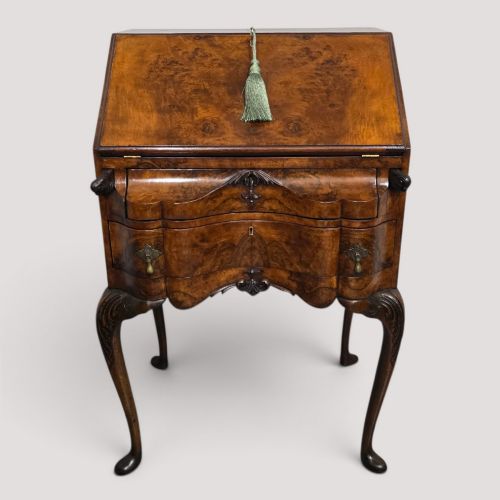
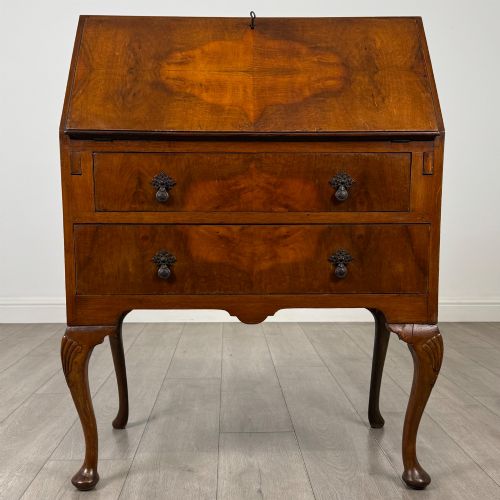
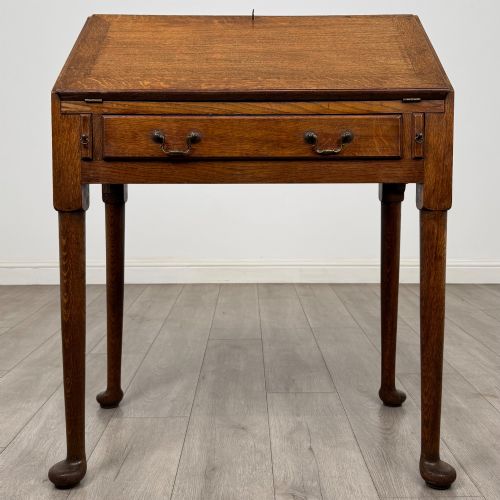
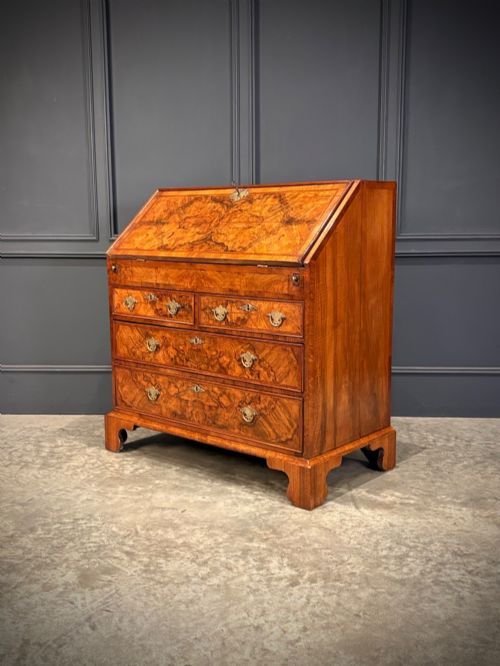
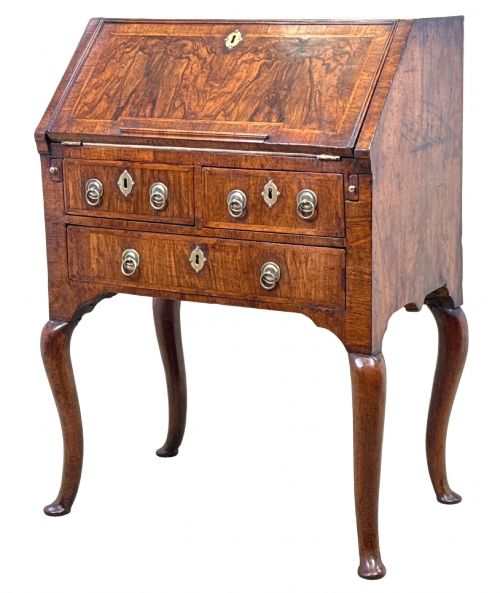
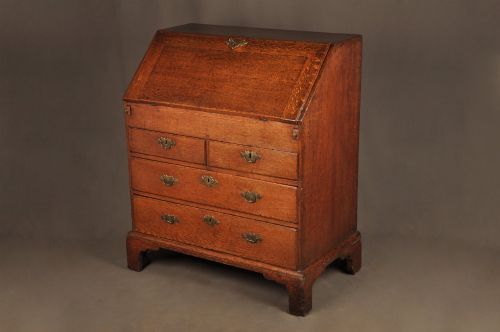
Queen Anne Slant Bureau
A queen anne slant bureau offers a sloping fall front concealing fitted compartments, bringing understated elegance and compact writing utility to a room.
Queen Anne Slant Bureau
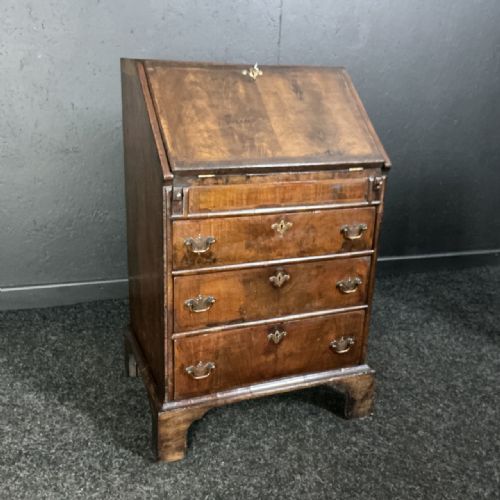
When you search for a queen anne slant bureau, you are looking at writing furniture characterised by a sloping fall front that opens to reveal pigeonholes and small drawers. The form evolved during the late seventeenth and early eighteenth centuries, bridging domestic workspace and refined cabinetry.
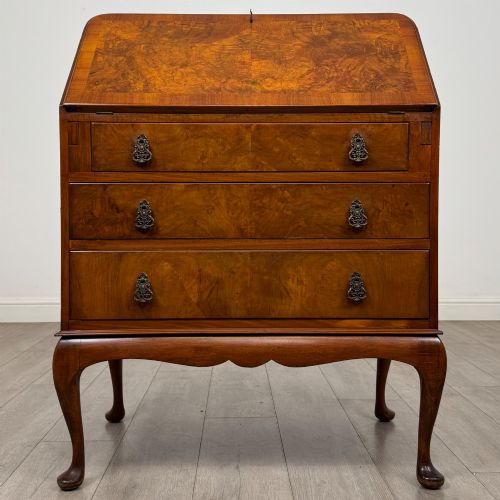
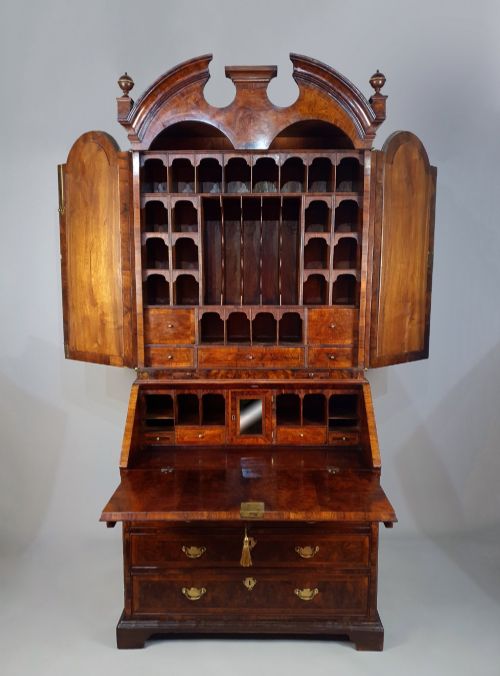
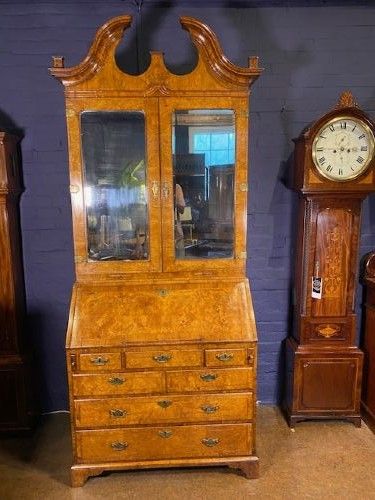
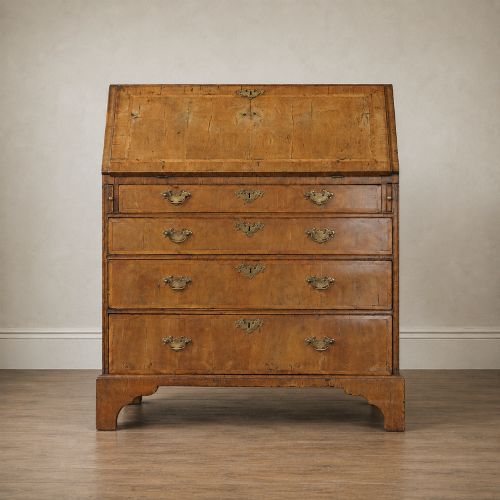
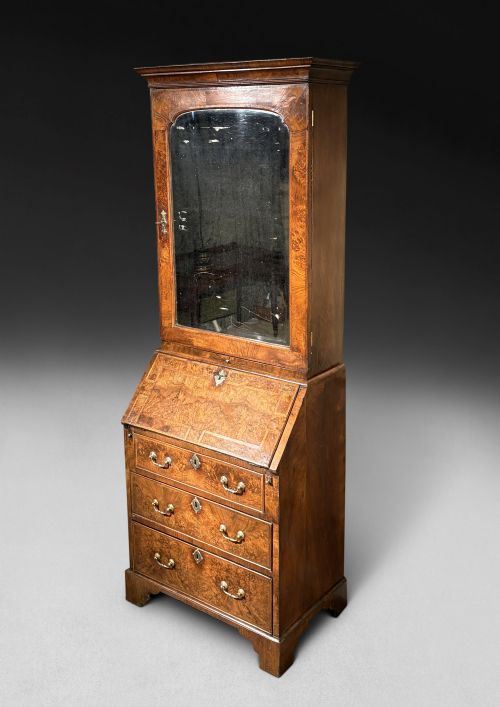
The pieces on this page span genuine early examples from the eighteenth century alongside later revivals from the Edwardian era and the nineteen-twenties. You will encounter both compact slant desks on legs and grander bureau bookcases featuring upper shelved cabinets.
Walnut is the predominant timber seen across these listings, often enriched with burr veneers or marquetry inlay. Oak, elm and yew also appear in regional and alternative iterations of the form.
Materials and Construction
Cabinetmakers constructed these pieces using solid timbers alongside decorative veneers applied to secondary woods. Walnut and burr walnut dominate the evidence, prized for their rich figuring and warm tones.
Secondary woods such as oak and elm provide structural stability for carcases and internal drawer linings. Original brass handles, escutcheons and ironwork complete the construction details recorded in the listings.
Cabinetmakers occasionally concealed secret compartments behind pigeonholes, designed to guard family letters and currency.
Evaluating the Pieces
Quality rests in the choice of timber veneer and the retention of original surfaces and patination. Examples utilising highly figured burr walnut or intricate marquetry sit at the upper end of the scale.
The integrity of the interior fitments, original hardware such as ironwork or brasses, and the harmony of proportions between the slant front and the base dictate the standing of an individual bureau.
The Queen Anne Slant Bureau Glossary
- Bureau
- A writing desk featuring a sloping fall front that drops to create a writing surface while concealing internal compartments.
- Fall front
- The hinged sloping panel on a bureau that opens downward to provide access to the writing surface and drawers within.
- Burr walnut
- Timber taken from a tree growth or burl, highly valued for its swirling, decorative grain pattern used in veneering.
- Bureau bookcase
- A writing bureau surmounted by a glazed or panelled cabinet for storing and displaying books.
- Marquetry
- Decorative inlay work using various tinted woods and veneers to create elaborate pictorial designs on furniture surfaces.
Queen Anne Slant Bureau: Frequently Asked Questions
How do I use a slant bureau today?
A queen anne slant bureau functions well as a compact writing desk or a laptop workstation in a living area. The drop-front closes to conceal modern clutter when not in use.
The internal drawers and pigeonholes provide practical storage for stationery and small items, combining historic character with everyday utility.
Are these bureaus solid walnut?
Most period examples utilise walnut veneers applied over a stable secondary wood carcase, such as oak or pine. This technique prevented warping while showcasing decorative grain patterns.
Solid timber construction does appear in certain oak and elm pieces, but veneering was standard practice for high-status walnut furniture.
How do I date a walnut bureau?
Dating relies on examining construction methods, timber choice, hardware, and secondary woods. Eighteenth-century pieces exhibit hand-cut dovetails and period framing techniques.
Later Edwardian and nineteen-twenties revival pieces often display machine-made elements and different internal construction details despite adopting earlier styles.