





Qing Dynasty Wall Panels
Qing dynasty wall panels bring layered silks, carved hardwoods, and painted glass into a room, offering a direct view into historical workshops.

Qing Dynasty Wall Panels
Qing dynasty wall panels encompass carved wooden plaques, embroidered silk hangings, reverse glass paintings, and lacquered works spanning from the eighteenth century through the nineteenth century. These pieces function as decorative wall art, temple carvings, framed textiles, and architectural elements salvaged from larger structures.
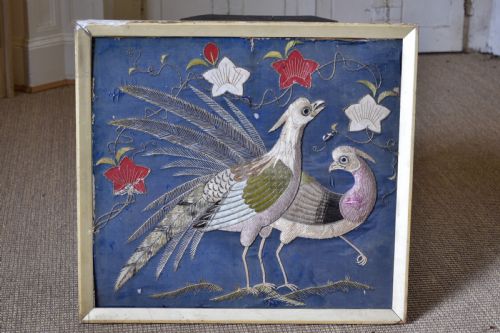
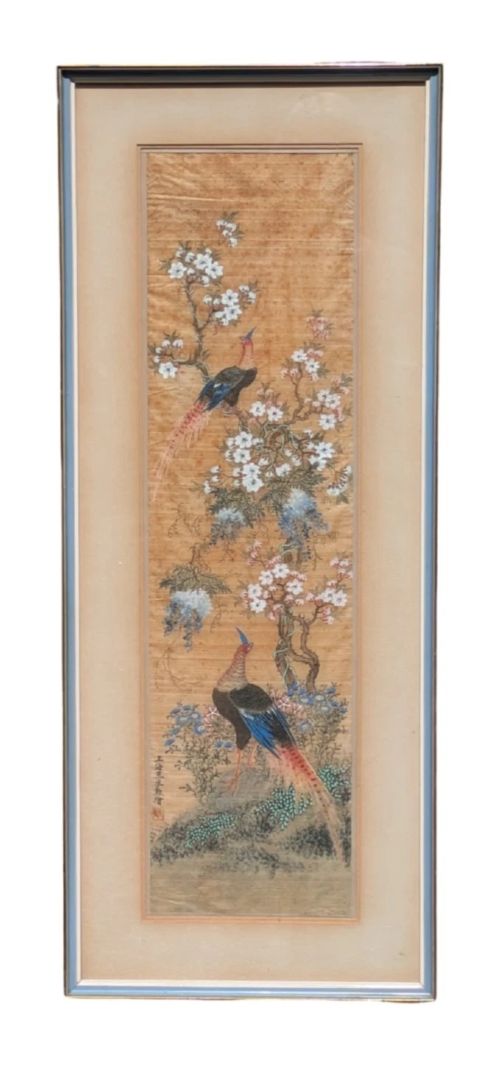
The selection on this page relies heavily on nineteenth-century examples alongside works dated around 1800, 1850, 1750, and 1790. Buyers encounter both single mounted plaques and matched pairs showing garden birds, mandarin ducks, dragons, and figures.
Materials range from hardwood and softwood to silk, glass, lacquer, gold leaf, pigment, and carved stone. Formats vary from framed silk rank badges and watercolours to large painted cart doors and memorial tiles.
How they were made
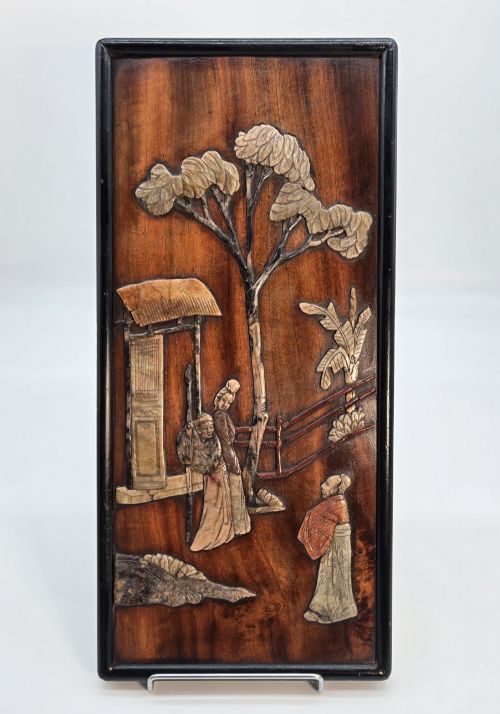
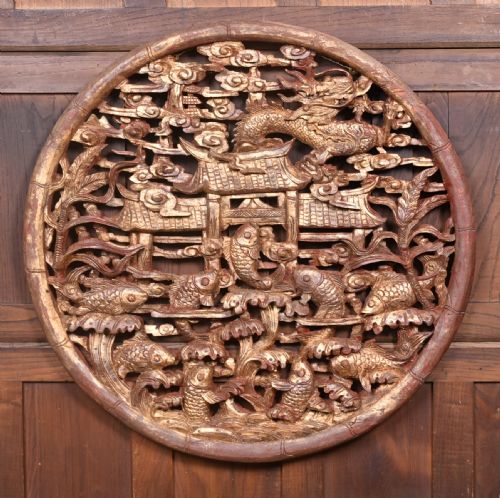
Carved wooden panels utilise hardwood and softwood shaped into intricate low relief scenes, often heightened with gold leaf or pigment. Temple panels and plaques demonstrate deep chiselling designed to catch light across architectural interiors.
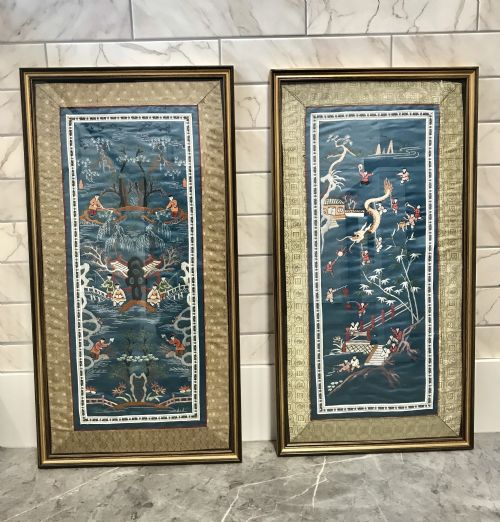
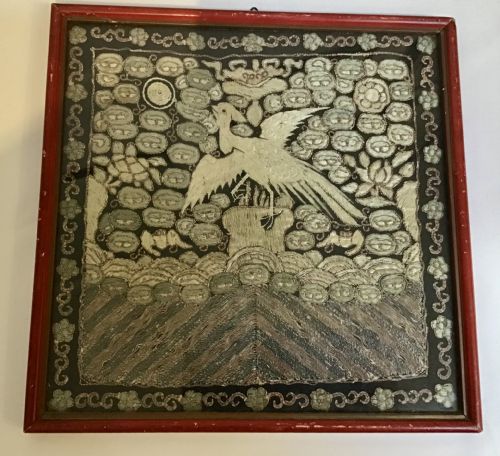
Textile art relies on hand-sewn silk embroidery, incorporating detailed threads to depict figures, trees, flowers, and birds. Silk panels sit under glass or function as framed rank badges and wall hangings.
Lacquer panels utilise techniques akin to export Bantam or Coromandel work, building layered surfaces that are carved and painted. Reverse paintings on glass apply pigment directly to the rear of the pane to create vibrant forward-facing images.
Mandarin ducks embroidered on nineteenth-century silk panels quietly remind every viewer of lifelong fidelity.
What varies in quality
The precision of the carving separates standard wooden plaques from exceptional pieces. Crisp detailing in gilt wood temple panels and depth in hardwood carvings indicate skilled workshop production.
Needlework density and silk preservation determine the standard of embroidered panels. Hand-sewn figures, dragons, and garden birds executed with fine thread longevity retain greater visual clarity.
Surface finish integrity across lacquer, gold leaf, and reverse glass paintings dictates overall execution. Intact pigment and stable lacquer layers preserve the original aesthetic intent of the maker.
The Qing Dynasty Wall Panels Glossary
- Qing Dynasty
- The final imperial dynasty of China, ruling from sixteen forty-four until nineteen twelve. Pieces from this era often display traditional motifs such as dragons, flowers, and figures.
- Coromandel work
- A method of incised lacquer decoration where designs are carved into a dark ground and filled with pigment or gold. These works frequently appear as panels or folding screens.
- Rank badge
- A square embroidered patch worn by officials to denote their status in the imperial hierarchy. Framed examples preserve detailed silk needlework.
- Reverse painting on glass
- An illustration technique applied to the back of a glass sheet so the finished picture is viewed through the front. This method creates a glossy, reflective surface.
- Ink stone
- A carved stone used for grinding solid ink blocks. Display sets incorporate ornamental stones mounted for visual appreciation.
Qing Dynasty Wall Panels: Frequently Asked Questions
How were Qing dynasty wall panels used originally?
These panels decorated the interiors of elite residences, temples, and official buildings, often mounted directly onto walls or fitted into architectural dividers.
Some items originated as functional architectural components, such as cart doors or memorial tiles, before transitioning to decorative display.
What subjects appear on these panels?
Common subjects include botanical scenes featuring trees, flowers, garden birds, and mandarin ducks. Mythological creatures like dragons also appear frequently.
Other works depict human figures in narrative settings, formal embroidered rank badges, or abstract decorative patterns.
How should I hang a heavy wooden panel?
Heavy carved wooden plaques and temple panels require secure fixings anchored directly into wall studs or masonry. Professional framing support ensures the weight distributes evenly.
Lighter silk panels and reverse glass paintings need stable environments away from direct sunlight to protect fragile textiles and pigments.
How do I distinguish silk embroideries from paintings?
Silk embroideries utilise needle and thread to build texture and dimension across the fabric surface. Examining the reverse or viewing under magnification reveals individual stitches.
Paintings on silk apply pigment directly to the woven textile without threadwork, resulting in a flat surface plane.