


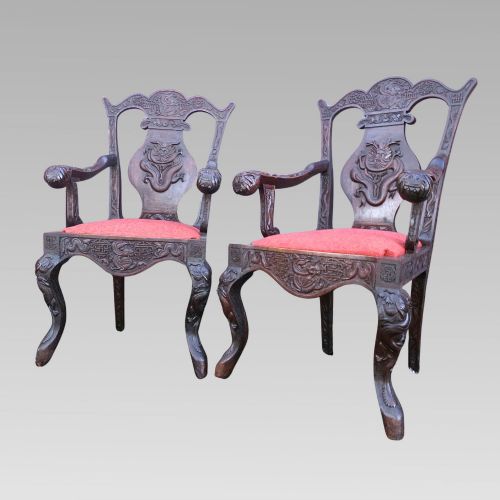


Qing Dynasty Rosewood Chairs
Qing dynasty rosewood chairs bring solid form and intricate carving into a room, offering heavy timber and formal presence.
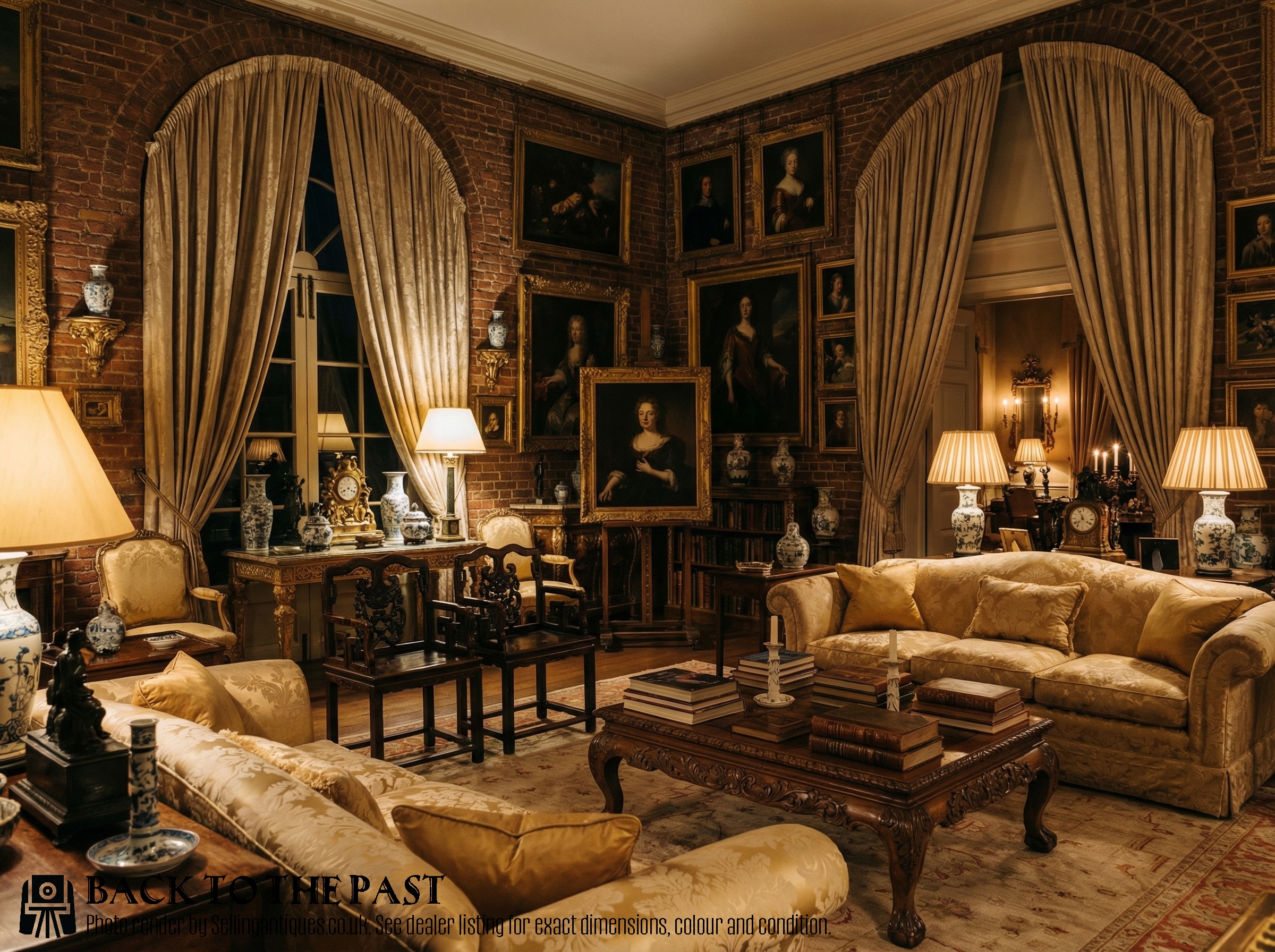
Qing Dynasty Rosewood Chairs
Qing dynasty rosewood chairs encompass armchairs, throne chairs, and settles fashioned from dense tropical hardwoods during the nineteenth century and around nineteen hundred. Buyers searching for qing dynasty rosewood chairs encounter seating that ranges from single hall chairs to matched parlour suites and chair sets.
The material palette recorded in the listings centres on rosewood, hongmu, and general hardwood, often enhanced with marble inserts or bone inlay. Styles span traditional Chinese designs and Chinese export pieces bearing carved dragon motifs.
Singular armchairs and pairs appear frequently alongside broader seating suites and benches. The construction reflects traditional joinery methods deployed across nineteenth-century workshops in China.
How they were made
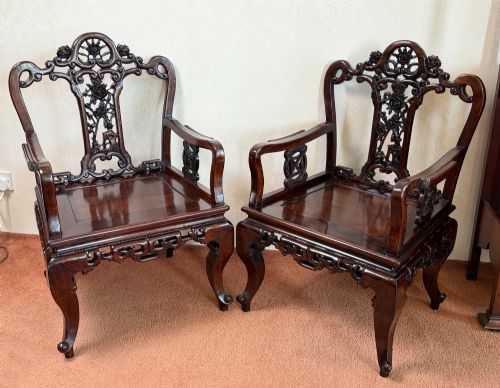
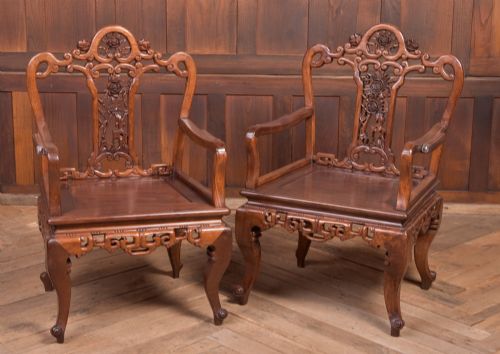
Maker's hands shaped dense timbers such as rosewood and hongmu into rigid frames using interlocking joinery without metal nails. Carvers cut deep relief patterns into the hardwood, rendering dragons and foliage directly into the structure.
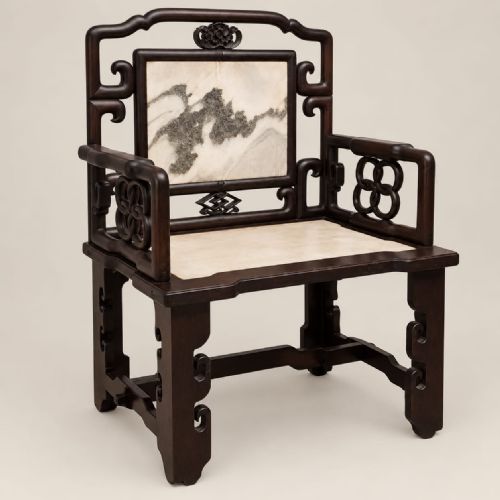
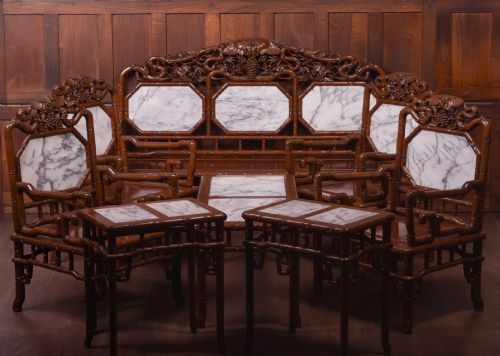
Selected examples incorporate contrasting inserts of white marble within the backrest or delicate bone and mother-of-pearl inlay along the wooden panels. Upholstery appears on specific parlour suites, though the primary focus remains exposed carved timber.
Qing Dynasty Rosewood Chairs Retail Price Guide 2026
Typical asking prices for qing dynasty rosewood chairs among the pieces listed under this phrase on Sellingantiques today, from the lower quarter to the upper quarter. They describe what is for sale here now, not the wider market.
Dragons twist through the carved timber on these chairs, keeping a watchful glass eye on the modern hallway.
What varies in quality
Quality rests in the crispness of the wood carving and the depth of relief achieved in the dragon motifs and foliage. The density of the rosewood or hongmu and the stability of the traditional joinery dictate the structural integrity of each piece.
The inclusion of matched sets, integrated marble panels, or careful bone and mother-of-pearl inlay separates standard seating from more ambitious throne chairs and parlour suites.
The Qing Dynasty Rosewood Chairs Glossary
- Hongmu
- A category of dense, heavy tropical hardwoods used in traditional Chinese furniture making. It translates literally as red wood and includes various heavy red-to-dark-brown timber species.
- Settle
- A wooden bench featuring a high solid back, armrests, and enclosed base. These pieces served as substantial seating furniture in halls and principal rooms.
- Throne Chair
- An imposing, high-backed armchair designed with formal dignity and elaborate ornamentation. Such chairs occupied positions of authority within traditional interiors.
- Parlour Suite
- A matched group of seating furniture comprising armchairs and related tables or benches. These suites provided uniform furnishing for reception spaces.
- Bone Inlay
- A decorative technique where small pieces of bone are set into carved recesses within the wooden surface to form geometric or pictorial patterns.
Qing Dynasty Rosewood Chairs: Frequently Asked Questions
How do I identify these chairs?
Look for dense tropical hardwoods like rosewood and hongmu combined with deep relief carving and traditional joinery. Many examples feature distinctive Chinese export motifs, dragon designs, or inserted marble panels.
Dates generally fall within the nineteenth century or around nineteen hundred, reflecting the late imperial period of Chinese craftsmanship.
How do I care for rosewood?
Keep hardwood furniture away from direct heat sources and sudden temperature shifts to prevent the dense timber from splitting. Dust regularly with a dry cloth and avoid harsh chemical polishes that can damage the antique finish.
Maintain stable humidity levels in the room to preserve the integrity of the wood and any inlaid bone or marble.
What styles are included?
The pieces span traditional Chinese designs, Qing dynasty styles, and Chinese export variants intended for Western markets. Carved dragon motifs and floral relief work dominate the visual presentation.
Forms range from individual armchairs and hall chairs to complete parlour suites, benches, and throne chairs.