






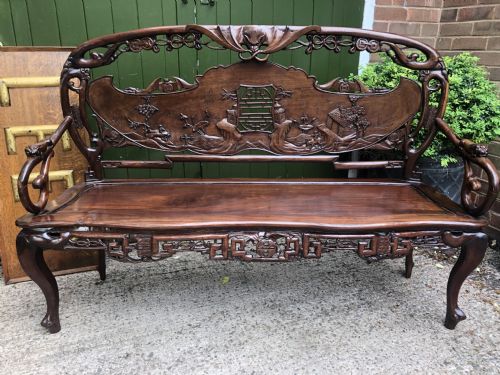


Chinese Rosewood Seating
Chinese rosewood seating brings heavy hardwoods, intricate Qing carvings and structured grandeur straight into a room.
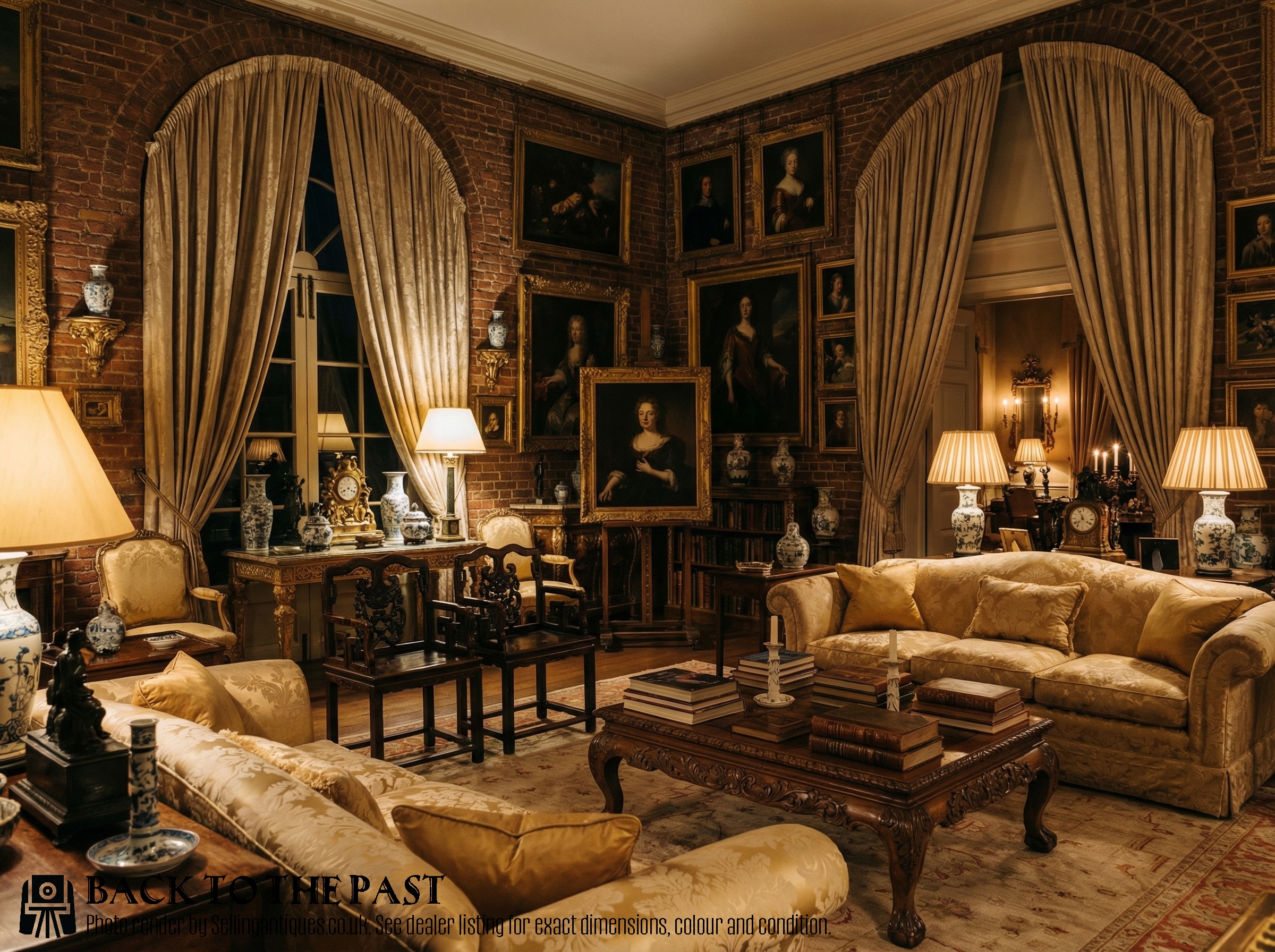
Chinese Rosewood Seating
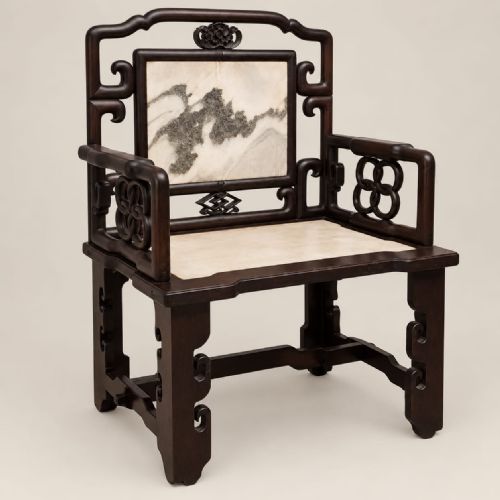
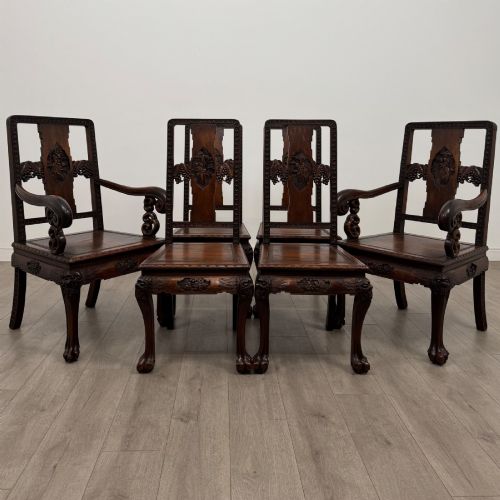
Chinese rosewood seating encompasses robust armchairs, throne chairs, benches, settles and matched parlour suites originating from the nineteenth and early twentieth centuries. These pieces emerge from traditional Chinese, Qing dynasty and Chinese export traditions, presenting formal arrangements designed for grand interiors.
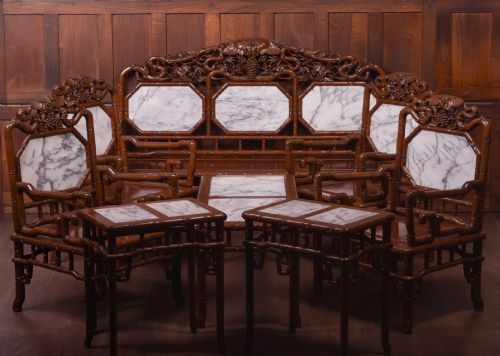
Buyers most frequently encounter substantial throne chairs, hall benches and carved armchairs fabricated from dense tropical timbers. Suites often include complementary stools, window seats and side tables designed as unified sets for formal reception rooms.
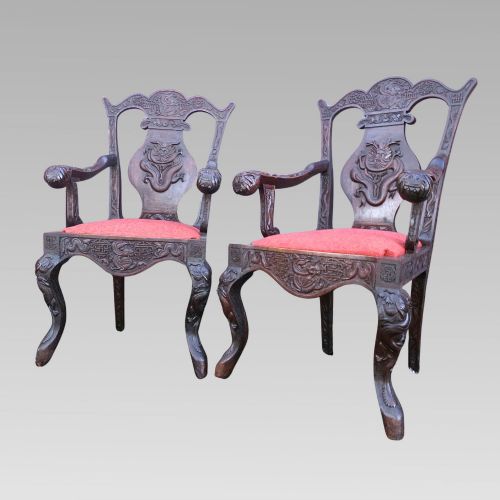
The aesthetic bridges severe architectural lines with deep relief carvings depicting dragons, horseshoes and traditional motifs. Pieces range from single occasional stools to comprehensive multi-piece dining and parlour suites.
Materials and construction
Construction relies upon dense Asian hardwoods including rosewood, hongmu, huali and huanghuali timbers selected for their immense weight and stability. Artisans utilised traditional joinery techniques without metal nails, allowing the dense wood to expand and contract naturally within fluctuating climates.
Surface ornamentation incorporates deep hand carving, contrasting bone inlay and iridescent mother of pearl panels set flush into the dark wood. Selected forms integrate inset marble panels into the backrests to provide a cool, decorative contrast to the polished timber.
Chinese Rosewood Seating Retail Price Guide 2026
Typical asking prices for chinese rosewood seating among the pieces listed under this phrase on Sellingantiques today, from the lower quarter to the upper quarter. They describe what is for sale here now, not the wider market.
Several horse-shoe benches in the collection feature subtle anatomical dragon carvings that appear to watch over the room.
Judging quality in Chinese seating
Quality rests upon the crispness and depth of the hand carving, particularly around complex motifs such as dragons and pierced splats. Superior examples display sharply defined anatomical details and deep undercut relief rather than shallow, mechanical incisions.
The selection and matching of the dense hardwood grain heavily dictate value, alongside the intricacy of any mother of pearl or bone inlay. Complete suites maintaining uniform timber colour and matching decorative panels command greater regard than assembled groups.
The Chinese Rosewood Seating Glossary
- Hongmu
- A traditional Chinese term translating to red wood, denoting dense and heavy tropical hardwoods used in fine furniture. These timbers naturally exhibit deep reddish-brown tones and take a high polish.
- Qing Dynasty
- The final imperial dynasty of China, spanning from sixteen forty-four to nineteen twelve. Furniture from this era is celebrated for elaborate carving and formal, imposing proportions.
- Settle
- A wooden bench featuring a high solid back, solid arms and frequently a box base or enclosed lower section. In these collections, they appear as substantial hall seating with deep carved ornamentation.
- Mother of Pearl
- The iridescent internal layer of mollusc shells, harvested to create thin geometric or floral plaques. Craftsmen recess these pieces into dark hardwood surfaces for sharp visual contrast.
Chinese Rosewood Seating: Frequently Asked Questions
How do I care for rosewood furniture?
Maintain a stable indoor humidity and keep heavy timber pieces away from direct heat sources to prevent timber splitting. Dust regularly with a dry cloth and occasionally apply a neutral beeswax to nourish the polished surface.
Avoid commercial silicone sprays and wet cloths, which can degrade the antique polish over time. Gentle handling preserves both the dry wood and any delicate mother of pearl inlay.
Are these chairs comfortable to use?
Traditional Chinese seating was designed with upright posture in mind, featuring rigid wooden backrests and solid seats. They function exceptionally well as statement pieces in hallways or studies rather than lounging chairs.
Adding custom silk or linen squab cushions can soften the wooden seat for extended sitting. Most buyers prioritize their architectural presence and historical craftsmanship over casual comfort.
How do I date nineteenth-century pieces?
Dating relies upon examining the timber density, tool marks left by hand-carving chisels and the natural ageing of the polish. Nineteenth-century examples typically exhibit deep patination and heavier timber selection than later reproductions.
Stylistic shifts between mid-nineteenth-century Qing pieces and early twentieth-century export items also offer clear chronological markers. Comparing joinery methods helps confirm the period of production.
Where should I place a throne chair?
Throne chairs possess a commanding vertical presence that suits grand entryways, high-ceilinged reception rooms or executive studies. Their intricate back carvings demand a neutral background wall to properly showcase the silhouette.
Positioning them away from direct sunlight protects the polished hardwood finish from fading. They serve best as isolated focal points rather than squeezed into cramped corners.