



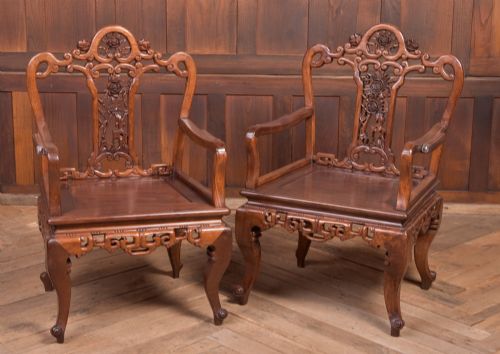

Oriental Carved Chairs
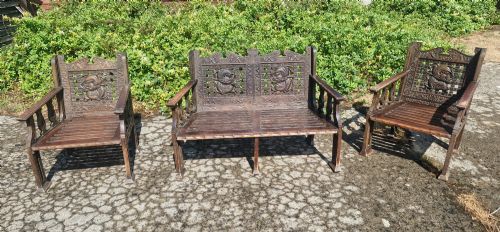
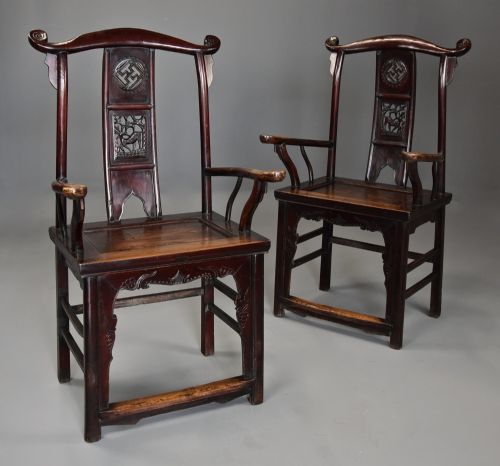
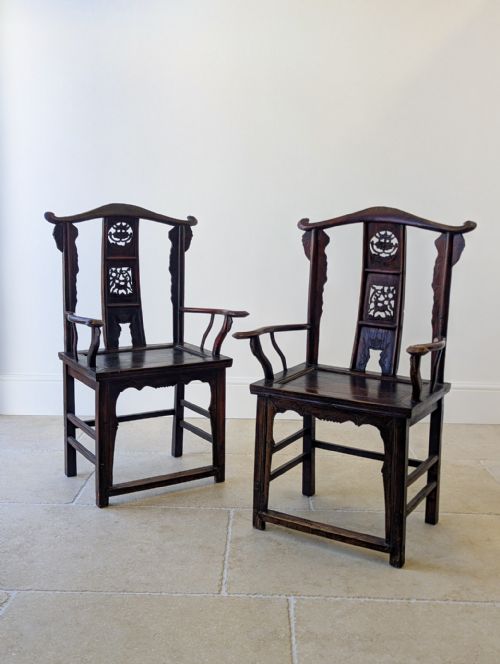
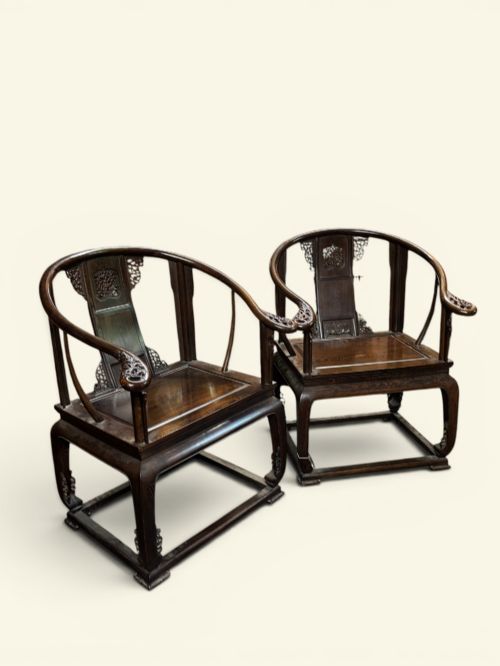
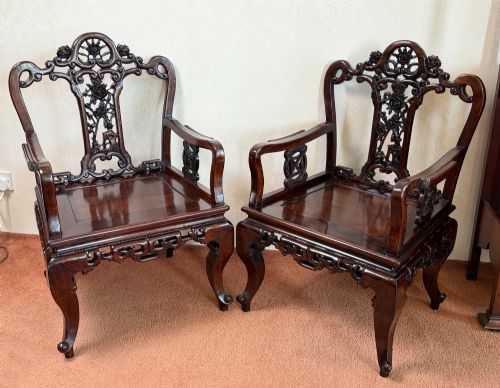
These oriental carved chairs bring heavy timber and intricate traditional craftsmanship into a room.
Oriental Carved Chairs
When you search for oriental carved chairs, you encounter solid timber seating built across the nineteenth century and the early decades of the twentieth. These pieces draw on traditional Chinese, Burmese, and Anglo-Indian designs, ranging from simple elm side chairs to grand throne chairs and horseshoe-back armchairs. You are most likely to meet hardwood and elm examples originating from the Qing Dynasty or later Victorian production periods.
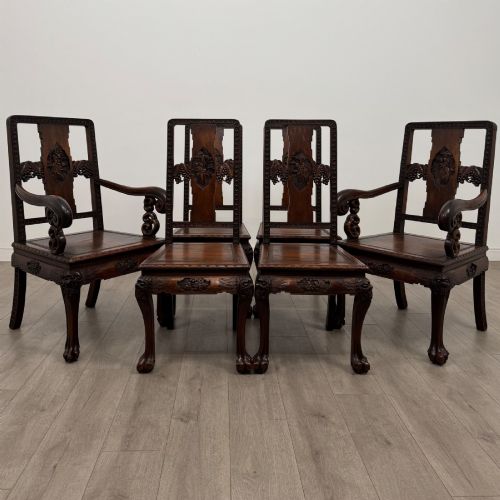
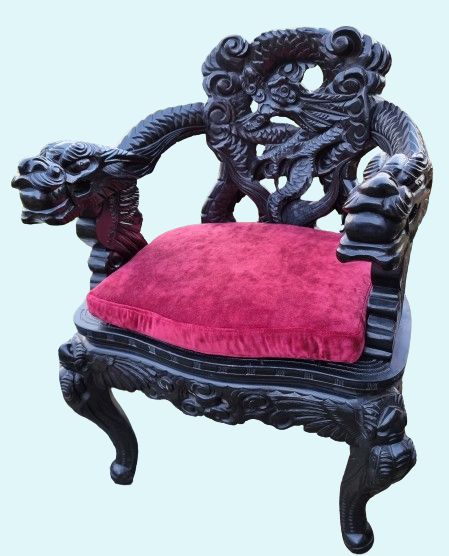
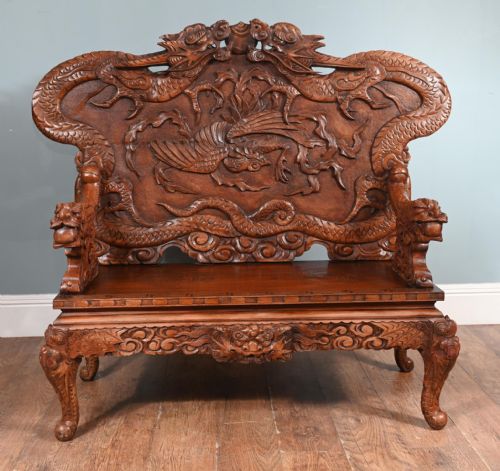
The forms vary from practical benches and settles to matched pairs of parlour armchairs and folding chairs. Makers utilised regional timbers to construct seating suites, corner chairs, and specific scholar forms like yoke-back and lamp-hanger chairs. Each piece displays distinct regional carving traditions, often featuring dragons, floral motifs, or daily life scenes worked directly into the dense wood.
Materials and Construction
Carpenters built these chairs using dense Asian hardwoods such as hongmu, rosewood, teak, and local elm, often selected for strength and weight. Joinery relied on traditional interlocking wooden joints rather than modern metal fixings, allowing the timber frames to support deep, intricate relief carving without splitting.
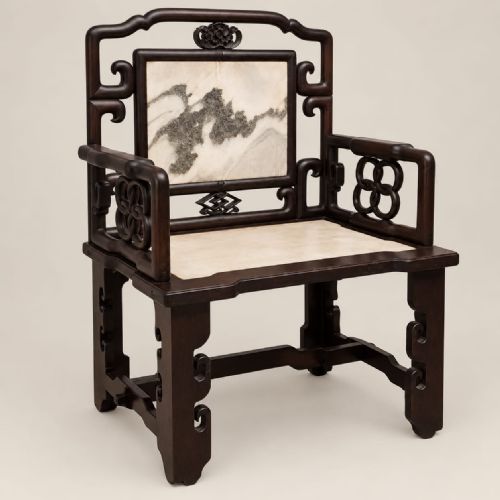
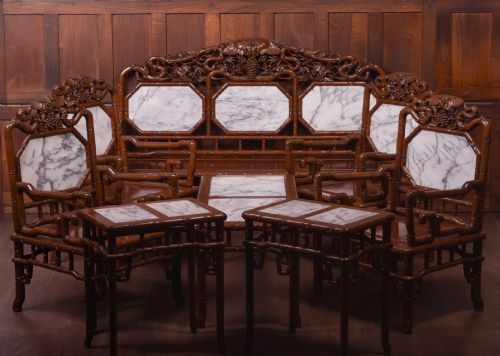
Surface finishes include original red or cinnabar lacquer, clear polishing to reveal the natural grain, and occasionally inlaid nacre-shell. Certain pieces incorporate cane seats or marble panels set into the wooden frames to provide textural contrast against the carved structural members.
Oriental Carved Chairs Retail Price Guide 2026
Typical asking prices for oriental carved chairs among the pieces listed under this phrase on Sellingantiques today, from the lower quarter to the upper quarter. They describe what is for sale here now, not the wider market.
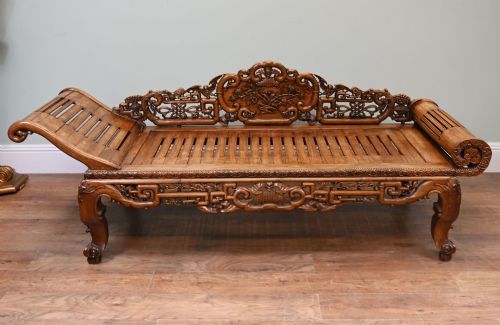
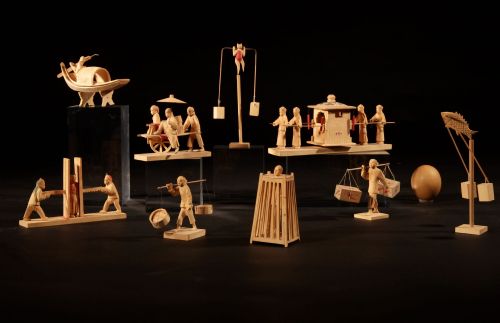
One exceptional bench records daily life in China through nine distinct wood carvings embedded directly into the seat.
Judging Quality
The standard of a carved chair rests on the depth and crispness of the hand-carved detail, where sharper relief and undercut motifs indicate superior workshop output. Mass-produced or later decorative copies lack the botanical and zoomorphic precision found on nineteenth-century pieces.
Material selection and structural integrity also separate grades; dense hardwoods like hongmu and rosewood hold fine carving significantly better than softer or plain timbers. Preserved original surfaces, such as intact red lacquer or good patination on the bare wood, elevate an example far above pieces stripped and refinished in modern times.
The Oriental Carved Chairs Glossary
- Hongmu
- A dense, heavy tropical hardwood prized in Chinese furniture making for its rich colour and ability to hold fine detail. It forms the structure of many high-status armchairs and throne chairs.
- Yoke-back armchair
- A traditional Chinese seating form characterised by a crei-rail that curves upward and outward like an ox yoke. This design provides ergonomic support for the sitter's shoulders.
- Horseshoe-back armchair
- A chair style featuring a continuous curved crei-rail and armrests that sweep down in a single fluid semicircle. It represents a refined form of traditional Chinese seating.
- Cinnabar lacquer
- A decorative surface treatment created by applying many layers of red lacquer onto a wooden core before carving intricate patterns into the buildup. This technique appears on bench seats and decorative panels.
- Cane
- Plant material woven into open-work panels for seats or backrests. It provides flexible support while lightening the visual weight of heavy hardwood frames.
Oriental Carved Chairs: Frequently Asked Questions
How do I date these chairs?
Dating relies on examining the timber species, joinery methods, and the style of the carving relative to recorded Qing Dynasty and Victorian production periods.
Changes in lacquer wear and the natural patination of the wood over the nineteenth century also help establish the approximate age of a piece.
Are these chairs comfortable for daily use?
Many of these chairs were designed for upright posture rather than lounging, featuring rigid wooden seats and high backs.
Adding small silk or linen cushions makes solid hardwood models more comfortable for prolonged sitting in a modern room.
How do I clean lacquered wood?
Dust the surfaces regularly with a soft, dry cloth to prevent abrasive particles from scratching the delicate lacquer or polished hardwood.
Avoid commercial liquid polishes or water, as moisture can penetrate old lacquer and lift the finish from the timber base.
What is a lamp-hanger chair?
A lamp-hanger chair is a specific traditional Chinese form featuring an extended top crei-rail designed originally to suspend lighting overhead.
These pieces typically utilise elm or lighter hardwoods and showcase restrained joinery rather than heavy carving.