


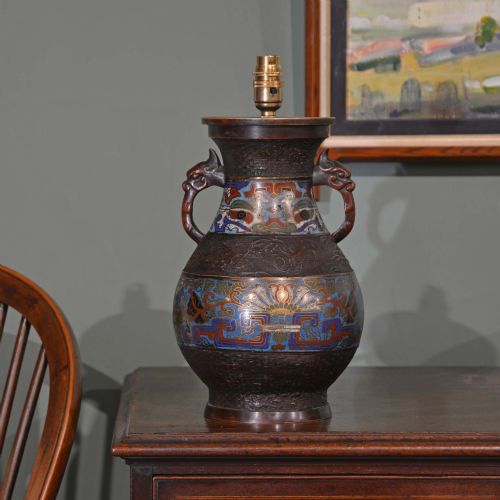


Qing Dynasty Converted Lamps
Qing dynasty converted lamps bring centuries of hand-finished porcelain and bronze into modern rooms as striking table lighting.
Qing Dynasty Converted Lamps
When you search for qing dynasty converted lamps, you are looking at antique Chinese vessels that have been adapted to hold electrical fittings for use as table lamps. The listings here centre on eighteenth and nineteenth century forms, alongside pieces from 1920, taking the shape of table lamps.
You are most likely to meet baluster vases, powder blue porcelain, crackleware, and bronze or ormolu mounted vessels among the current selection. These items bridge historical decorative arts and domestic utility, keeping centuries-old craftsmanship in daily service.
How they were made
Makers shaped these pieces from porcelain, bronze, brass, and gilt bronze, often incorporating enamel and intricate wood components. Fabric shades complete the conversion, pairing textile elements with rigid metallic and ceramic bodies.
The underlying vessels rely on traditional Chinese ceramic and metalworking techniques from the Qing period, later adapted with drilled bases or fitted mounts to accommodate internal wiring and lamp hardware.
Current listings feature items spanning the 18th century, the 19th century, and 1920, utilising porcelain, bronze, brass, and fabric.
What varies in quality
The division between standard and superior examples rests on the crispness of the original vessel's glaze, the refinement of the bronze or ormolu mounts, and the discretion with which the electrical conversion was executed. Early porcelain bodies with vibrant famille noure or blue and white painting hold a distinct visual weight.
Harmonious proportions between the antique base and the final lamp fittings dictate the overall success of the piece. Subtle variations in surface finish, from crackleware textures to smooth celadon, separate mass adaptations from finer individual works.
The Qing Dynasty Converted Lamps Glossary
- Celadon
- A pale green jade-like glaze originating in China, prized for its subtle tone and crackled texture. It appears frequently on nineteenth-century table lamp conversions.
- Ormolu
- Gilt bronze mounts applied to furniture and porcelain, popular in eighteenth-century decorative schemes. These metallic collars and bases often secure the electrical fittings.
- Baluster
- A vase form with a rounded body that tapers toward a narrow neck, resembling a architectural baluster. This shape forms the primary silhouette for many ceramic lamp conversions.
- Crackleware
- Pottery featuring a network of fine decorative cracks in the glaze, deliberately produced during firing. It adds tactile depth to blue and white vases adapted as lamps.
- Mandarin
- A term historically used in the West to describe vibrant polychrome enamel decoration depicting figures in courtly scenes. These painted vases bring rich narrative colour to domestic interiors.
Qing Dynasty Converted Lamps: Frequently Asked Questions
What are qing dynasty converted lamps?
These pieces are antique Chinese vases, jars, and bronze vessels fitted with electrical wiring and lamp holders for modern home illumination.
They combine historical Asian ceramics and metalwork with practical household utility.
How do I date these lamps?
Dating relies on the style of the ceramic body, the characteristics of the glaze, and the nature of any bronze mounts.
Pieces span the eighteenth and nineteenth centuries, with specific forms reflecting distinct periods of Chinese export and domestic production.
How were these vessels converted?
Conversion typically involves mounting the original vase onto a metal base and drilling the ceramic or metal to run internal wiring for a bulb fixture.
This process adapts decorative objects into functional table lighting without altering the primary upper body.
Where do these lamps fit best?
They suit side tables, desks, and credenzas where their height and decorative surfaces can serve as a focal point.
Their varied finishes, from blue and white porcelain to gilt bronze, complement both traditional and contemporary interior schemes.