


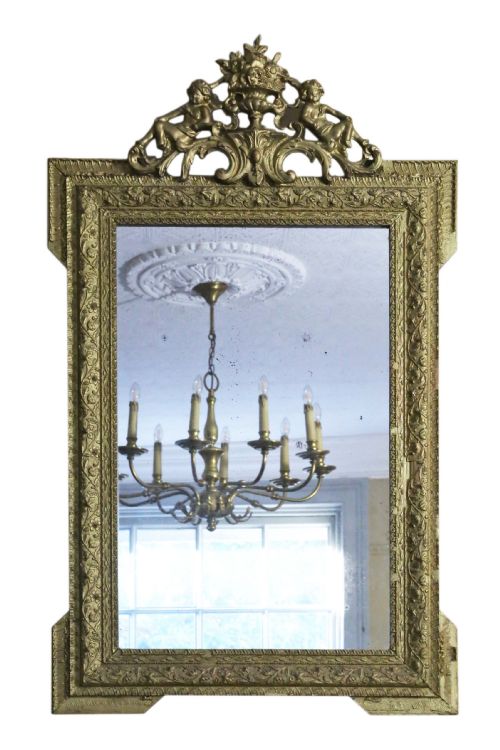

Putto Gilt Mirror
A putto gilt mirror brings sculptural winged figures into the room alongside gleaming reflective glass.
Putto Gilt Mirror
When you search for a putto gilt mirror, you enter a domain of opulent wall furniture dominated by Victorian and nineteenth-century overmantel and wall pieces. These items feature carved or moulded winged figures, often described as cherubs, perched upon crestings or framing brackets.
The versions most frequently met on this page include large overmantel mirrors alongside dressing table and easel variants. Stylistic influences range from Rococo Revival and Italianate designs to French Chateau and Florentine Baroque aesthetics.
How they were made
Makers built the foundational structures of these frames using timber, applying layers of gesso to smooth the surface before adding intricate carved details. Artisans then applied gold leaf or parcel gilding to achieve the characteristic metallic sheen.
Alternative constructions incorporated cast bronze, ormolu, and marble, particularly in smaller table and vanity mirrors from the nineteenth century. Glass plates were bevelled or flat-set within these elaborate surrounds, secured by traditional backing methods.
Listings feature pieces spanning the nineteenth and early twentieth centuries, utilising materials from traditional giltwood and gesso to bronze and porcelain.
What varies in quality
The integrity of the gilding and the preservation of the original gesso foundation heavily influence the visual impact. Patination that shows age gracefully without obscuring the underlying material indicates a healthier survivor.
The Putto Gilt Mirror Glossary
- Putto
- A plump, naked winged child figure, commonly found in Renaissance and later decorative arts. In these mirrors, they perch upon the cresting or frame.
- Gesso
- A plaster-like mixture applied to wood frames to create a smooth surface for gilding. It allows for intricate relief moulding before the gold leaf is laid.
- Giltwood
- Timber that has been coated with gold leaf or metallic powder. It forms the primary bright surface of many nineteenth-century wall pieces.
- Overmantel mirror
- A large mirror specifically designed to hang above a fireplace mantelpiece. These often feature wide horizontal proportions and prominent crestings.
- Ormolu
- Finely ground high-carat gold-mercury amalgam applied to bronze objects. It provides a rich, durable metallic finish on smaller table mirrors.
Putto Gilt Mirror: Frequently Asked Questions
Where should I hang a putto gilt mirror?
These mirrors suit principal reception rooms, particularly positioned above a fireplace mantel where their overmantel proportions balance the hearth. They also work well on prominent living room or hallway walls as standalone focal points.
Ensure the wall structure can support the substantial weight of large wood and gesso frames. Positioning them opposite a window will help maximise the reflection of natural light into the space.
How do I clean the gilt frame?
Dust the carved surfaces and the putto cresting gently using a very soft, dry brush or a feather duster. Avoid applying moisture or chemical cleaning agents directly onto the giltwood or gesso.
Harsh wiping can strip the delicate gold leaf layers. For the mirror glass itself, apply a minimal amount of glass cleaner to a cloth rather than spraying the glass directly near the frame.
What is the difference between a putto and a cherub?
Art historical conventions often use the terms interchangeably in nineteenth-century trade descriptions, though putti specifically denote classical winged infants. Both motifs appear frequently in Revivalist mirror crestings.
On these pieces, the figures serve the same decorative function of crowning the upper frame with sculptural movement. Look at the surrounding style, such as Rococo or Florentine, to understand the broader design context.