




Putto Gilt Bronze Clock
These pieces unite putto gilt bronze clock designs across nineteenth-century French and English workshops, offering figural charm and heavy cast metalwork for mantelpieces.
Putto Gilt Bronze Clock
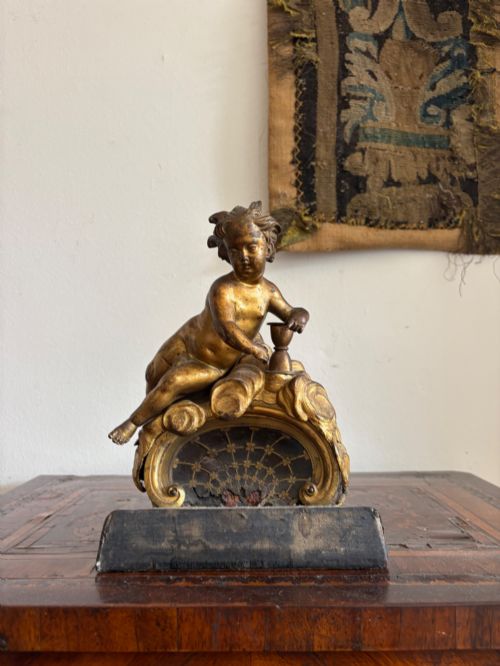
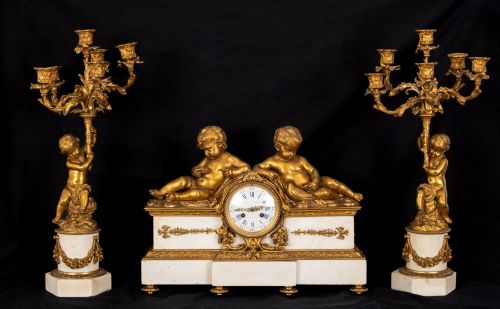
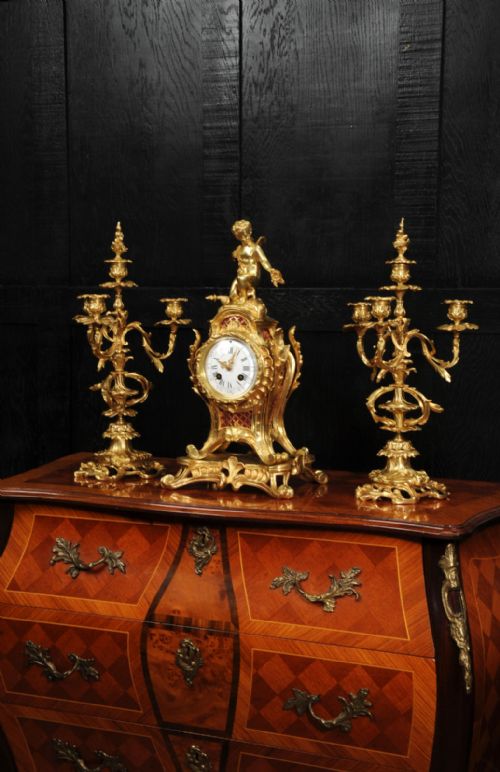
A putto gilt bronze clock combines sculptural cherubs or cupids with timekeeping, appearing most frequently as nineteenth-century French mantel clocks and garniture sets. These objects take many forms, from single mantel pieces and table clocks to cartel wall clocks flanked by candelabras.
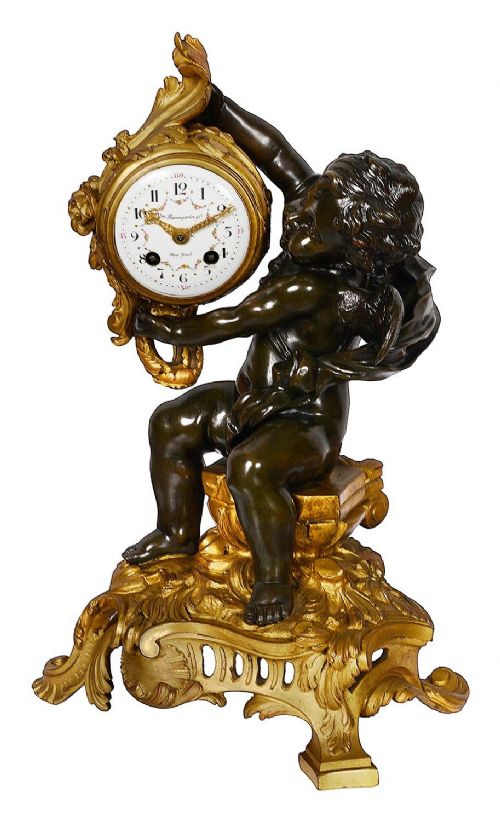
Makers drew on Louis XVI, Rococo, and Classical styles to frame the dial with cast bronze figures, marble plinths, and enamel details. The putto typically sits atop the case or leans against the dial as a central figural mount.
French workshops dominate the selection, though English makers also produced gilt metal cherub clocks during the Victorian era. Buyers encounter these items as standalone clocks or paired sets with matching decorative branches.
How they were made
Casting gilt bronze and ormolu formed the structural shell of each putto gilt bronze clock, yielding intricate surface detail on the cherub figures and scrollwork. Craftsmen applied gold amalgam or gilding to the bronze base, contrasting the metallic finish with white or red marble plinths.
Enamel dials with hand-painted numbers provided the face, often protected by glass and fitted into architectural or rococo housings. Subsidiary bronze components like portrait plaques or candelabras completed the garniture assemblies.
Cupid keeps time while perpetually leaning against a bronze plinth.
What varies in quality
The crispness of the bronze chasing dictates the visual sharpness of the putto and foliage, separating finely sculpted castings from softer production. Heavier marble bases and detailed hand-painted enamel dials indicate higher workshop standards.
Signed movements by known makers elevate the standing of a piece above unsigned or replacement mechanisms. The integration of the figural mount with the clock body determines the overall harmony of the design.
Le Roy·Leon Message·Jollet et Cie·Phillipe H. Mourey·John Bennett
The Putto Gilt Bronze Clock Glossary
- Ormolu
- Gilt bronze produced by applying a gold-mercury amalgam to a bronze base. This technique creates a durable golden finish characteristic of French decorative arts.
- Putto
- A plump, naked male child figure often depicted as a cherub or cupid. These figures appear frequently in classical and rococo decorative metalwork.
- Garniture
- A set of matching decorative objects designed for display together, typically comprising a clock flanked by two candelabras or vases.
- Cartel clock
- A wall-mounted clock enclosed in an ornate frame made of gilt bronze or wood. They gained popularity during the Louis periods.
- Fusee
- A conical pulley used in clock movements to maintain an even pull on the mainspring as it unwinds. It ensures more accurate timekeeping.
Putto Gilt Bronze Clock: Frequently Asked Questions
Where were putto gilt bronze clock pieces made?
Most surviving examples originate from nineteenth-century French workshops in Paris, though London retailers also commissioned and retailed them.
French pieces lean heavily into Louis XVI and Rococo revival styles, while English versions often feature traditional fusee movements.
How do I style a clock garniture?
A clock garniture is traditionally placed on a mantelpiece or sideboard with the clock at the centre and the matching candelabras flanking it.
The matching elements create a balanced decorative display that reflects nineteenth-century interior arrangements.
What is the difference between ormolu and gilt bronze?
Ormolu specifically refers to gilt bronze created through the historical mercury gilding method, which produces a distinct golden lustre.
Gilt bronze is a broader term that encompasses various methods of applying gold leaf or plating to a bronze substrate.
How are these clocks powered?
These clocks use mechanical movements driven by springs or pendulums, requiring regular manual winding with a key.
Many nineteenth-century examples feature rack strike or pendulum regulation systems housed behind the enamel dial.