

Purple Gemstone Jewellery
Purple gemstone jewellery brings together deep violet amethysts, almandine garnets, and lavender jade set in yellow, rose, and white gold.
Purple Gemstone Jewellery
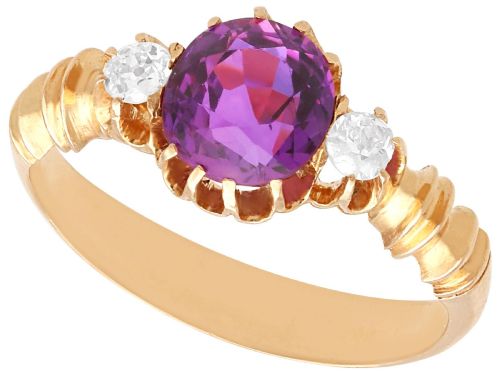
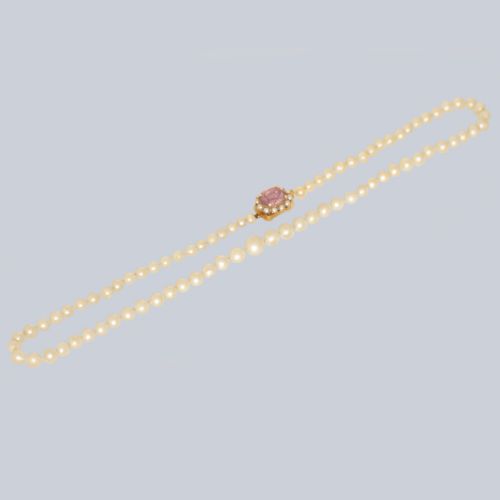
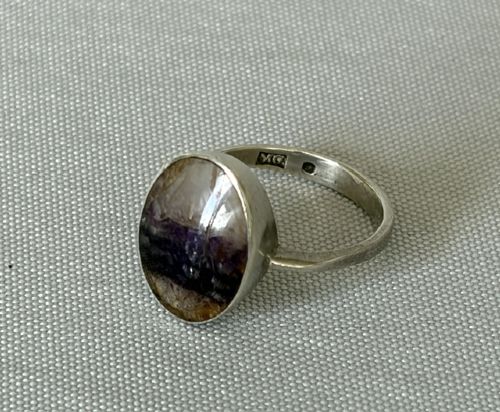
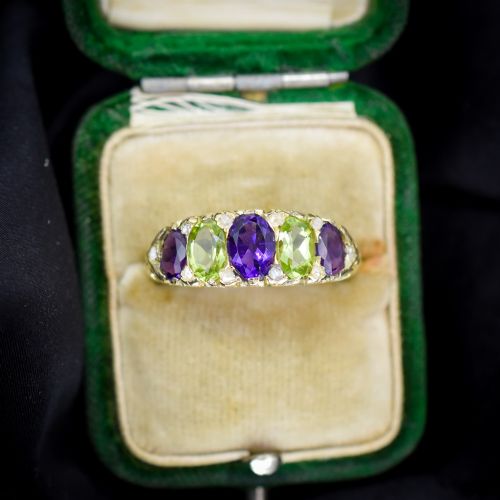
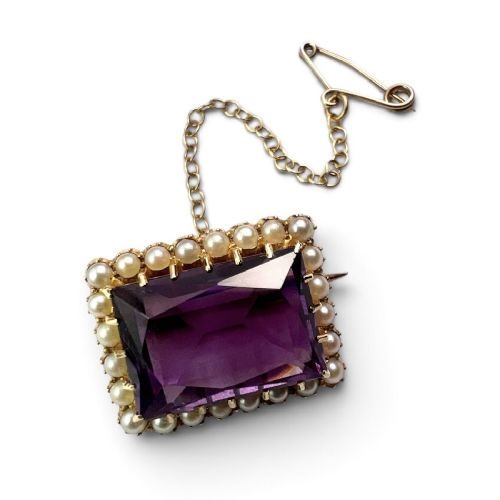
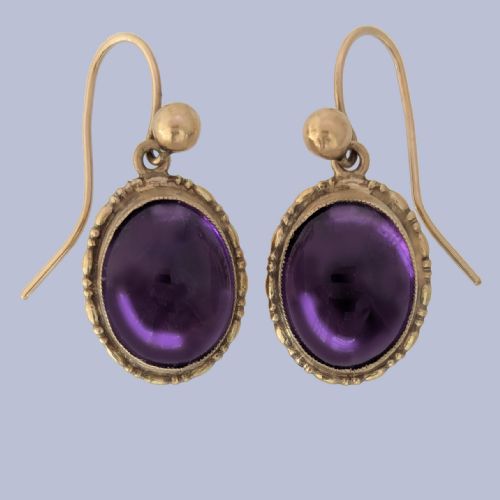
Purple gemstone jewellery spans rings, earrings, necklaces, pendants, brooches, and charm pendants produced across the Georgian, Victorian, Edwardian, Art Nouveau, Art Deco, and mid-century periods. Buyers searching for purple gemstone jewellery typically encounter amethysts mounted in gold or silver, alongside occasional garnets, rubies, and Blue John stones.
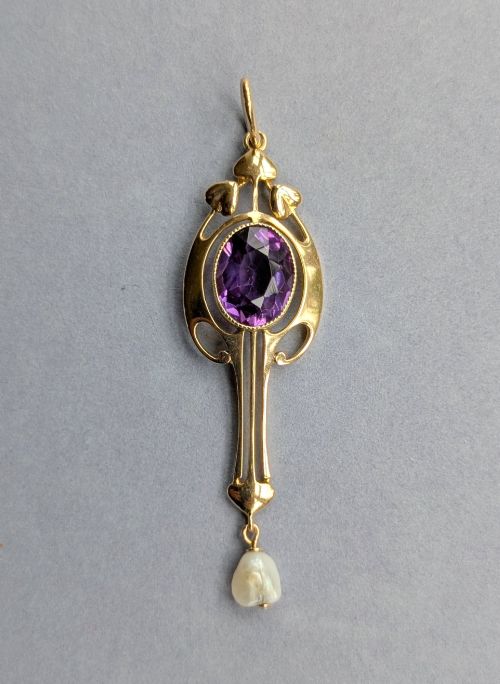
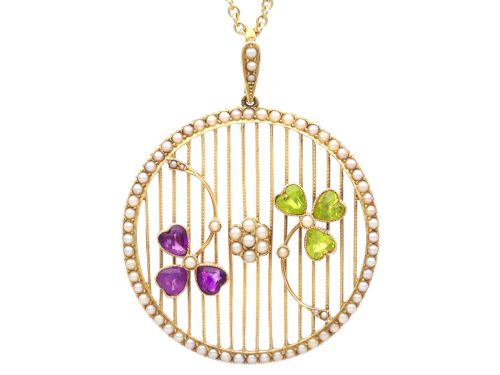
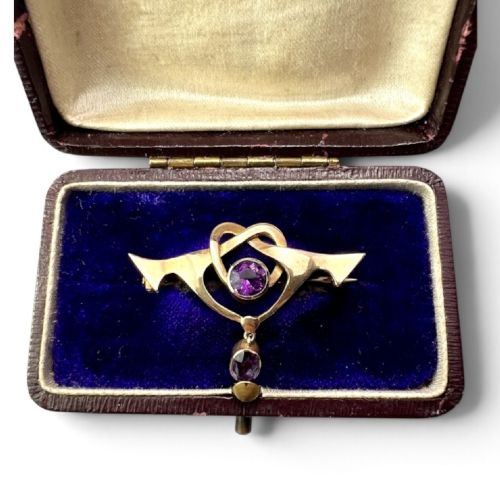
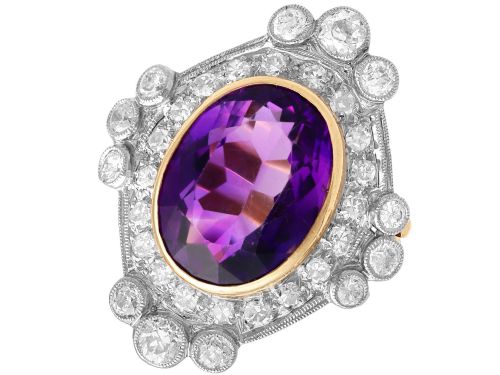
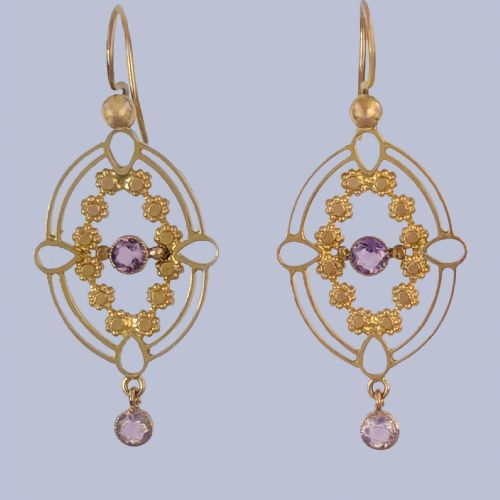
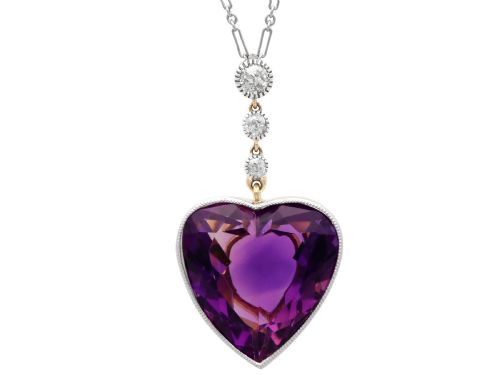
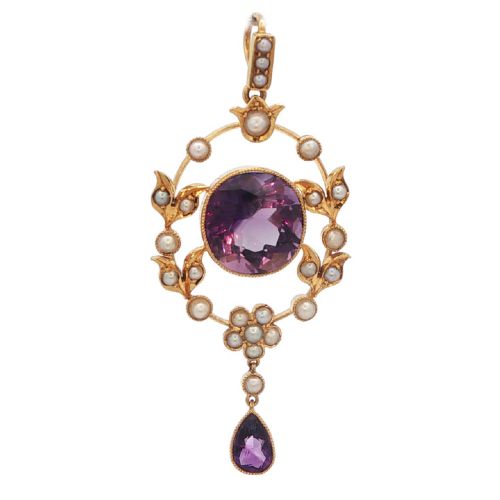
The selection ranges from delicate Edwardian seed pearl and amethyst pendants to substantial vintage cocktail rings and drop earrings set in nine-carat or fifteen-carat gold. Pieces from the early twentieth century often display openwork floral designs, openwork frames, and lavalier drops characteristic of Edwardian and Art Nouveau workshops.
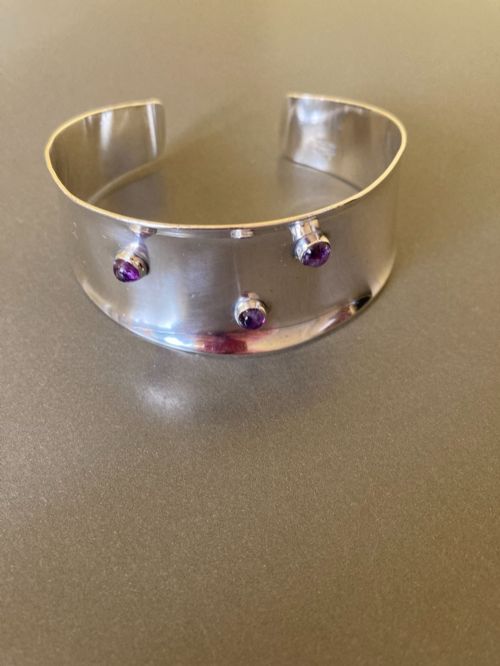
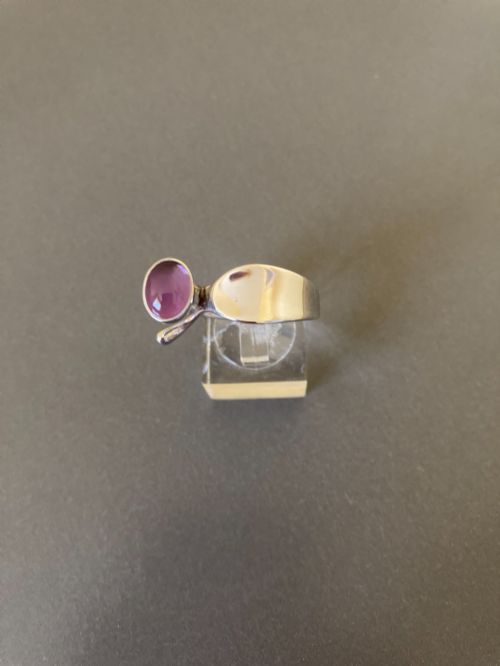
Mid-century and later vintage examples shift toward bolder cabochon cuts, heavier gold weights, and distinct geometric forms. These later pieces reflect changing tastes through the 1950s, 1960s, and 1970s while retaining the rich purple hues central to the category.
Materials and construction methods
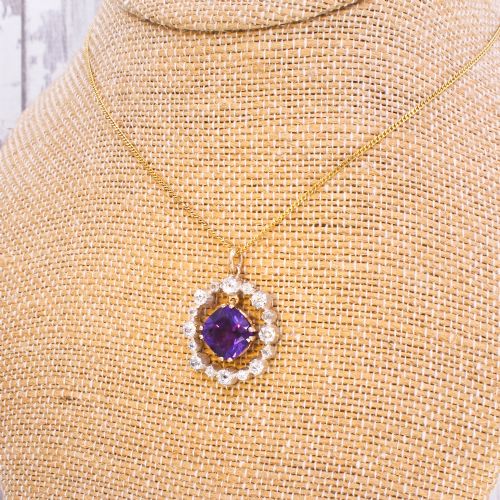
Makers set stones in nine-carat, twelve-carat, fourteen-carat, fifteen-carat, and eighteen-carat yellow, rose, and white gold, as well as silver and platinum. Amethysts dominate the material record, frequently accented by seed pearls, diamonds, or almandine garnets.
Craftsmen utilised techniques such as openwork mounting, claw-setting for large stones, and delicate bezel or halo arrangements to frame central amethysts. Lavalier necklaces and drop earrings incorporate articulated chains and seed pearl clusters that rely on fine soldering and wirework.
Heavier vintage rings employ substantial cast gold shanks, while earlier Edwardian and Victorian pieces utilise hollow or stamped components combined with solid settings to balance weight and visual lightness.
Purple Gemstone Jewellery Retail Price Guide 2026
Typical asking prices for purple gemstone jewellery among the pieces listed under this phrase on Sellingantiques today, from the lower quarter to the upper quarter. They describe what is for sale here now, not the wider market.
An adventurous insect fly charm pendant waits among the collection, ready to perch on a lapel.
Factors determining quality
Quality rests upon the depth and saturation of the stone colour, the weight and purity of the gold mount, and the intricacy of the metalwork. Deeper, evenly saturated amethysts and heavier fifteen-carat gold settings separate finer pieces from lighter, standard nine-carat alternatives.
The fineness of supporting stones, such as the matched quality of surrounding seed pearls or the cut and clarity of accompanying old-cut diamonds, dictates the overall refinement of a piece. Hand-finished openwork details and crisp hallmarks provide further indication of workshop standards.
Deakin & Francis·S. Blanckensee & Son
The Purple Gemstone Jewellery Glossary
- Amethyst
- A purple variety of quartz valued for its violet colour. It appears frequently in antique rings, pendants, and brooches.
- Seed pearl
- A very small, naturally occurring or cultured pearl used in clusters or borders. They surround central stones in Edwardian and Victorian jewellery.
- Lavalier
- A pendant necklace featuring drops that hang below the main setting. This style gained popularity during the Edwardian and Art Nouveau periods.
- Cabochon
- A gemstone shaped and polished with a smooth, convex surface rather than faceted. This cut is common in vintage rings and heavier gold pieces.
- Almandine garnet
- A deep red-violet garnet variety. It shares visual space with amethysts in nineteenth-century rings and brooches.
Purple Gemstone Jewellery: Frequently Asked Questions
How do I wear antique purple gemstone jewellery safely?
Antique rings and delicate drop earrings require care during daily activities, particularly when set in lower-carat or softer gold. Removing pieces before manual work protects seed pearls and claw-set stones from impact.
Storing items in individual compartments prevents scratching between stones and metal mounts. Regular checks by a jeweller ensure that settings remain secure.
What periods do these purple gemstone pieces come from?
The selection includes pieces from the Georgian era through to the 1970s, with a strong concentration of Edwardian and Victorian designs. Each era brings distinct characteristics, from early nineteenth-century cluster rings to mid-century cocktail rings.
Identifying marks, gold purities, and mounting styles help distinguish between these historical periods.
Were amethysts popular in the Edwardian era?
Amethysts enjoyed widespread favour during the Edwardian period, often paired with seed pearls in pendants, brooches, and lavaliers. The purple stones matched the refined, floral aesthetic favoured by jewellers at the turn of the twentieth century.
These pieces frequently utilise nine-carat or fifteen-carat yellow gold frames.