


Purple Amethyst Pin
A purple amethyst pin brings a flash of deep violet light to a lapel, spanning Victorian grandeur and Edwardian delicacy.
Purple Amethyst Pin
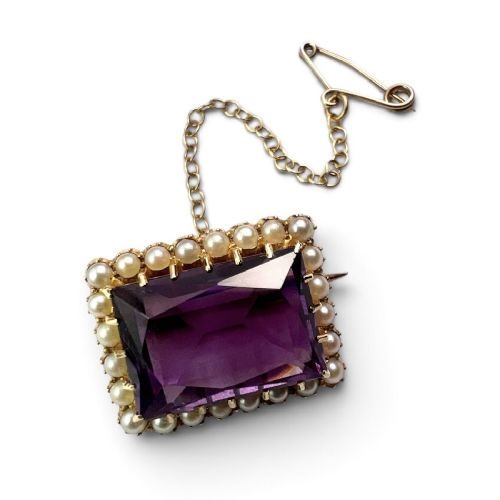
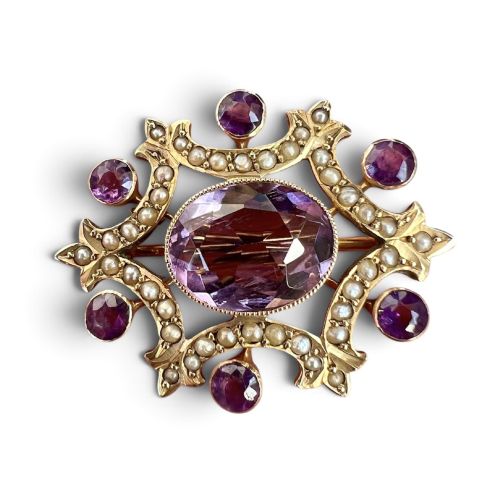
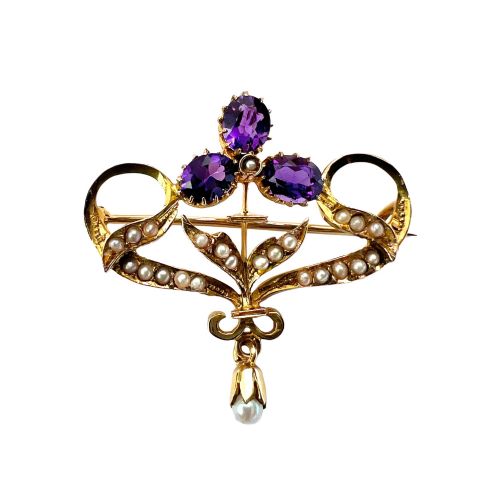
A purple amethyst pin appears across several distinct eras, with Edwardian and Victorian examples forming the majority of the pieces seen here.
Materials range from nine-carat and eighteen-carat gold to silver, often accented with seed pearls, diamonds, and enamel.
How they were made
Goldsmiths set vibrant purple amethysts into mounts of nine-carat yellow gold, eighteen-carat gold, or silver.
Many designs incorporate natural pearls and seed pearls as delicate borders around the central stones, or feature drops suspended below.
Makers utilised techniques ranging from traditional British cluster settings to Mexican modernist silverwork and nineteenth-century French yellow gold mounts.
Some pins double as pendants, giving an amethyst two chances to dangle.
What varies in quality
Quality rests in the depth of colour and cut of the amethyst stone, alongside the finesse of the surrounding metalwork.
Pieces featuring evenly matched pearls and secure, intricate gold or silver mounts sit at the higher end of the range.
The integration of additional gems, such as diamonds in step-cut arrangements, elevates the complexity of the piece.
Beto
The Purple Amethyst Pin Glossary
- Amethyst
- A purple variety of quartz prized for its transparent violet hue in antique jewellery settings.
- Seed pearl
- A very small, natural or cultured pearl used in delicate clusters and borders around central gemstones.
- Target brooch
- A circular brooch design featuring concentric rings of stones radiating outward from a central gem.
- Step-cut
- A gemstone cutting style with parallel facets that emphasise clarity and depth of colour rather than sparkle.
- Cluster brooch
- A piece of jewellery featuring a prominent central stone surrounded by a tight group of smaller gems.
Purple Amethyst Pin: Frequently Asked Questions
How do I wear a brooch?
Pin the piece securely through heavier fabrics like lapels, wool coats, or heavy knit scarves to support the weight of the gold and stones.
For a different look, suspend a suitable brooch from a chain to use it as a pendant.
Are these pins made of real gold?
The listings show settings created in nine-carat gold, eighteen-carat yellow gold, and silver.
These materials reflect the standard practices of Victorian and Edwardian jewellers.
What is an Edwardian amethyst brooch?
An Edwardian piece dates from the early twentieth century, known for lighter, lace-like mounts often combining pearls and gold.
These designs frequently showcase softer pastel tones alongside vibrant purple stones.
How do I tell Victorian from Edwardian styles?
Victorian pieces tend to be heavier and more substantial in their goldwork, favouring deep clusters and rich colours.
Edwardian items often appear more delicate and airy, incorporating intricate wirework and seed pearl borders.