
Purple Amethyst Jewellery
Purple amethyst jewellery spans centuries of goldsmithing, offering deep violet quartz paired with gold, pearl and diamond across rings, pendants and brooches.
Purple Amethyst Jewellery
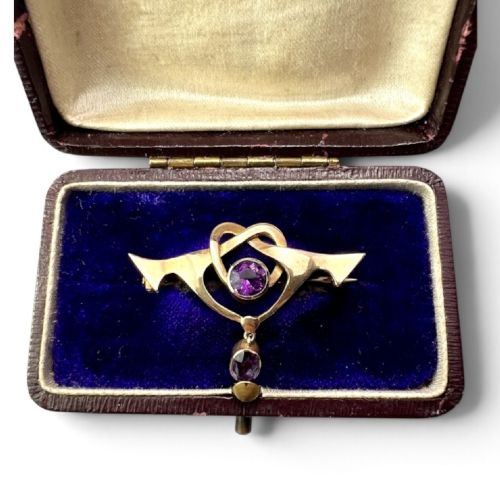
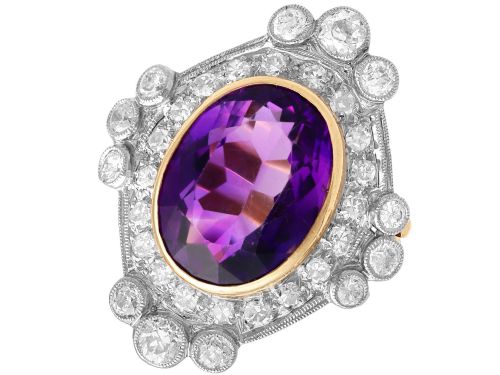
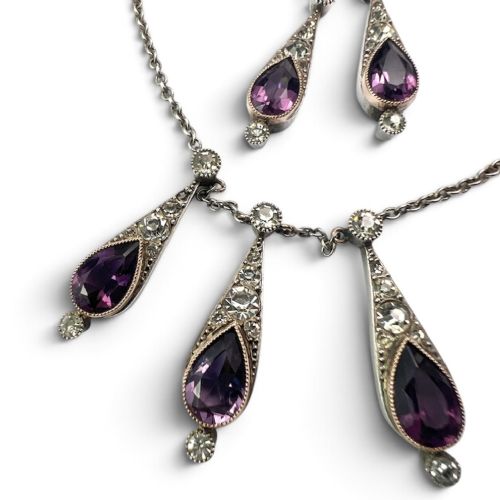
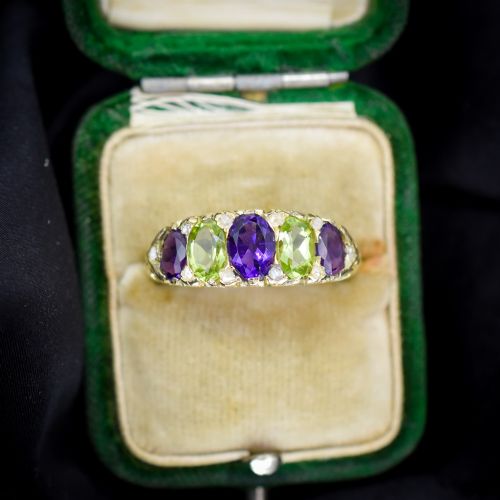
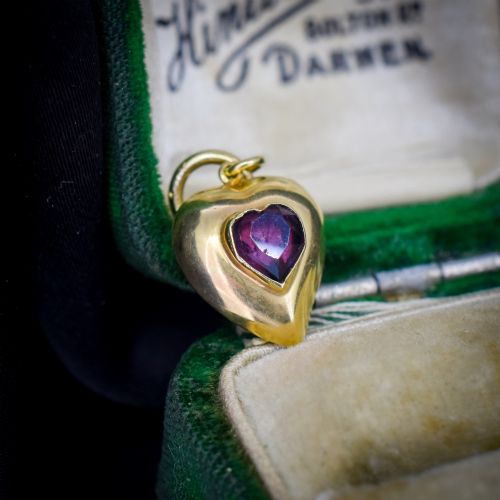
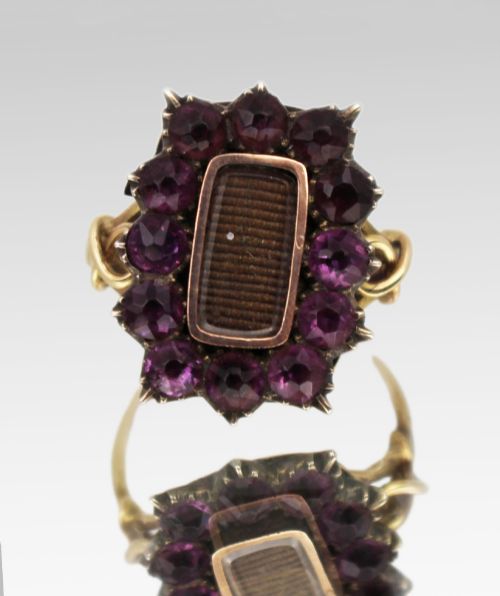
Purple amethyst jewellery encompasses rings, earrings, pendants, necklaces, brooches and bracelets originating from periods including the Georgian era, Victorian times, the Edwardian years and Art Deco movements. Buyers seeking these pieces encounter everything from delicate cluster rings to substantial cocktail rings and drop pendants.
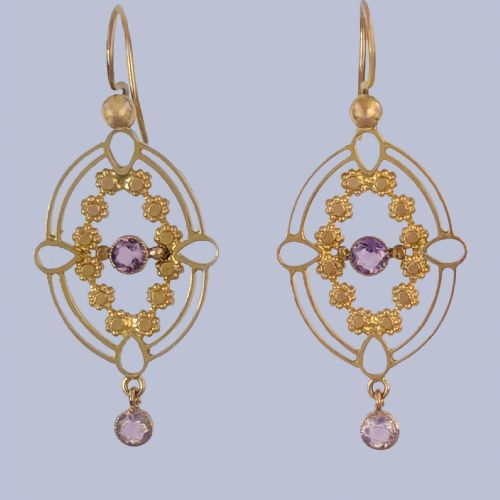
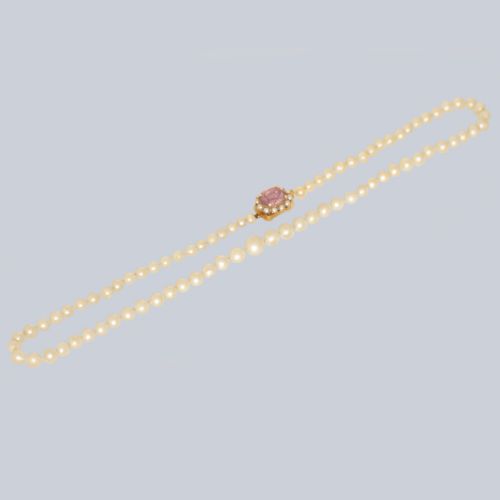
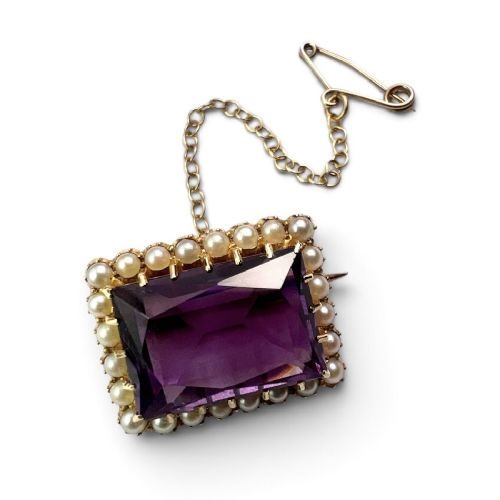
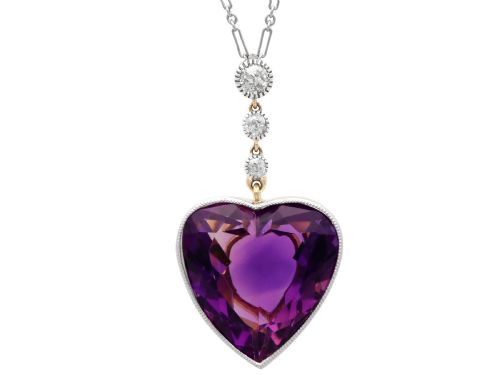
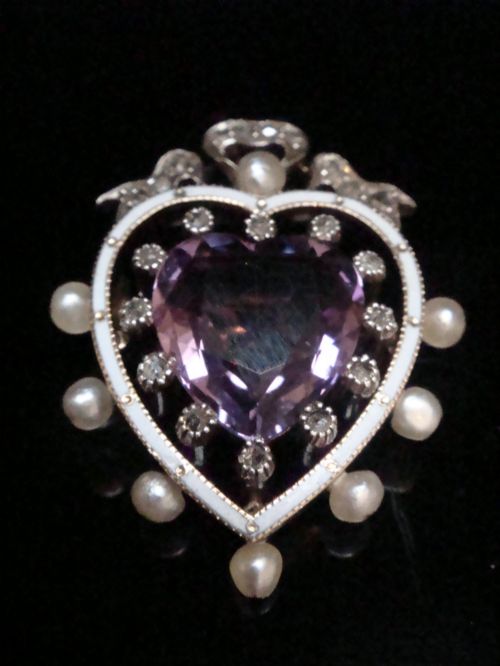
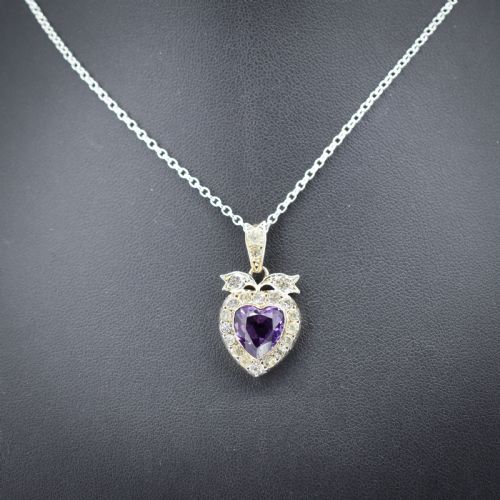
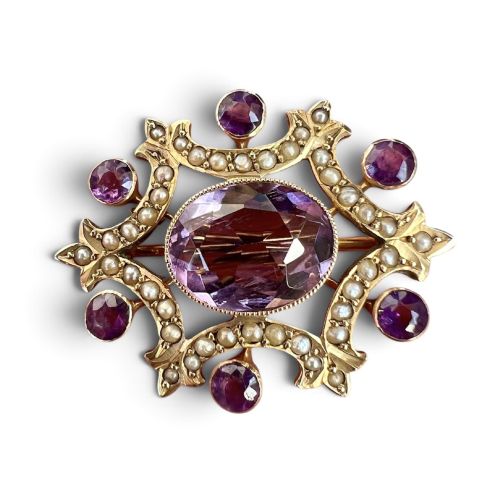
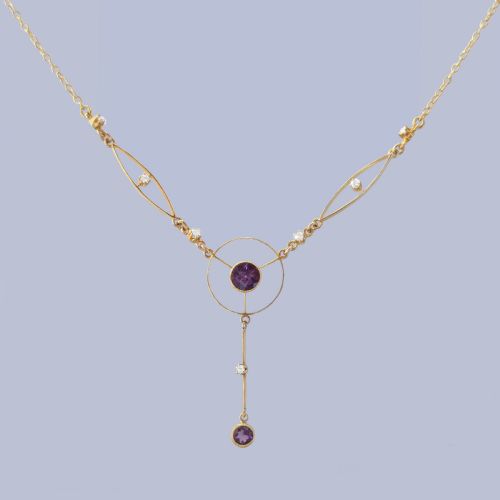
The Edwardian and late Victorian periods dominate the selection, frequently combining bright purple quartz with seed pearls and yellow gold. Pendant necklaces, lavaliers and drop earrings from these decades show distinct attention to fine metalwork and balanced stone arrangement.
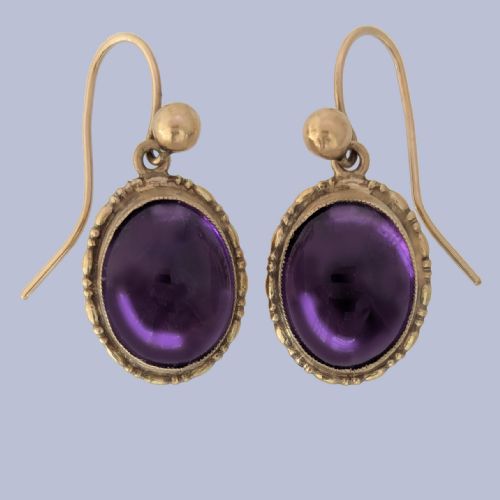
Mid-century and later vintage items bring bolder proportions into the mix, utilising cabochon cuts and heavier gold settings. Whether looking for a suffragette ring or an Art Nouveau pendant, the variety spans everyday wear and significant decorative pieces.
Materials and Construction
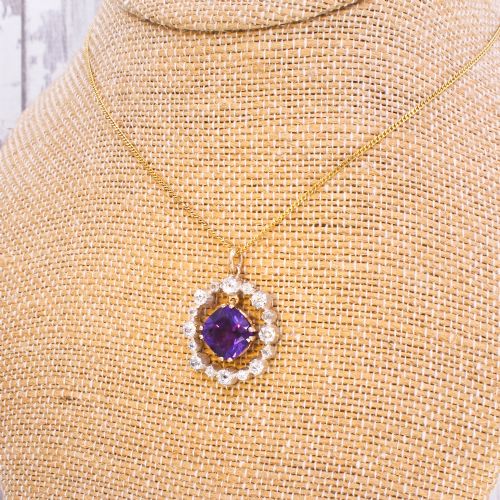
Goldsmiths set natural amethysts into varying purities of gold, including 9ct, 15ct, 18ct, and platinum, alongside silver mounts for older stones. Seed pearls and diamonds frequently accompany the central quartz, held in claw settings, bezels or delicate collets.
Edwardian makers employed openwork frames, guilloche enamel and fine chain drops, while earlier Victorian pieces utilised closed-back foils or robust bezels. Art Deco and later vintage items introduced geometric platinum or white gold geometry alongside step-cut stones.
Periods represented span from Georgian cluster rings through Edwardian pendants to mid-century cocktail rings.
Quality and Craftsmanship
Quality rests in the saturation and clarity of the purple quartz, the precision of the stone setting, and the integrity of accompanying seed pearls or diamonds. Finer examples display matched colour across multiple stones and crisp wirework or casting in the surrounding metal.
Substantial gold weight and intact maker hallmarks elevate a piece, whereas worn prongs or uneven colour distribution shift an item toward the simpler end of the range. The harmony between the amethyst cut and its period mount dictates the overall standing of the jewel.
S. Blanckensee & Son
The Purple Amethyst Jewellery Glossary
- Amethyst
- A purple variety of quartz prized in jewellery for its violet hue, ranging from pale lilac to deep plum.
- Seed Pearl
- Tiny, naturally small pearls often used in Edwardian and Victorian clusters to frame larger centre stones.
- Lavalier
- A pendant necklace featuring a suspended gemstone or drop that dangles below the main decorative section.
- Guilloche
- An intricate decorative technique where a precise pattern is mechanically engraved into metal beneath translucent enamel.
- Paste
- Hand-cut glass or lead crystal used historically as a bright gemstone substitute in period jewellery.
Purple Amethyst Jewellery: Frequently Asked Questions
How do I care for antique amethyst jewellery?
Clean purple amethyst jewellery using warm soapy water and a soft brush, avoiding harsh chemical dips that can damage pearls or delicate gold alloys.
Store pieces individually in soft pouches to prevent harder gems like diamonds from scratching the softer quartz surface.
Are seed pearls durable for daily wear?
Seed pearls are relatively delicate and sensitive to acids, perfumes, and moisture, meaning they require gentle handling during everyday activities.
Original stringing on vintage pieces may weaken over time, so periodic inspection by a specialist helps secure the pearls.
What defines Edwardian amethyst jewellery?
Edwardian pieces typically feature light yellow gold or platinum settings, incorporating airy filigree work, seed pearls, and lavalier drops.
The aesthetic focuses on lightness and grace, contrasting with the heavier, more imposing clusters of the mid-Victorian era.
How can I tell a paste stone from a real amethyst?
Amethyst is a natural quartz with genuine mineral coldness and occasional natural inclusions, whereas glass paste may reveal tiny bubbles under magnification.
Consulting a loupe or checking for a gemstone certificate helps confirm the natural mineral origin of the purple stone.