




Purple Amethyst Drop Earrings
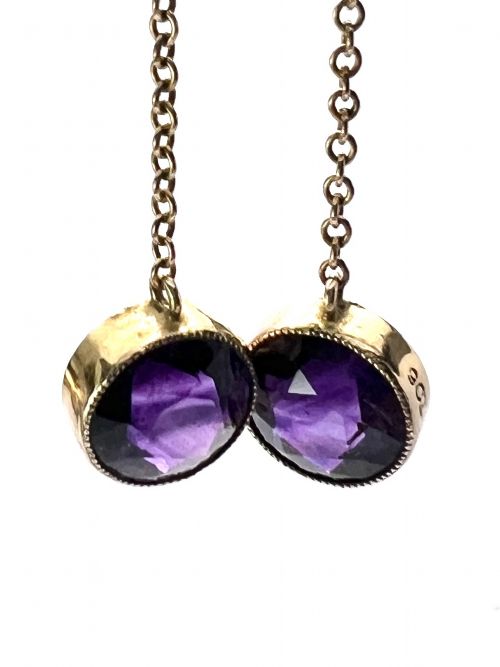
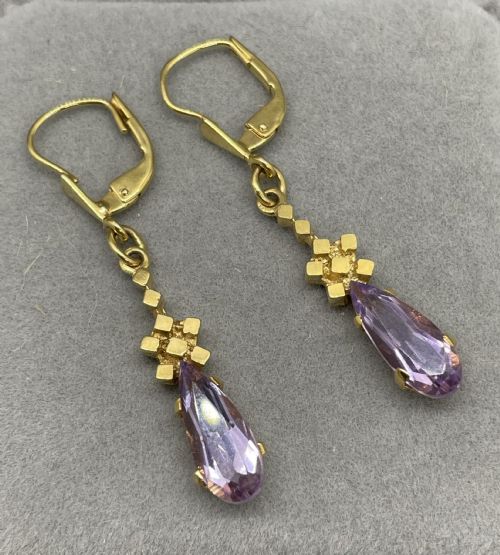
Purple amethyst drop earrings bring deep violet stones together with swinging, elongated forms that catch the light with every turn of the head.
Purple Amethyst Drop Earrings
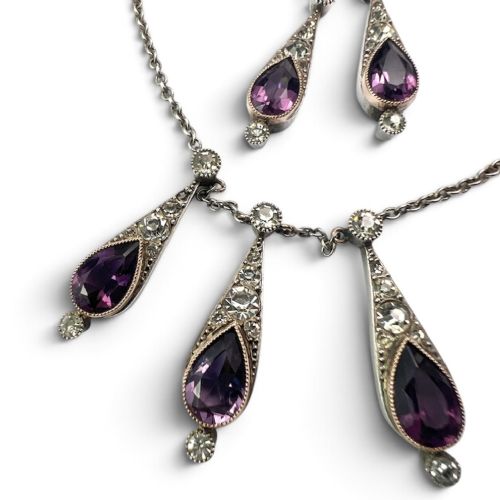
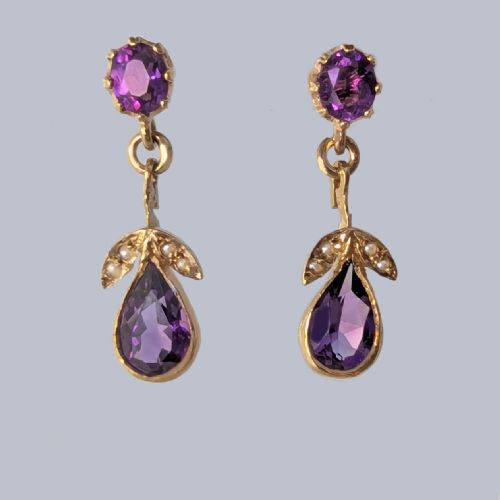
Purple amethyst drop earrings span multiple eras, encompassing genuine antique Victorian pairs alongside Edwardian designs and mid-century twentieth-century numbers. These pieces hang below the earlobe, often pairing purple quartz with supporting gems like seed pearls or paste glass.
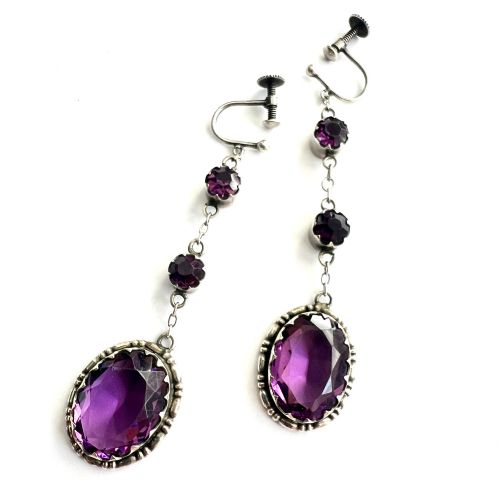
The assortment includes chain drops, teardrop pendants, and screwback fastenings, reflecting shifts in jewellery design from the nineteenth century through the 1960s. Buyers encountering this search phrase will find both delicate gold wirework and heavier geometric shapes.
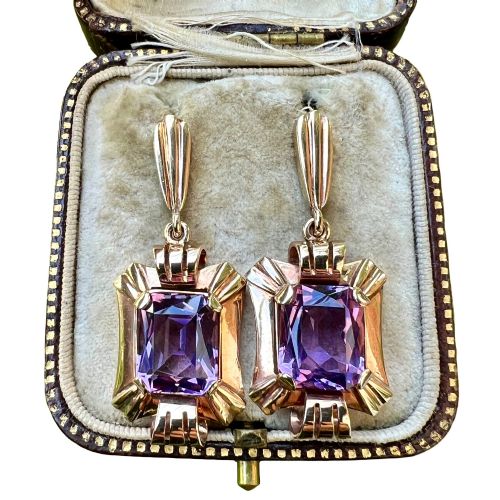
Victorian and Edwardian iterations tend to incorporate ornate gold mountings, whereas mid-century examples lean towards simpler stud drops and modernist lines. Each period brings distinct metalwork techniques to the suspension of the purple stones.
How they were made
Goldsmiths shaped these pieces using yellow, white, and rose gold alongside silver, setting faceted or smooth purple amethysts into claws, bezels, and collets. Many examples integrate seed pearls wired individually into floral or cluster motifs surrounding the central quartz.
Constructive methods evolved from hand-forged nineteenth-century mountings to twentieth-century cast settings and hallmarked components. Fastenings range from traditional hook wires and screwbacks to modern post fittings.
Materials span nine-carat gold, silver, pearls, and paste glass, set across Victorian, Edwardian, and twentieth-century modernist periods.
What varies in quality
The saturation and clarity of the purple stones set the visual hierarchy, alongside the precision of the facet cutting. Deeper, more even colour distribution within the quartz generally marks out a superior specimen.
The weight and purity of the precious metal mountings, from nine-carat to fifteen-carat gold and silver, dictate the structural integrity of the drop mechanism. Heavier wirework and secure setting claws separate robust construction from lighter, more fragile assemblies.
The Purple Amethyst Drop Earrings Glossary
- Amethyst
- A purple variety of quartz prized for its violet hue. It serves as the primary gemstone across Victorian, Edwardian, and twentieth-century drop designs.
- Seed pearl
- A very small, natural or cultured pearl often drilled and wired in clusters. They frequently accent the purple stones in antique earrings.
- Screwback
- A mechanical earring fastening utilising a threaded post and a small rotating disc to secure the piece without a pierced earlobe. This mechanism was especially common in Victorian and mid-century jewellery.
- Paste glass
- Hand-cut and polished glass used as a gemstone simulant in historic paste jewellery. It mimics the appearance of precious stones in period settings.
- Drop earring
- Any earring design that suspends a decorative element below the base of the metal finding or earlobe. These pieces move independently of the wearer.
Purple Amethyst Drop Earrings: Frequently Asked Questions
How do I date these earrings?
Dating relies on the metal hallmarks, the style of the mountings, and the type of fastening mechanism used. Victorian and Edwardian examples often feature closed-back settings or hand-twisted wirework, whereas mid-century pairs utilise simpler cast frames.
Examination of the metal purity marks and the cut of the purple amethysts provides further clues to the decade of manufacture. Comparing the overall silhouette to documented jewellery periods clarifies the timeline.
Are all amethysts naturally purple?
Amethyst is naturally a violet-purple quartz coloured by natural irradiation and trace iron impurities. The depth of the purple varies from pale lilac to deep violet depending on the stone's origin.
Historical pieces utilise both pale rose-toned stones and deeply saturated purple gems. Natural variations mean no two earrings share the exact same shade.
Can I wear them daily?
Quartz has a reasonable hardness of seven on the Mohs scale, making these earrings suitable for regular wear with sensible care. Historic metalwork and delicate seed pearls require gentler treatment than modern solid-cast pieces.
Storing them separately prevents the purple stones from scratching or striking other jewellery items. Removing them before vigorous activity protects the hanging chains and drop mechanisms.
What is a screwback fastening?
A screwback fastening is an adjustable mechanical clasp designed for unpierced ears. A small threaded screw tightens a backing plate against the lobe to hold the drop securely in place.
This style appears frequently on Victorian and mid-century earrings. Collectors value functioning mechanisms that retain their original adjustment thread.