


Prussian Military Headgear
Prussian military headgear brings tangible imperial history to a room, offering distinct spiked helmets and officer pieces built for the Kaiserreich period.
Prussian Military Headgear
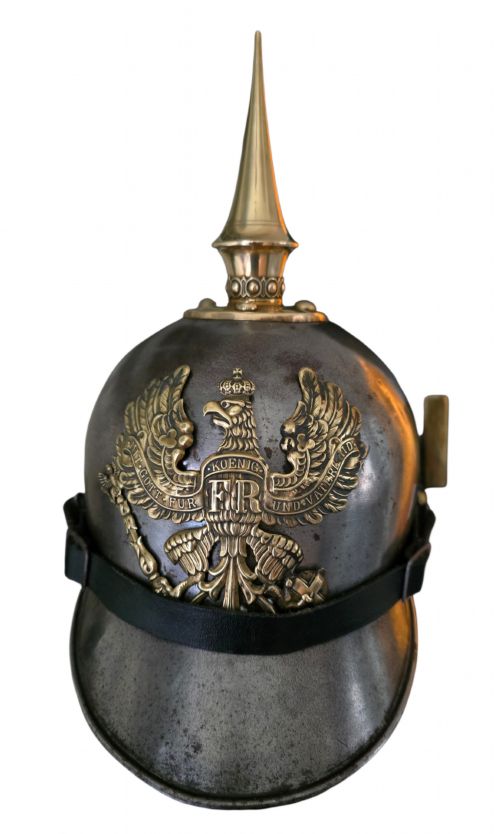
Prussian military headgear encompasses the iconic spiked helmets and military helmets associated with Imperial German forces from the nineteenth century through the First World War. Buyers searching for prussian military headgear encounter notable forms including the pickelhaube, alongside infantry and officers helmets bearing distinct eagle plates.
The pieces on this page span several decades, reaching from eighteen-sixty and eighteen-seventy examples up to nineteen-fifteen and nineteen-eighteen items. Infantry and pioneer battalion helmets sit alongside officer variations, reflecting the structured hierarchy of the nineteenth century military.
Most items on this page lean heavily into the Kaiserreich and Imperial German styles, showcasing the formal appearance demanded by the period. Collectors will find both other ranks and officers representations among these military headgear examples.
How they were made
Construction relies heavily on boiled leather, standard leather, and sturdy felt to form the foundational shell of each helmet. Brass fittings and metal elements provide structural reinforcement and decorative plates across the exterior.
Horsehair, steel, and wool frequently appear as supplementary materials, particularly in plumes, interiors, and structural components. These varied materials combine to create the robust profile characteristic of nineteenth century military gear.
Listings span from eighteen-sixty through nineteen-eighteen, covering both nineteenth century military styles and First World War eras.
What varies in quality
Quality separates along the distinction between standard other ranks equipment and higher-tier officers helmets. Officer pieces generally display finer detailing in their brass fittings and insignia compared to standard soldiers helmets.
The preservation of organic materials like leather and horsehair dictates the overall integrity of a piece. Stronger survival of the boiled leather shell and metal mounts denotes a superior example within the historical range.
The Prussian Military Headgear Glossary
- Pickelhaube
- A spiked helmet worn by nineteenth and early twentieth-century German military forces. It serves as the quintessential form of prussian military headgear.
- Kaiserreich
- The German Empire period spanning from eighteen-seventy-one to nineteen-eighteen. This era defines the predominant style of the helmets found here.
- Boiled leather
- Leather hardened by immersion in hot water or wax, forming a rigid protective shell. This material constitutes the main body of many helmets on this page.
- Pioneer battalion
- Combat engineer units within the army. Helmets associated with these battalions carry specific organizational heritage.
Prussian Military Headgear: Frequently Asked Questions
What is a pickelhaube?
A pickelhaube is a spiked helmet worn by German military forces during the nineteenth and early twentieth centuries. It stands as the primary style encountered when exploring prussian military headgear.
The distinctive spike atop the helmet often unscrews or detaches depending on the specific military branch and rank of the wearer. These helmets served both ceremonial functions and active service roles across different periods.
How do I date these helmets?
Dating relies on stylistic changes, model numbers like the model eighteen-ninety-five, and associated historical conflicts. Pieces range from eighteen-sixty through the First World War.
Examining the metal fittings, eagle plates, and construction materials helps narrow down the specific decade of manufacture. Imperial German designs evolved significantly between the mid nineteenth century and nineteen-eighteen.
What is the difference between officer and soldier helmets?
Officer helmets typically feature higher quality materials and finer metal fittings compared to other ranks examples. They reflect the distinct social and military hierarchy of the Imperial German army.
Privately purchased officer pieces often exhibit superior craftsmanship in the eagle plates and interior linings. Standard soldiers helmets followed strict government specifications for mass production.
How should I display military headgear?
Military headgear requires stable display conditions away from direct sunlight and excessive humidity to protect organic materials. Leather and horsehair components need consistent indoor climates to prevent degradation.
Support mounts should distribute the weight evenly across the interior rather than straining the brim or crown. Proper support ensures the boiled leather shell retains its historical shape over time.