




Provincial Rush Chairs
Provincial rush chairs bring honest country craftsmanship into a room, offering sturdy seating built from local woods with woven seats.
Provincial Rush Chairs
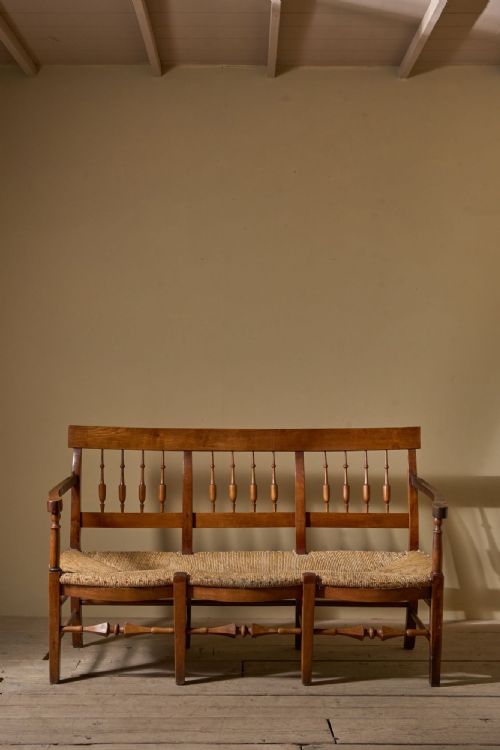
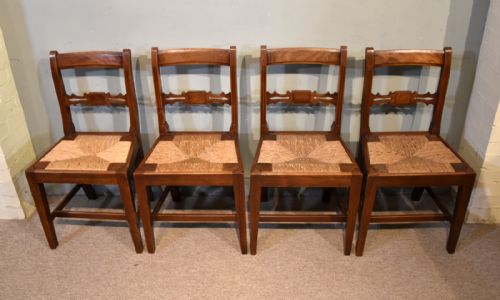
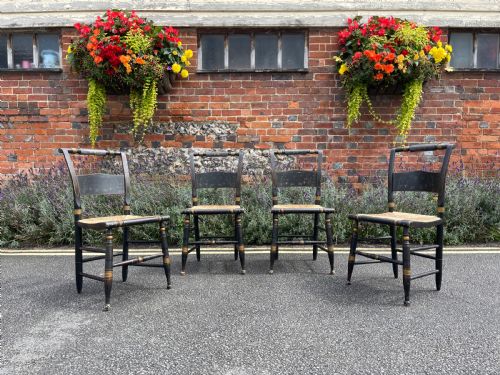
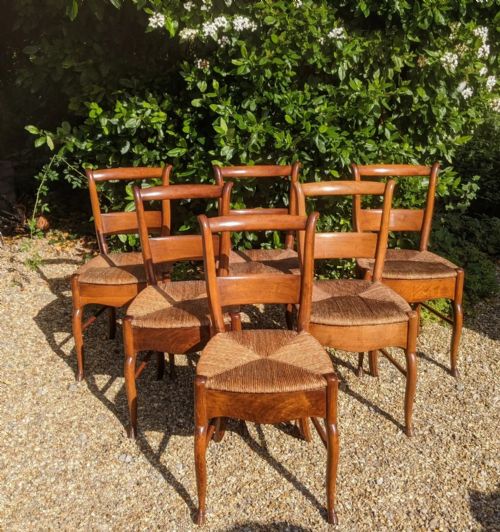
Provincial rush chairs encompass dining chairs, side chairs, and benches originating from rural workshops across various regions. When you search for provincial rush chairs, you find dining sets and individual seating ranging from the eighteenth century to the early twentieth century. The selection leans heavily toward French provincial forms, alongside English, Dutch, Italian, and American examples.
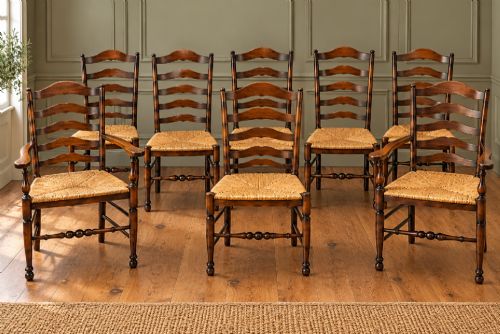
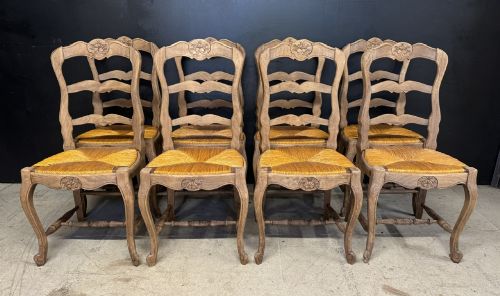
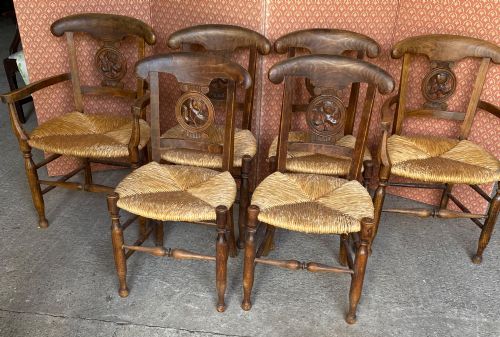
Makers in the countryside produced these forms for everyday domestic use in kitchens and dining rooms. You encounter ladder back designs, hoof feet, and Louis XV styles executed in oak, fruitwood, ash, elm, and walnut. Sets vary from pairs up to twelve chairs, alongside long hall benches suitable for country interiors.
Materials and construction methods
Local hardwoods form the structural frames of these seats, utilising oak, fruitwood, ash, elm, walnut, and general hardwood. Carpenters shaped ladder backs and upright supports from these native timbers, sometimes applying paint for a finished appearance.
The defining feature is the woven rush seat, constructed using marsh plants twisted into durable cords and hand-woven across the wooden framework. This traditional technique provided a resilient, supportive surface that withstood daily household dining.
Provincial Rush Chairs Retail Price Guide 2026
Typical asking prices for provincial rush chairs among the pieces listed under this phrase on Sellingantiques today, from the lower quarter to the upper quarter. They describe what is for sale here now, not the wider market.
Certain nineteenth-century makers carved the wooden feet into the shape of hooves, giving hardworking kitchen chairs a surprisingly nimble stance.
Assessing quality in country seating
Quality rests in the proportional balance of the turned or shaped wooden members and the tightness of the rush weave. Finer examples display carefully carved ladder backs, robust hoof feet, and well-seasoned fruitwood or walnut timbers that age with a rich surface patina.
The structural integrity of the joints and the preservation of the original woven seating dictate the standing of a piece. Uniformity across larger dining sets elevates the desirability, especially when the frames retain their original unblemished timber surfaces.
The Provincial Rush Chairs Glossary
- Rush
- A marsh plant material twisted into cordage and hand-woven to create traditional flexible seating surfaces. It provides a natural, textured pad for country dining chairs.
- Ladder back
- A chair back featuring horizontal wooden slats resembling the rungs of a ladder between the vertical posts. This regional style appeared frequently in seventeenth and eighteenth-century rural workshops.
- Hoof foot
- A carved foot design shaped to resemble the hoof of an animal, seen on certain nineteenth-century regional seating. This decorative detail lifts the legs with sculptural flair.
- Fruitwood
- Timber sourced from fruit-bearing trees such as pear, cherry, or apple, utilised extensively by provincial cabinetmakers. It yields a warm tone and smooth grain when polished.
Provincial Rush Chairs: Frequently Asked Questions
How do I clean a rush seat?
Maintain rush seats by brushing them gently with a soft attachment to remove dust from the woven cords.
Avoid applying water or liquid cleaners directly onto the natural plant fibres to prevent weakening the weave.
Are these chairs comfortable for daily dining?
Country rush seating provides a surprisingly resilient and supportive surface suited for extended sitting during meals.
The woven plant fibres yield slightly to the body while maintaining their structural tension over time.
How can I date an oak ladder back?
Examine the timber colour, tool marks, and construction joints to estimate the period of manufacture.
Earlier pieces show hand-turned components and pegged joints, whereas twentieth-century interpretations often exhibit more uniform machine finishing.
Can I mix different provincial styles together?
Country seating from different regions often shares an honest aesthetic that allows chairs from French and English traditions to sit harmoniously.
Focusing on matching wood tones or similar ladder back designs helps unify mixed seating arrangements around a dining table.