



Provincial Oak Writing Table
A provincial oak writing table brings honest rural craftsmanship and practical timber surfaces into a modern room.
Provincial Oak Writing Table
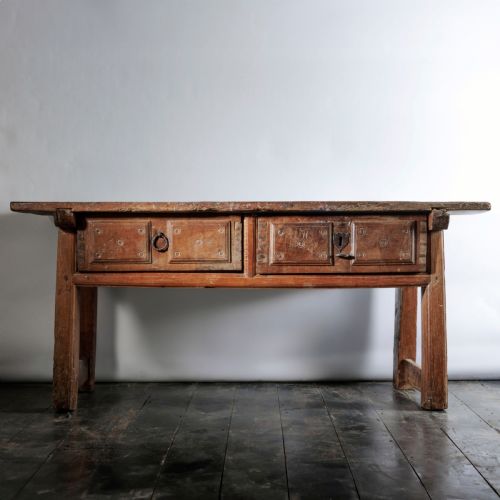
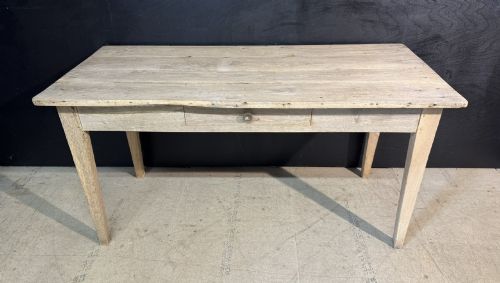
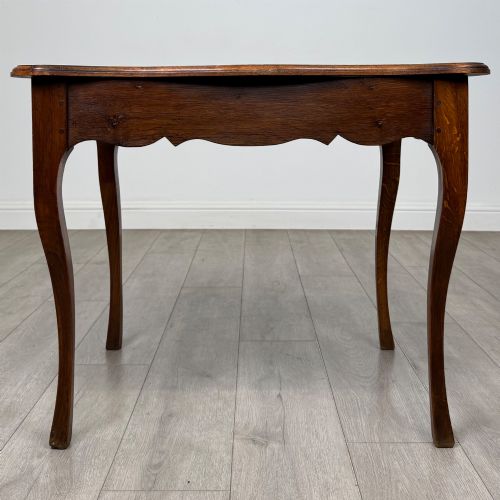
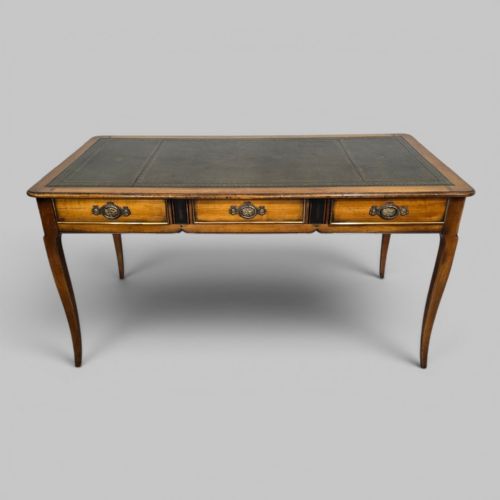
When searching for a provincial oak writing table, buyers find sturdy timber furniture built for regional utility rather than formal courtly life. These pieces encompass various forms including side tables, lowboys, partners library desks, and farmhouse tables created across the eighteenth and nineteenth centuries.
The versions most commonly met on this page originate from French, English, Welsh, and Spanish provincial workshops. They display straightforward construction methods using native hardwoods like oak and elm, often fitted with drawers for storage.
Regional characteristics define these tables, separating English and Welsh lowboys from French provincial side tables and Spanish occasional pieces. Their surfaces show the grain and wear accumulated through generations of domestic use.
How they were made
Carpenters constructed these tables using solid oak timbers, frequently paired with elm for secondary parts or drawer linings. Workshops relied on traditional joinery techniques suited to regional timber supplies and domestic requirements.
Metal elements such as brass handles and wrought iron or standard iron fittings appear on drawers and structural joints. Some examples incorporate leather surfaces for writing, alongside carved ornamentation like the green man motif.
Provincial Oak Writing Table Retail Price Guide 2026
Typical asking prices for provincial oak writing table among the pieces listed under this phrase on Sellingantiques today, from the lower quarter to the upper quarter. They describe what is for sale here now, not the wider market.
The inventory records vernacular forms ranging from Welsh lowboys and French farmhouse tables to Spanish occasional writing desks.
What varies in quality
The distinction between ordinary and superior examples lies in the selection of the timber and the integrity of the regional construction. Better pieces retain their original patination and uncompromised structural proportions without excessive modern intervention.
Subtlety of carved detail and the quality of secondary woods like elm differentiate standard farmhouse utilities from finer lowboys and library desks. The presence of documented provenance or untouched regional hardware elevates specific specimens.
The Provincial Oak Writing Table Glossary
- Lowboy
- A small table with one or more drawers, commonly used as a dressing table or writing surface in eighteenth-century rooms. These pieces typically feature slender legs supporting a compact top.
- Partners desk
- A large desk designed for two people to work opposite one another, often featuring banks of drawers on both sides. These heavy library tables use robust timbers to support daily clerical labour.
- Provincial
- Describing furniture made in regional areas outside metropolitan centres, following local traditions rather than court fashions. Makers utilised readily available woods like oak and elm for these domestic items.
- Elm
- A durable hardwood with an interlocking grain, frequently employed by country cabinetmakers for secondary elements or drawer construction. Its toughness made it suitable for parts subject to heavy stress.
Provincial Oak Writing Table: Frequently Asked Questions
What is a lowboy?
A lowboy is a small table with drawers, traditionally used for writing or grooming in smaller rooms. They became popular during the eighteenth century in country houses.
These pieces offer compact storage while maintaining a light visual footprint in a contemporary interior.
How do I care for antique oak?
Keep oak furniture away from direct heat sources and sudden humidity changes to prevent the timber from splitting. Regular dusting with a dry cloth maintains the surface.
Avoid modern silicone polishes that build up and attract dirt over time. Traditional wax feeds the dry wood appropriately.
Where were these tables made?
Regional workshops across France, England, Wales, and Spain produced these tables to serve local domestic and agricultural communities. Each region developed distinct proportions and decorative vocabulary.
Country cabinetmakers utilised native woods available in their immediate surroundings rather than imported exotic timbers.
Can I use an antique table daily?
These tables were originally built for heavy daily labour and domestic administration, making them inherently sturdy for modern use. Oak and elm withstand regular contact well.
Using coasters and blotters protects the historic timber surface from moisture rings and ink stains while you write.