




Primitive Windsor Armchair
A primitive windsor armchair is a vernacular country seat built by regional joiners, offering honest timber construction and sculptural spindle backs.
Primitive Windsor Armchair
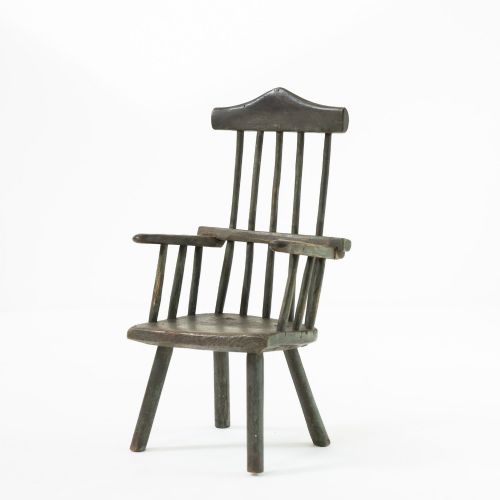
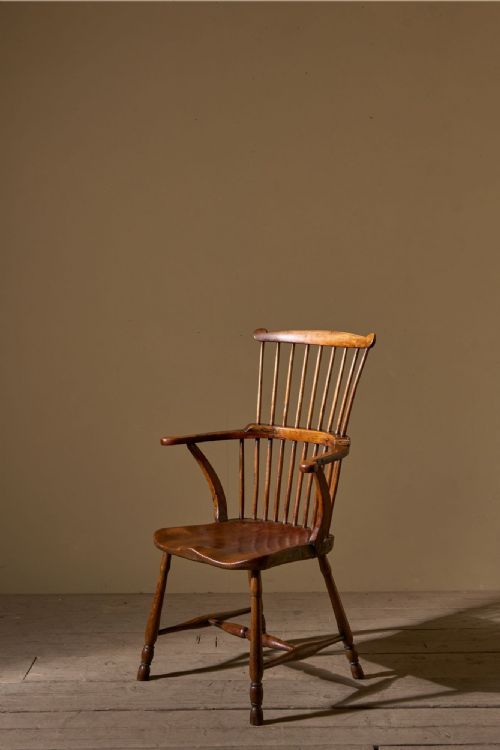
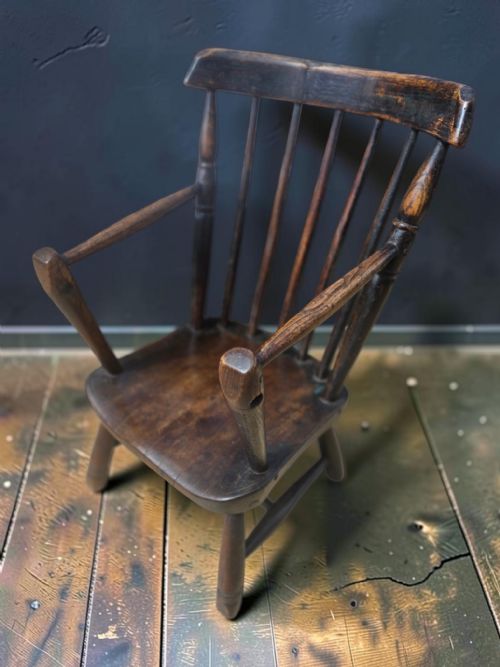
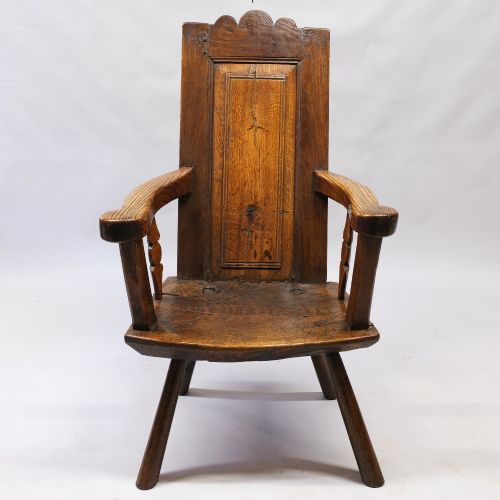
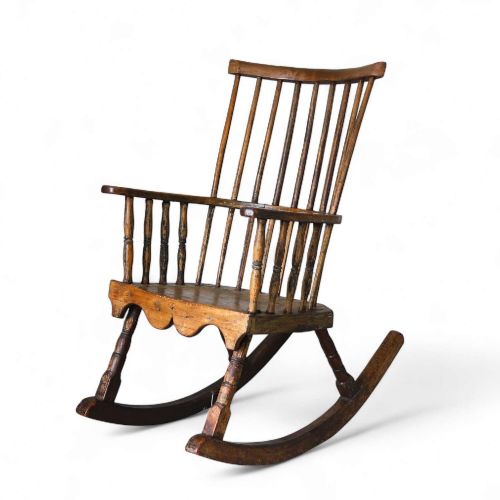
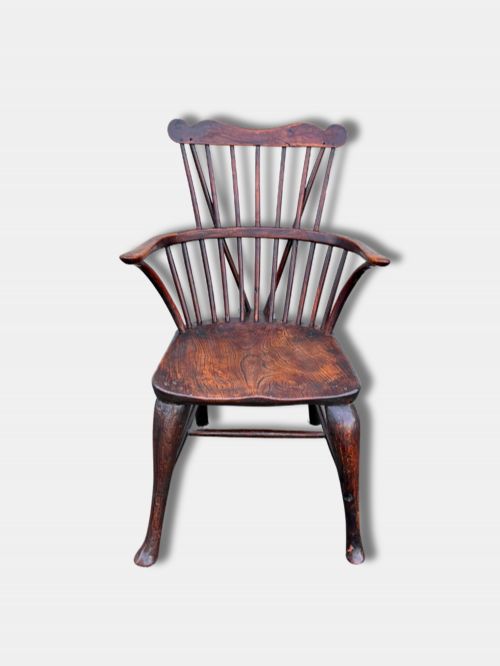
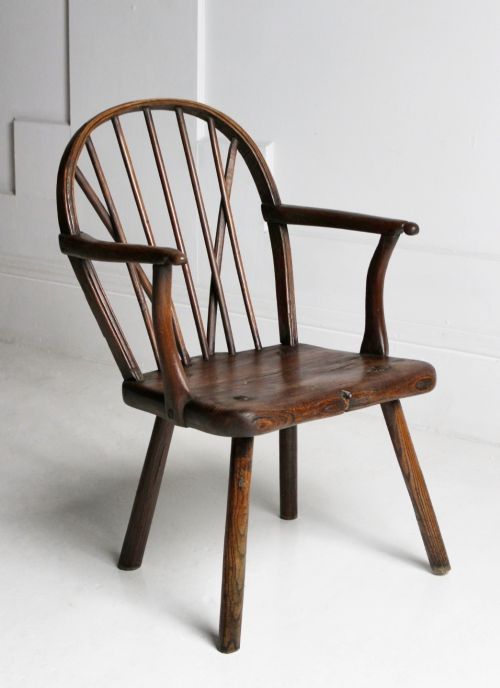
When you search for a primitive windsor armchair, you encounter regional English, Welsh and Irish country seating dating from the eighteenth and nineteenth centuries. These chairs span forms including comb-backs, panel-backs, stick-backs, hoop-backs and rocking variants.
The most common examples you meet on this page are eighteenth-century and nineteenth-century elm and ash pieces originating from Welsh and English vernacular traditions. Makers built these chairs for everyday domestic use in farmhouses and cottages.
The selection also includes smaller child's armchairs and chairs incorporating yew, fruitwood, sycamore, oak and laburnum. Regional variations range from Thames Valley designs to Swansea and Carmarthenshire stick chairs.
Materials and construction
Joiners selected contrasting native timbers for different parts of the chair, combining elm seats with ash spindles and occasionally adding yew, fruitwood or laburnum. This multi-wood construction utilised the specific bending and load-bearing properties of each tree species.
Makers shaped heavy solid timber seats using adzes and gouges, boring tapered holes to receive turned legs and stick backs. Component parts were wedged and pinned together without metal screws or complex upholstery.
Some regional examples retain historic painted finishes over the bare wood, while others display exposed burr elm figuring and natural grain patterns developed through centuries of handling.
Listings feature eighteenth-century and nineteenth-century pieces constructed from ash, elm, yew, fruitwood, sycamore, oak and laburnum.
Judging quality in country seating
Quality rests in the harmony of regional proportions, the balance between the turned spindle rake and the sculpted seat slab, and the boldness of the comb-back crest. A successful chair displays confident local vernacular design rather than clumsy rustic proportions.
The choice and combination of timbers dictate visual depth, with variegated yew or burr elm displaying superior figure compared to plain secondary hardwoods. Original untouched surfaces with accumulated patination hold greater character than stripped or overly sanded timber.
Structural integrity depends on the tightness of the wedged joints and the thickness of the original elm seat rather than applied decorative flourishes.
The Primitive Windsor Armchair Glossary
- Comb-back
- A Windsor chair back where the vertical spindles rise to pierce a horizontal top rail resembling a hair comb. This style provides solid upper back support.
- Vernacular
- Objects built by regional craftsmen following local traditions rather than metropolitan academic designs. These pieces utilise available local materials and practical construction methods.
- Stick-back
- A chair construction method where turned wooden sticks form the back rest directly inserted into the seat. It is a defining characteristic of country seating.
- Lobster pot
- A regional comb-back windsor chair configuration featuring strongly splayed vertical sticks curving upwards and outwards. The profile resembles traditional woven fishtraps.
- Panel-backed
- A Windsor variant incorporating a solid wooden panel within the upper back structure rather than open spindles. This form often appears in earlier eighteenth-century pieces.
Primitive Windsor Armchair: Frequently Asked Questions
How do I identify a Welsh primitive windsor chair?
Welsh chairs typically display distinct regional turning patterns, specific local timber choices like burr elm or ash, and characteristic stick-back or comb-back formations originating from workshops in areas such as Snowdonia or the Swansea Valley.
Examination of the seat base and undercarriage joinery often reveals the specific hand tools and methods used by rural Welsh makers during the eighteenth and nineteenth centuries.
Were these chairs painted originally?
Many country chairs received protective coats of paint or dark stains to unify mixed timbers or preserve the softwood and hardwood components.
Surviving historic paint layers contribute significant character and historical evidence to the piece, though many examples were stripped down to bare wood during later periods.
How do I care for an elm and ash armchair?
Keep wooden country chairs away from direct heat sources and rapid temperature fluctuations to prevent timber shrinkage and joint loosening. Feed dry historic wood with appropriate traditional wax polish.
Avoid harsh chemical cleaners that strip the accumulated patina and dry out the grain of ancient hardwood surfaces.