
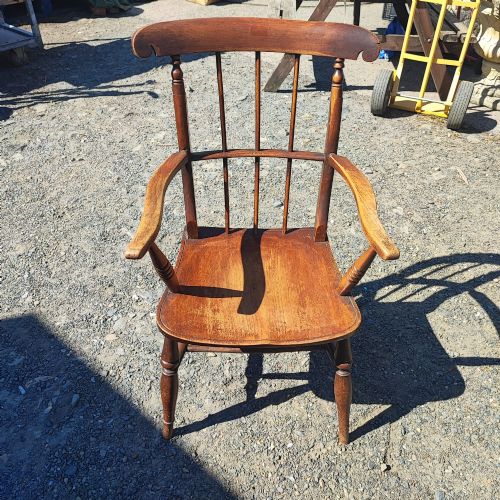
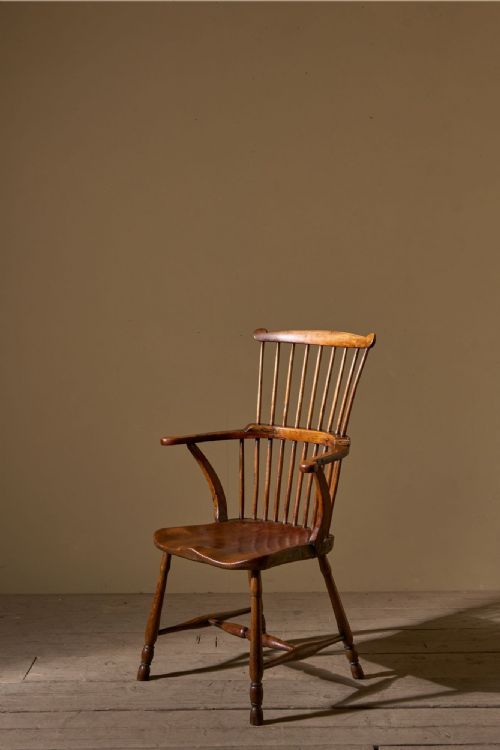
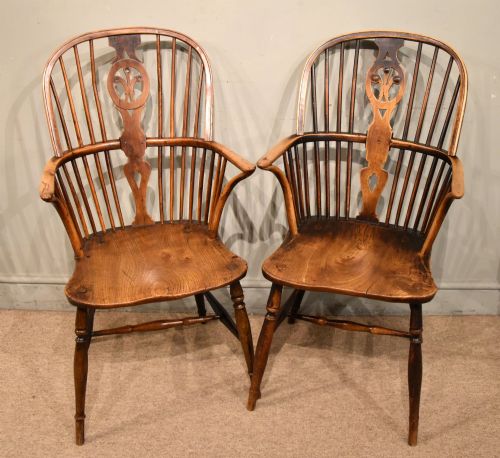
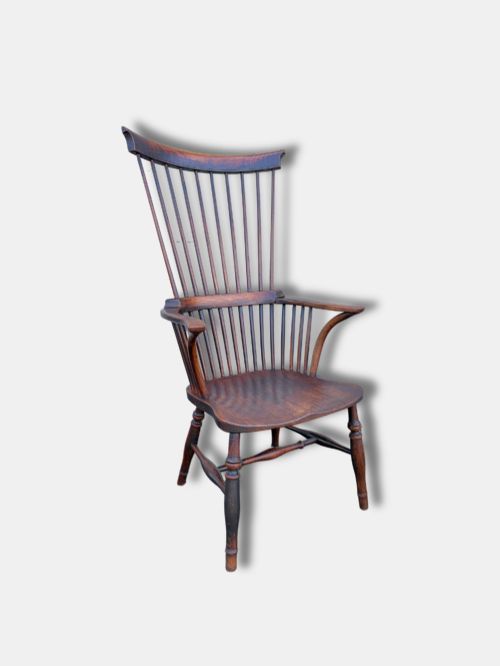
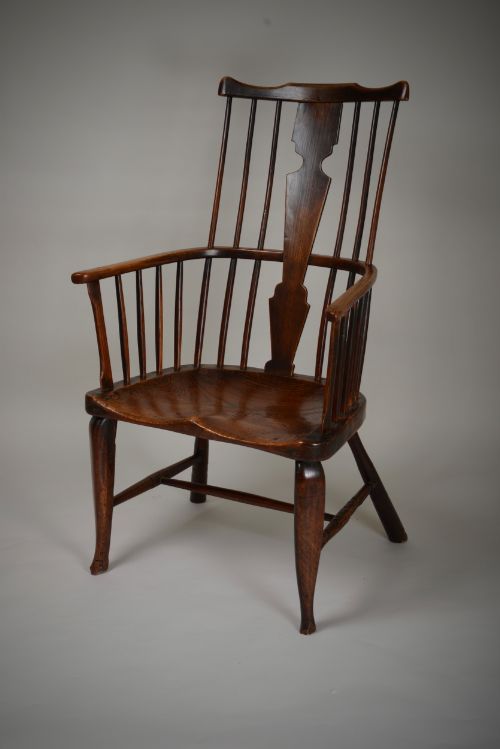
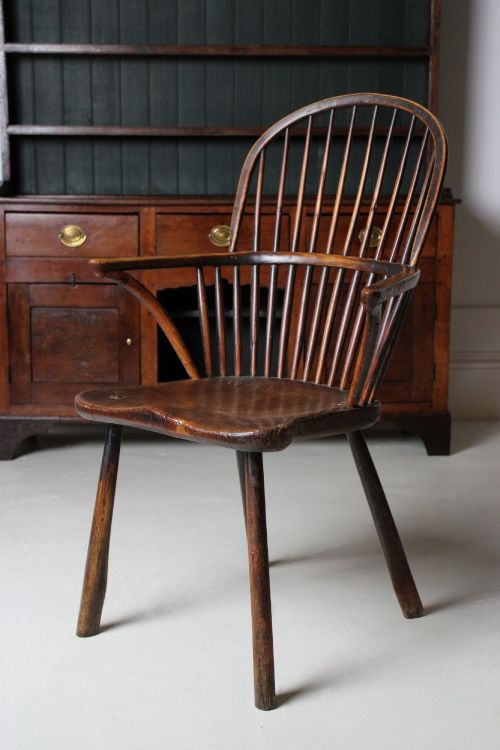
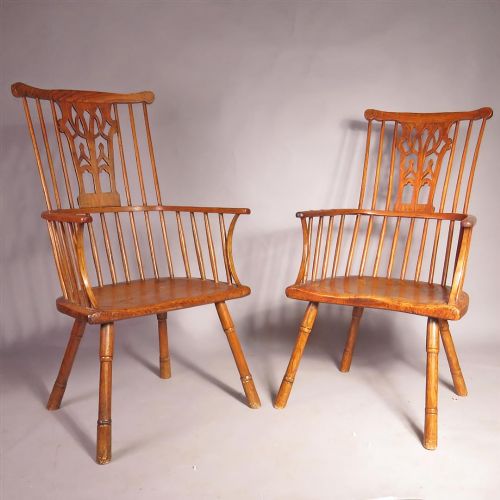
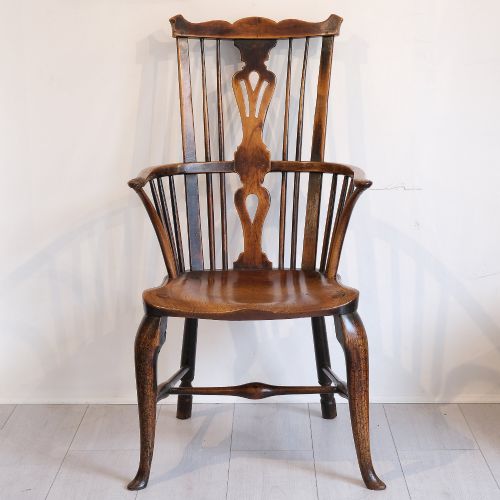
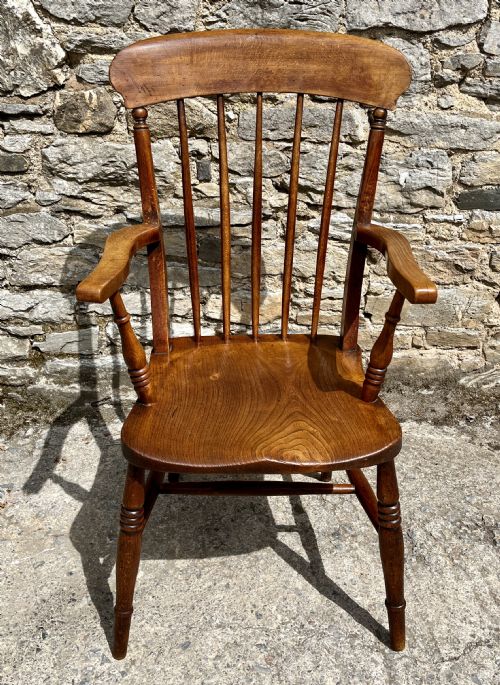


Elm Comb Back Armchair
An elm comb back armchair is a traditional vernacular seat combining sturdy regional craftsmanship with distinctively grained timber.
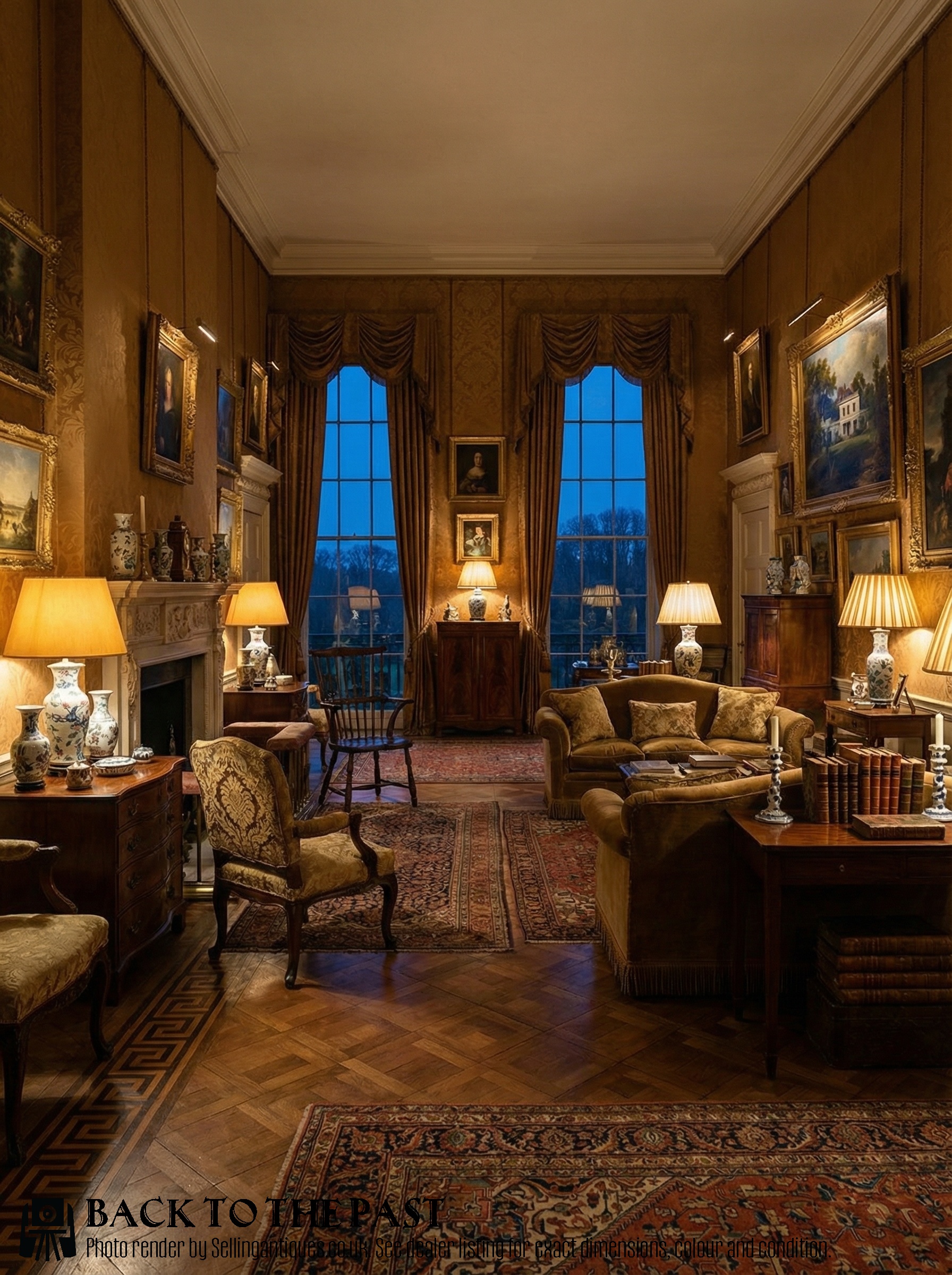
Elm Comb Back Armchair
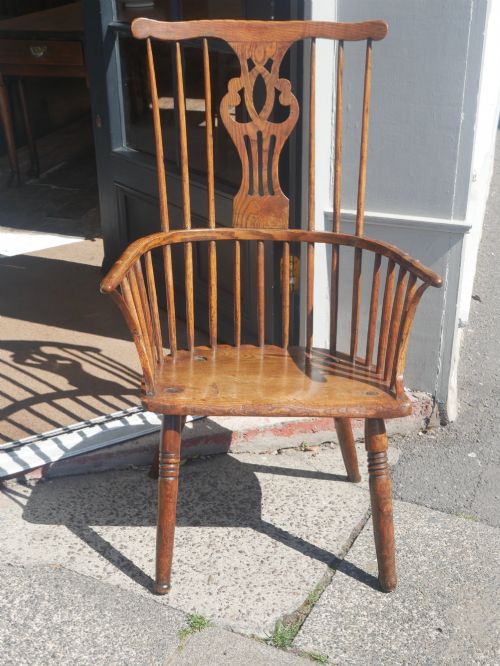
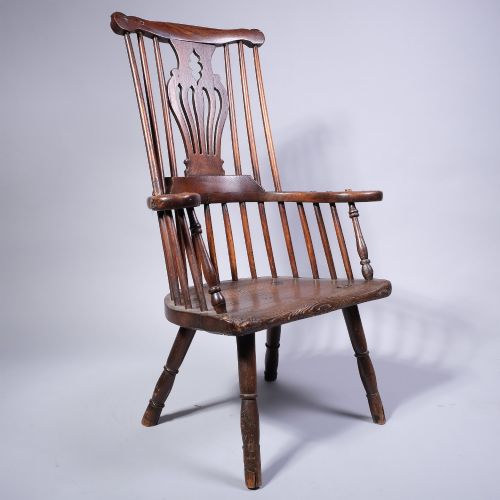
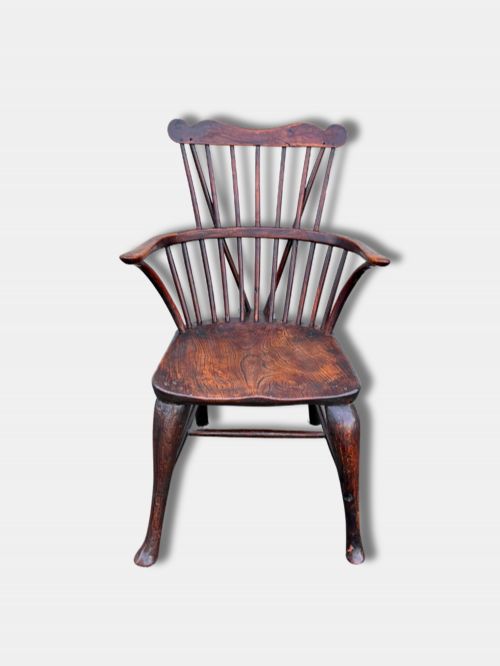
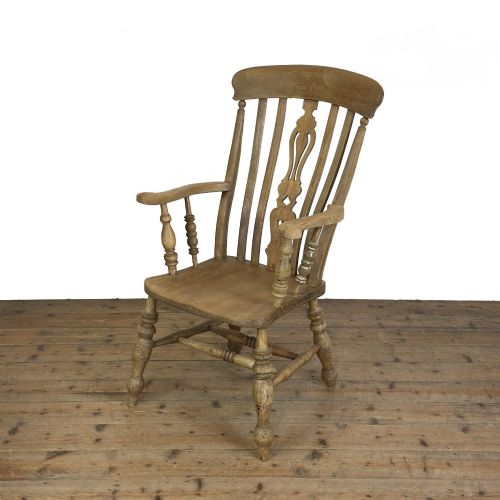
An elm comb back armchair represents a cornerstone of vernacular seating, built by regional joiners utilising local timber resources. When you examine this selection, you encounter pieces spanning the eighteenth and nineteenth centuries, including Georgian and Victorian examples.
Materials and construction
Maker construction relies on a clever combination of woods chosen for their specific mechanical properties. Solid elm provides a richly figured, resilient seat board that resists splitting, while ash supplies the bending strength needed for spindles, bows, and arm supports.
Additional timbers such as yew, fruitwood, beech, and oak often appear in secondary components or multi-wood frames. Joinery typically employs traditional through-wedged tenons and peg construction, uniting shaped seats with steam-bent superstructures.
Listings feature pieces spanning the Georgian, Regency, and Victorian periods, constructed primarily from elm, ash, and fruitwood.
Assessing quality and character
Quality rests heavily on the sculptural handling of the solid elm seat and the rhythmic spacing of the comb back spindles. Superior examples display balanced proportions, elegant arm scrollwork, and minimal structural replacement over centuries of use.
The depth of surface appearance, developed through decades of polishing and handling, distinguishes exceptional pieces from ordinary ones. Timber selection also dictates standing, with burr elm or mixed fruitwood and yew combinations bringing added visual texture.
Darvil
The Elm Comb Back Armchair Glossary
- Comb back
- A Windsor chair variation where the vertical spindles extend right through the bentwood arm rail to form a high back topped by a flat, comb-like crest.
- Vernacular
- Objects designed by regional makers for local utility rather than following strict high-style metropolitan fashions of the period.
- Thames Valley
- A recognised geographic centre for Windsor chair production, known for specific stylistic refinements and fine timber selection.
- Lobster pot
- A descriptive term for a chair with outwardly splayed spindles resembling the shape of a traditional wicker fishing trap.
- Spindle
- A slender, turned or shaved wooden rod supporting the arms or backrest of the chair.
Elm Comb Back Armchair: Frequently Asked Questions
What is an elm comb back armchair?
It is a wooden Windsor-style seat featuring a distinct upper rail that resembles a comb, supported by vertical spindles above a shaped solid timber seat.
These chairs were produced across British regional workshops using native woods like elm and ash for daily domestic utility.
Where were these chairs made?
Production took place in various regional workshops throughout England, Wales, and Scotland, with notable regional variations emerging from places like the Thames Valley.
Local timber availability heavily influenced which woods a maker selected for the seat, legs, and superstructure.
How do I care for an elm chair?
Keep the wood away from direct heat sources and sudden humidity changes to prevent the timber from splitting or joints from loosening.
Applying a gentle microcrystalline wax periodically helps maintain the natural finish and preserves the surface appearance.
How can I tell an 18th century chair apart from a 19th century one?
Earlier eighteenth-century pieces often display deeper saddle seats, more primitive tool marks, and specific regional idiosyncrasies in the turning and shaping.
Nineteenth-century examples frequently show standardised production methods while retaining the traditional timber combinations and vernacular charm.