
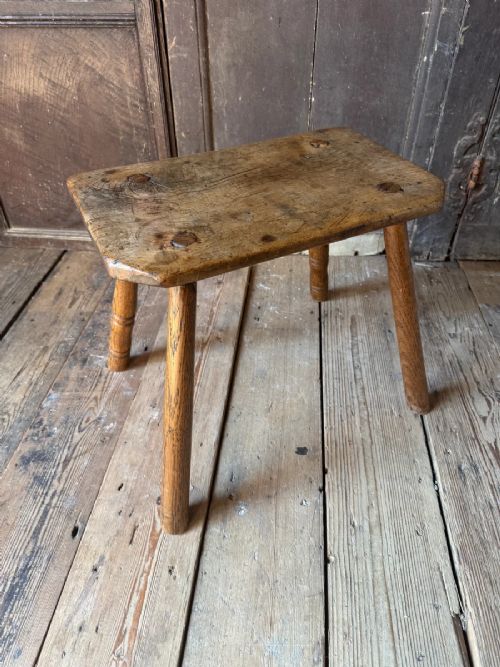
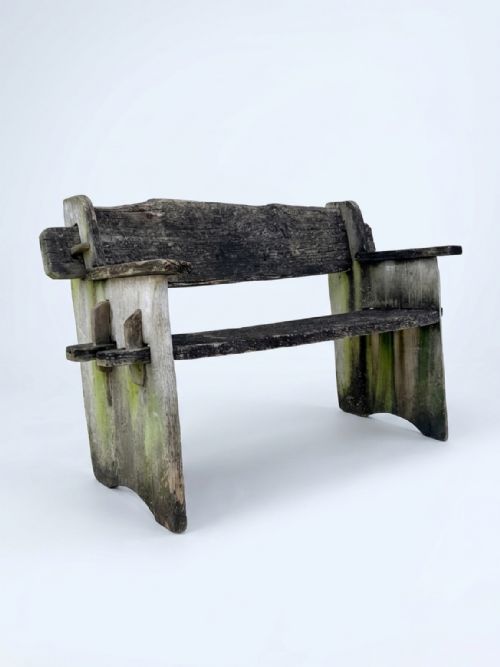
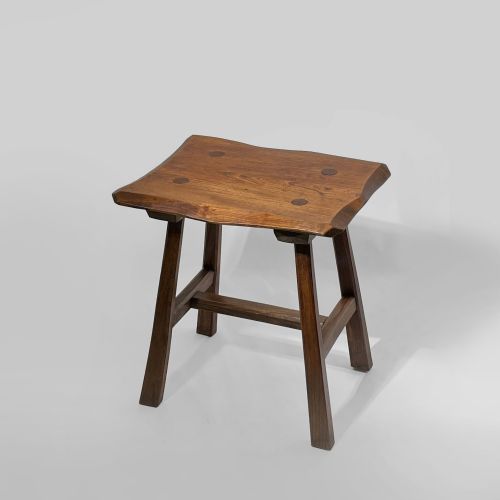
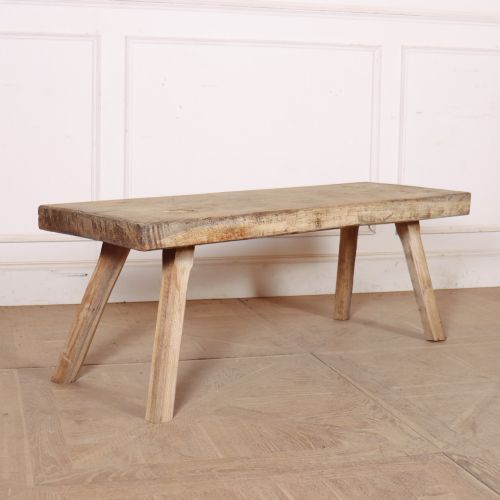


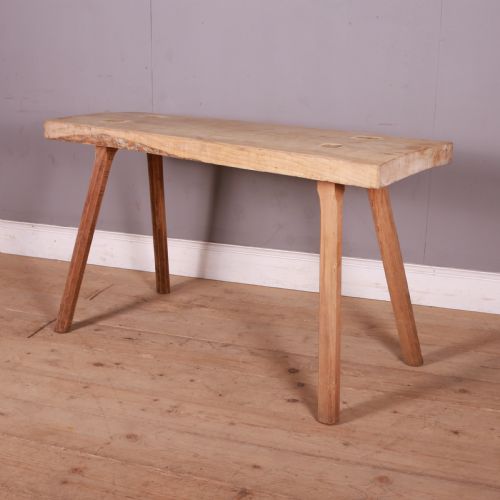
Primitive Timber Bench
A primitive timber bench offers honest utility and tactile warmth, bringing direct rural craftsmanship into contemporary rooms.
Primitive Timber Bench
A primitive timber bench search brings up a range of rustic seating and low tables shaped by rural utility across the eighteenth and nineteenth centuries. These pieces encompass English garden benches, Welsh oak seating, and occasional tables designed for functional work rather than formal display.
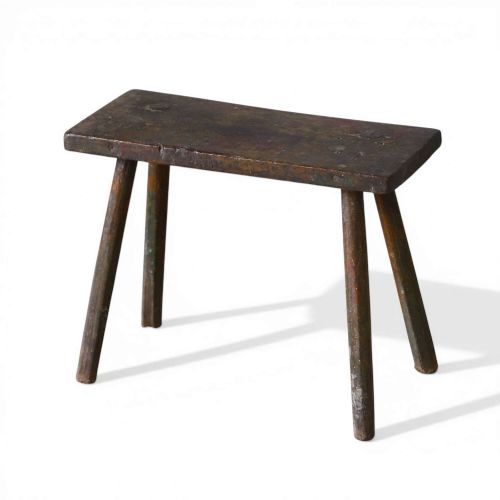
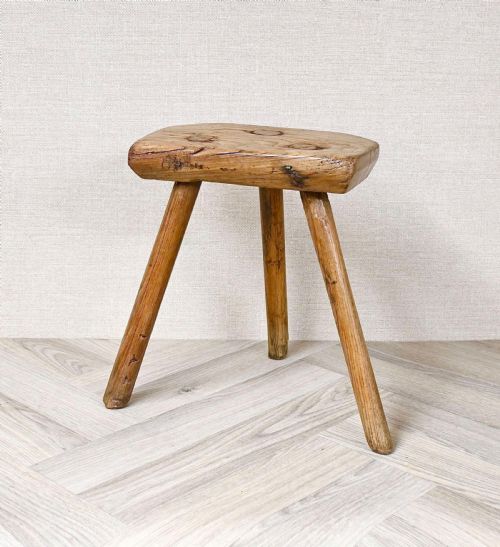
Most examples you encounter on this page span the nineteenth century, including Edwardian garden variations and earlier vernacular seating. Forms stretch from long dining benches to low milking stools and child-sized seating in native woods.
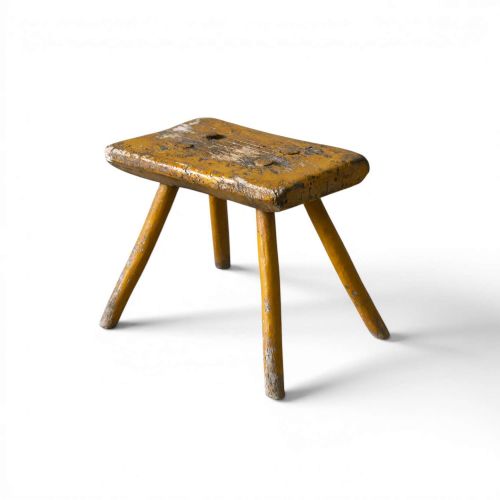
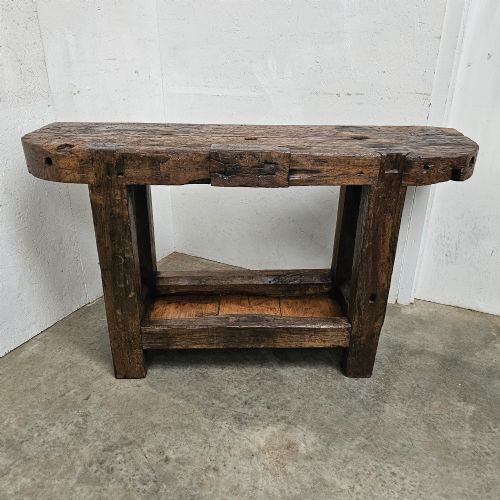
Makers utilised whatever local timber came to hand, resulting in French provincial tables, Eastern European milking stools with original paint, and sturdy workbenches. The emphasis rests entirely on straightforward construction and everyday practicality.
Materials and construction methods
Makers built these pieces using solid native hardwoods and softwoods such as oak, elm, sycamore, ash, and pine. Weathered wood and occasional applications of ochre or green paint finish the surfaces, preserving the timber while showing decades of hard use.
Construction relies on straightforward vernacular joinery, often featuring pegged mortise and tenon joints or legs wedged directly into carved seats. Carpenters shaped natural form oak and sculpted rounded seats with simple hand tools to meet immediate domestic or agricultural needs.
Several milking stools retain their original ochre and green paint, having survived generations of dairy work without a single polish.
Factors that define quality
Quality in these utilitarian pieces rests on the integrity of the original timber and the survival of honest surface patination. Untouched finishes, such as original ochre paint on Eastern European stools, hold greater interest than stripped or overly restored surfaces.
Proportion and structural honesty separate exceptional vernacular pieces from mundane utility items. A well-balanced frame with balanced wear and solid joints demonstrates the maker's practical skill without recourse to decorative artifice.
The Primitive Timber Bench Glossary
- Vernacular
- Everyday objects made by local craftspeople using traditional regional methods and materials without academic architectural influence. These items prioritize utility over high-style fashion.
- Milking stool
- A small, low three-legged or four-legged seat used by dairy workers for milking livestock by hand. They often feature simple sculpted wooden tops.
- Trestle
- A structural support consisting of a horizontal beam fixed to two splayed vertical legs. This design provides sturdy support for long benches and work tables.
- Patina
- The surface sheen and colour acquired by wood through age, handling, and wear. Good patina reflects the history of use rather than artificial polishing.
Primitive Timber Bench: Frequently Asked Questions
Are these benches suitable for daily seating?
These benches were originally built for heavy agricultural or domestic work, making them remarkably sturdy for everyday use.
Their robust timber construction handles normal sitting and placement well, though older surfaces benefit from thoughtful care.
How do I identify an eighteenth-century piece?
Eighteenth-century examples often display deeper patination, hand- adzed surfaces, and construction details consistent with early vernacular joinery.
Examining the underside and joint construction reveals the hand tools and methods typical of the period.
Can I use these benches outdoors?
Garden benches from the Edwardian period were designed for outdoor use, but interior primitive benches prefer stable indoor climates.
Moisture and fluctuating temperatures can damage historic pine, elm, and painted surfaces not treated for the garden.
Why do some stools have painted finishes?
Original paint finishes, such as ochre or green on Eastern European milking stools, served to protect the softwood and identify property.
Surviving historic paint adds considerable character and records the working life of the object.