


Primitive Comb Back Chair
A primitive comb back chair brings raw country character and centuries of honest craftsmanship straight into a modern room.
Primitive Comb Back Chair
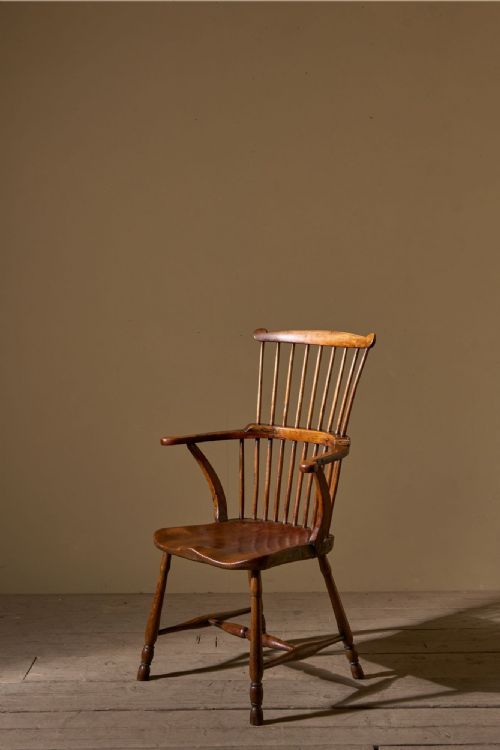
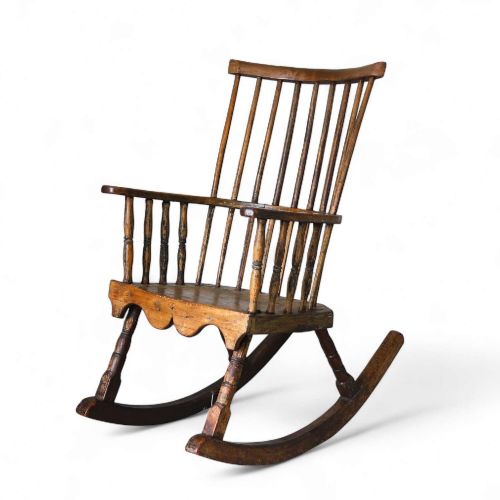
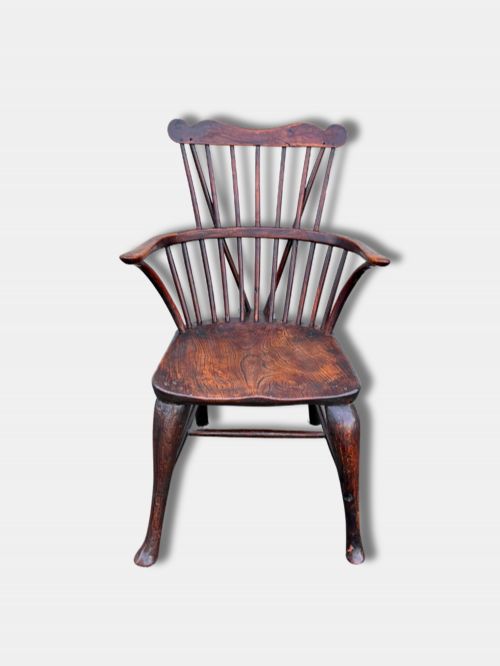
A primitive comb back chair represents the height of vernacular furniture design, constructed by regional makers using local timber. These pieces generally take the form of robust armchairs or occasional rocking chairs designed for daily domestic use.
The materials and construction reflect the needs of rural life rather than metropolitan fashion. Most examples encountered here date from the eighteenth and nineteenth centuries, spanning Georgian vernacular periods down to mid nineteenth century country workshops.
Regional variations dominate the selection, with Welsh origins appearing frequently alongside Thames Valley pieces. Buyers encounter variations ranging from simple stick backs to elaborate lobster pot forms.
How they were made
Makers relied on mixed timber construction, typically pairing sturdy ash for structural undercarriages and spindles with elm or sycamore for shaped seats. Yew, oak, and burr elm also appear in significant regional examples.
Seats are heavily sculpted from solid blocks of timber to accommodate the sitter, while spindles are shaved by hand using drawknives. The distinctive comb back crest is steam bent or shaped to form the upper rail.
Some country chairs retain tool marks left by makers who whittled the green wood by hearthside light.
What varies in quality
The sculptural grace of the seat carving and the balance of the spindle arrangement dictate the visual success of the piece. Superior examples display thoughtful integration of contrasting woods and pleasing proportions.
Surface preservation heavily influences the character of an individual chair, particularly where original timber surfaces and authentic wear remain intact. The rhythm of the comb back structure and the integrity of the joints determine lasting structural merit.
The Primitive Comb Back Chair Glossary
- Comb back
- A Windsor chair variation where the back spindles extend through a crest rail resembling the teeth of a comb. This construction offers robust support to the upper back.
- Stick chair
- A form of vernacular seating where turned or shaved sticks are tenoned directly into a solid wooden seat without a bentwood bow. These rely on sheer structural simplicity.
- Vernacular
- Furniture made by regional craftsmen for local use rather than following strict London stylistic rules. Such pieces utilise readily available local materials.
- Lobster pot
- A regional descriptor for chairs featuring tightly raked spindles that curve inwards like the slats of a fishing trap. This creates a distinctive rounded seating enclosure.
- Windsor
- A chair built with a solid wooden seat into which the legs, back spindles, and bow are separately fixed. The construction method prioritises individual component strength.
Primitive Comb Back Chair: Frequently Asked Questions
Where were these chairs made?
These chairs originated in rural workshops across regions such as Wales and the Thames Valley, where local timber was readily accessible to country craftsmen.
Makers built them for everyday domestic use rather than high-society drawing rooms, leading to distinct regional design traits.
What woods were used?
Constructors utilised mixed native timbers, most commonly pairing ash for the structural elements with elm, sycamore, or oak for the seats.
Finer examples occasionally incorporate decorative woods such as yew or burr elm to enhance the visual grain.
How do I date a chair?
Dating relies on observing construction techniques, tool marks, timber shrinkage, and regional design evolution across the eighteenth and nineteenth centuries.
Early pieces often display wider tool signatures and deeply sculpted seats reflecting eighteenth-century country practice.
How do I live with one?
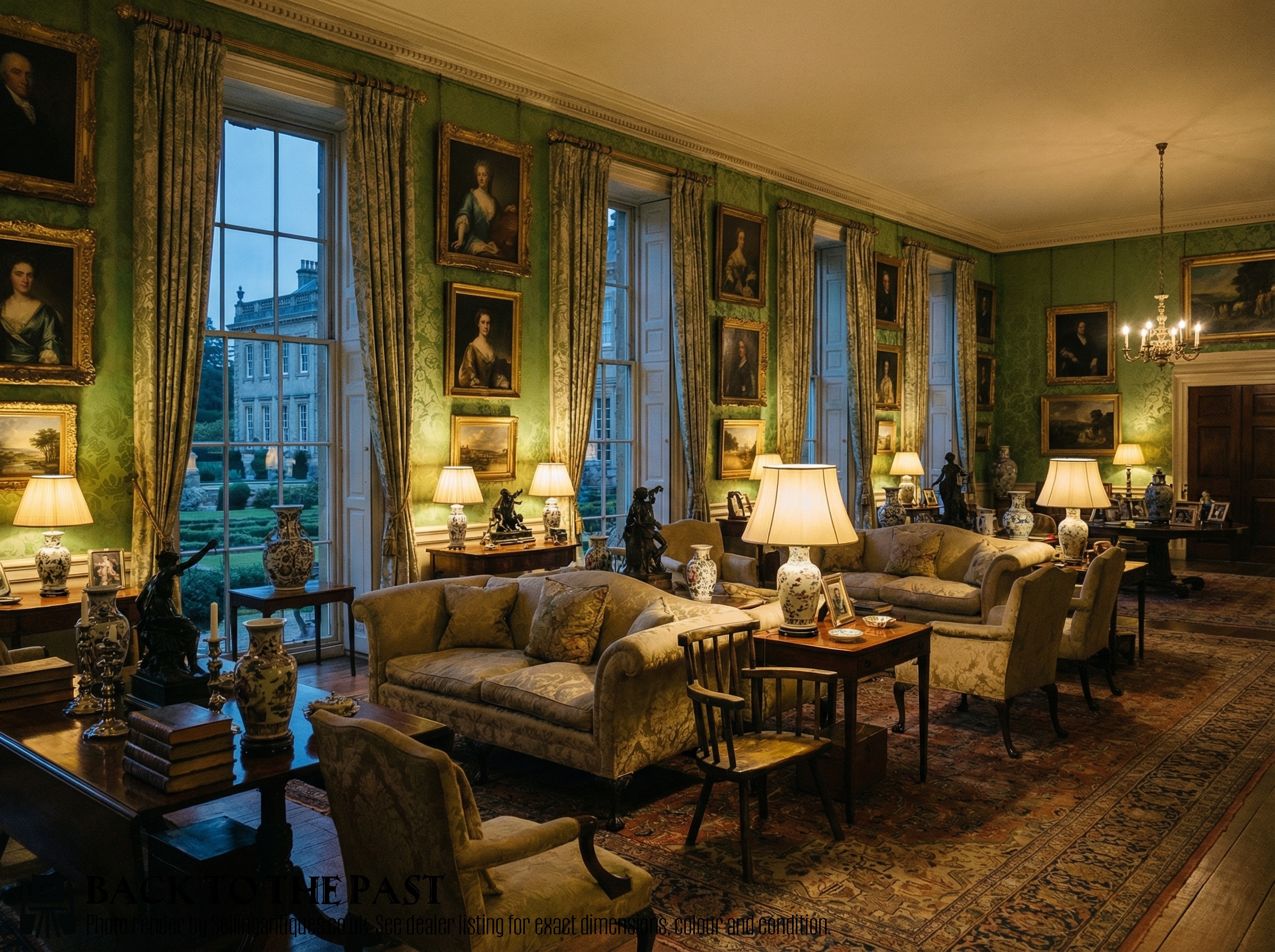
These chairs suit modern interiors as occasional seating in studies or living spaces, adding strong architectural silhouette and texture.
Keep them away from direct heat sources and sudden humidity changes to protect the historic timber joints.