

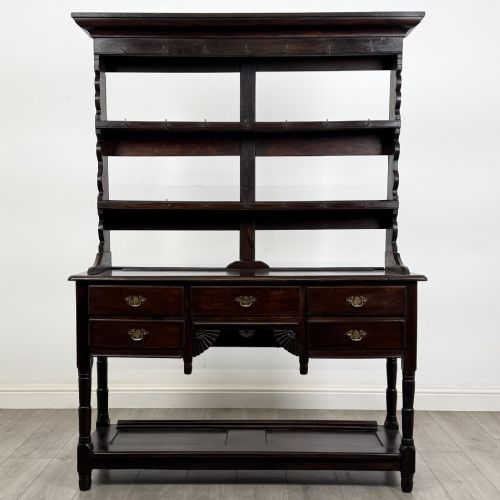
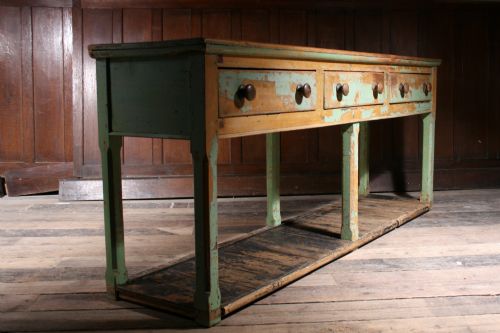
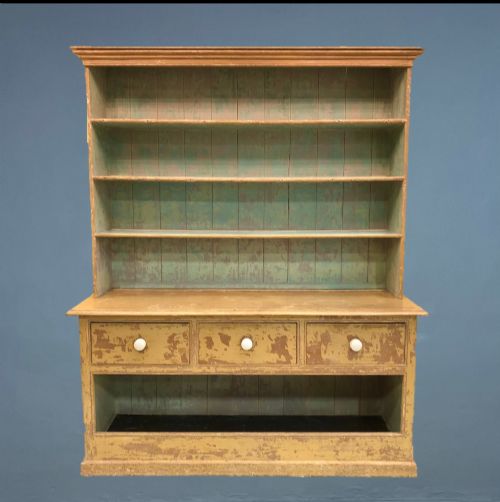
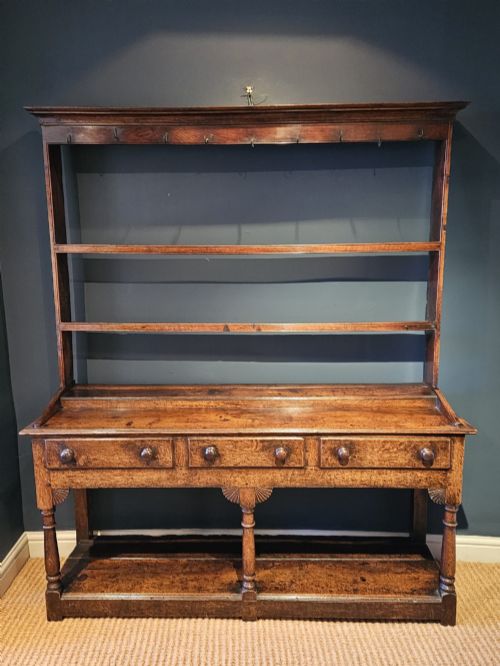
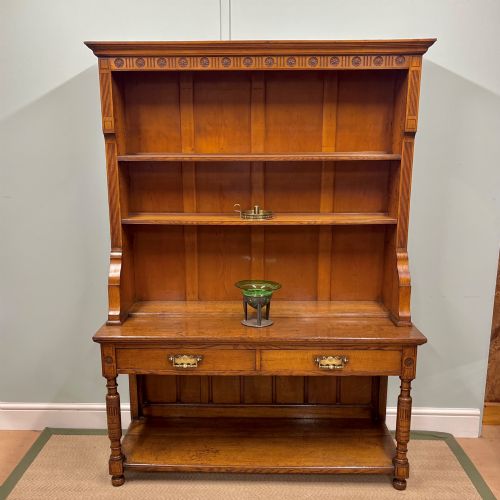


Pot Board Kitchen Dresser
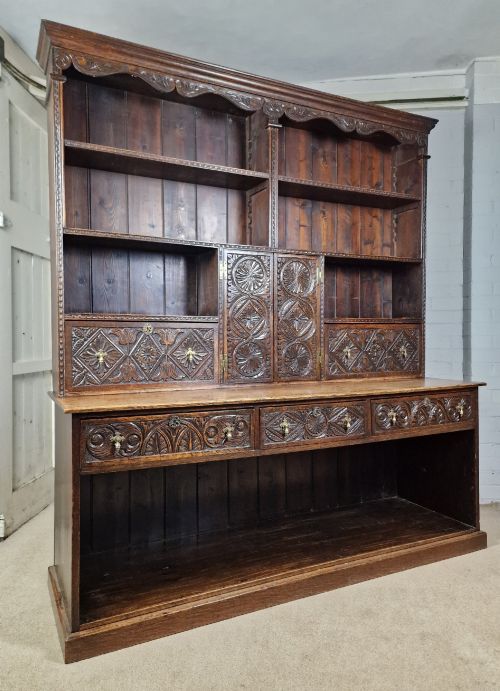
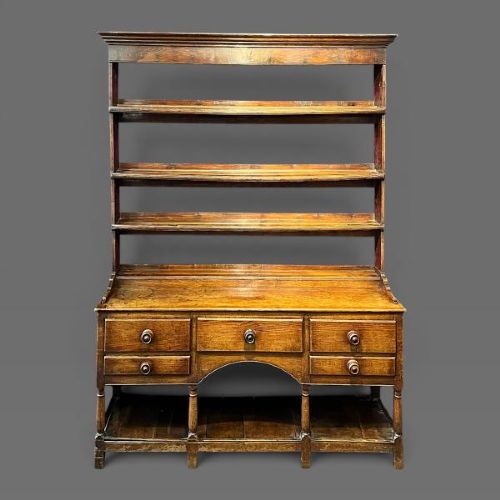
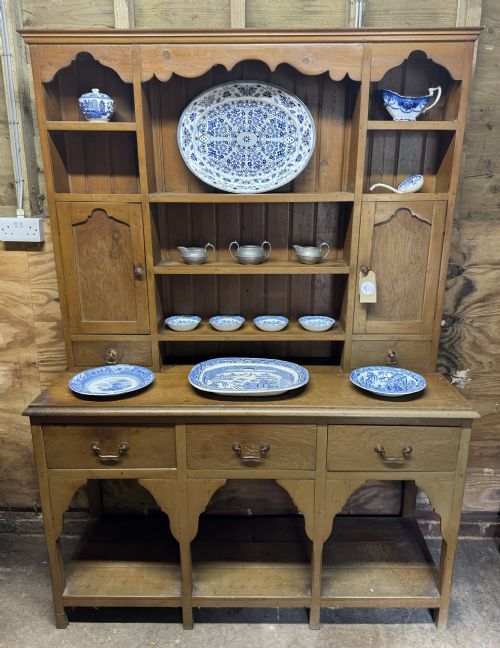
A pot board kitchen dresser is a substantial country timber storage piece designed with an open lower shelf for displaying heavy wares.
Pot Board Kitchen Dresser
When you search for a pot board kitchen dresser, you encounter heavy timber storage furniture originating primarily from Welsh, English, and Scottish regional traditions. These pieces combine a lower base fitted with drawers or cupboards with a distinctive open pot board shelf near the floor.
The version you are most likely to meet on this page dates from the eighteenth or nineteenth century and is constructed from native hardwoods or softwoods. Many examples retain their original upper plate racks designed for displaying domestic ceramics and metalware.
How they were made
Carpenters constructed these items predominantly using solid oak or pine, often selecting timber with dense grain and natural figure. Drawer linings and secondary elements frequently utilised softer timbers, while construction relied on traditional pegged joinery and hand-cut dovetails.
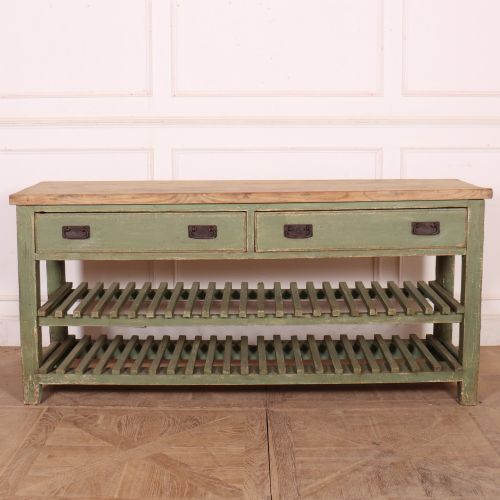
Surfaces were finished with applied paint, waxed patinas, or left in the bare timber depending on regional workshop practices and subsequent domestic use. Metal hardware such as brass handles and iron hinges were incorporated into the drawer and cupboard assemblies.
Pot Board Kitchen Dresser Retail Price Guide 2026
Typical asking prices for pot board kitchen dresser among the pieces listed under this phrase on Sellingantiques today, from the lower quarter to the upper quarter. They describe what is for sale here now, not the wider market.
Listings span the eighteenth, nineteenth, and early twentieth centuries, featuring regional oak and pine varieties alongside painted finishes.
What varies in quality
The distinction between standard examples and finer items rests upon the integrity of the timber selection and the retention of original surface patination. Pieces that maintain their untouched structural framing, original boarded racks, and honest wear command greater interest.
Proportion and regional design details also dictate the standing of a piece within its category. Refined bracket feet, well-figured oak boards, and balanced drawer arrangements separate standard vernacular utility items from superior regional workshops.
The Pot Board Kitchen Dresser Glossary
- Pot board
- An open lower shelf positioned close to the floor between the legs of a dresser base. It was traditionally utilised for storing heavy pots and pans.
- Welsh dresser
- A regional form of kitchen furniture featuring a lower base combined with an upper plate rack. These units originate from various Welsh counties and English provincial centres.
- Plate rack
- The upper shelving unit attached to or set upon the dresser base. It incorporates grooved plate rails and vertical boards to display ceramic plates safely.
- Dresser base
- The lower section of a kitchen dresser comprising drawers and cupboards mounted on legs or a plinth. Some examples survive independently without their upper racks.
- Patina
- The surface sheen and colour acquired by timber through decades of handling, polishing, and natural ageing. Original patination is valued for its depth and historical honesty.
Pot Board Kitchen Dresser: Frequently Asked Questions
What is a pot board on a dresser?
The pot board is the low, open shelf fixed between the legs near the floor of a kitchen dresser. It served as a practical storage area for heavy culinary pots, pans, and utilitarian domestic items.
In traditional country houses, this open shelf kept heavy kitchen copper and ironware within easy reach while supporting the structural rigidity of the base frame.
Are dresser plate racks original?
Many surviving examples retain their original boarded plate racks, which were pegged or screwed directly to the dresser base. Establishing originality involves inspecting the timber ageing, nail types, and fixing methods.
Because upper racks were easily separated or lost over centuries of domestic rearrangement, married racks from similar periods also appear in trade.
How do I style a kitchen dresser?
Living with these pieces involves using the open plate rack to display collections of ceramic plates, platters, and pewterware. The arrangement benefits from mixing varying heights and historical pottery types.
The lower pot board provides a natural platform for stacking heavy ironstone bowls, treen, or copper kitchenware, maintaining the functional aesthetic intended by the original provincial makers.
How do I date an oak dresser?
Dating relies on examining construction techniques, timber species, hardware, and design proportions. Eighteenth-century examples often feature hand-cut dovetails, pegged joints, and native oak with deep patination.
Later nineteenth-century and early twentieth-century pieces typically display machine-sawn elements, pine secondary timbers, or revival styling informed by earlier Georgian vernacular traditions.