

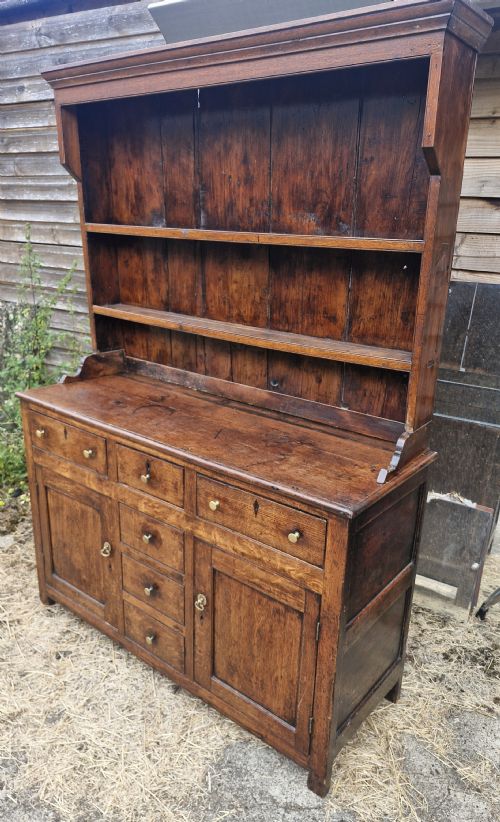
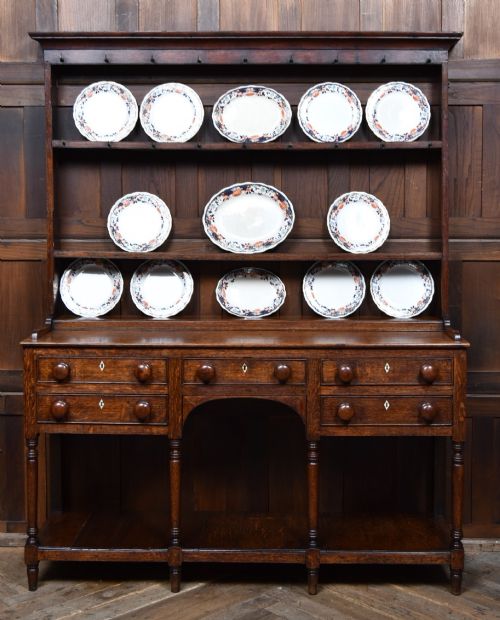
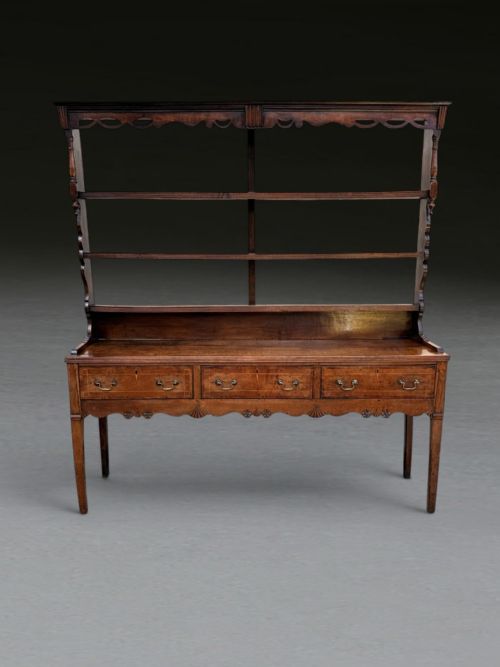
Country Oak Kitchen Dresser
A country oak kitchen dresser anchors a room with storage and display space handed down from centuries of practical domestic life.
Country Oak Kitchen Dresser
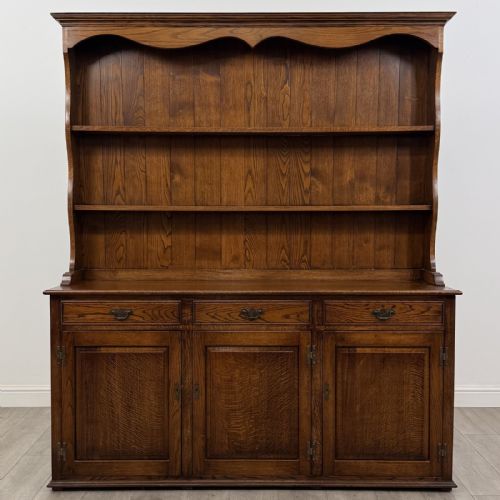
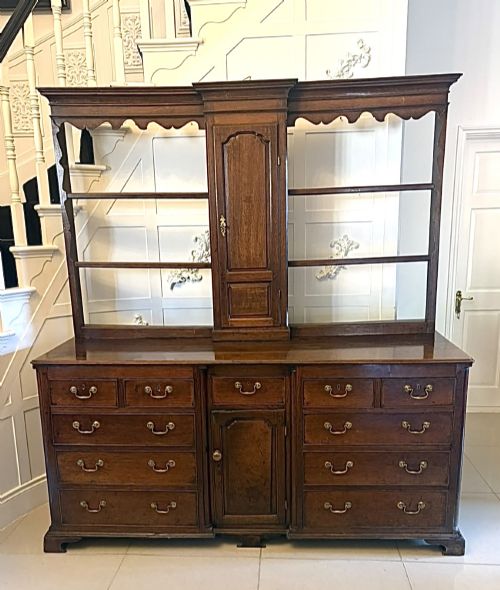
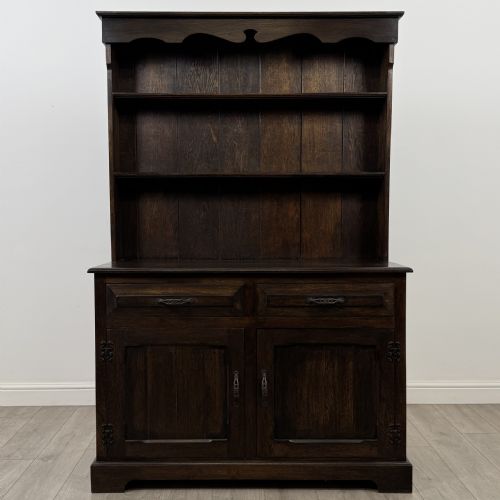
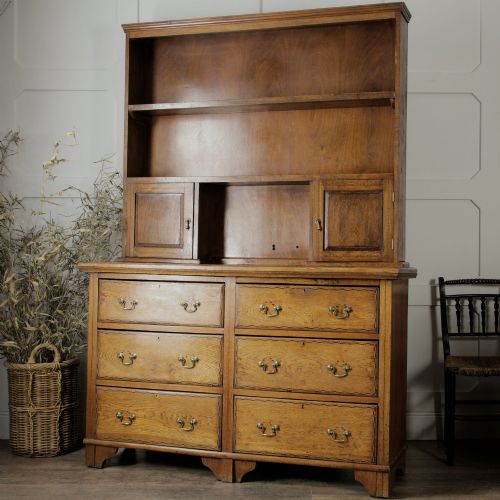
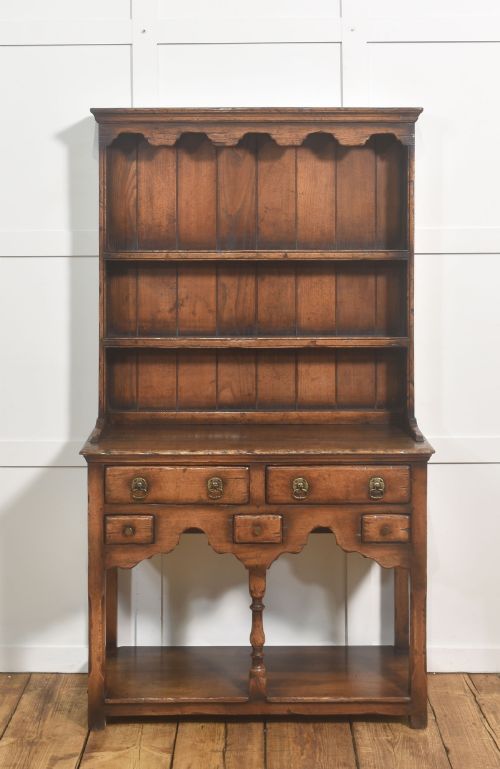
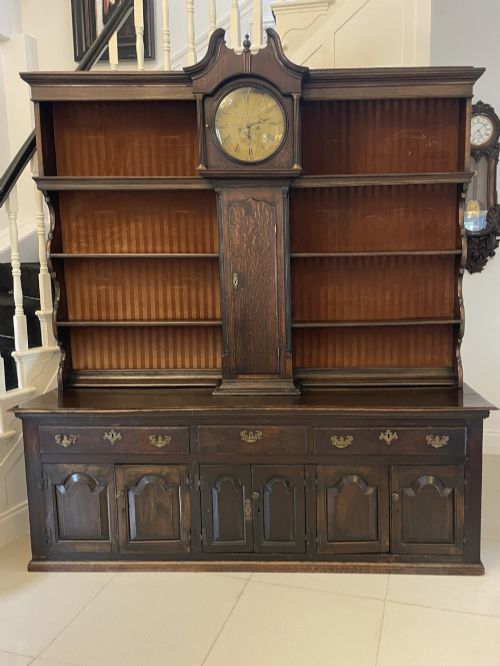
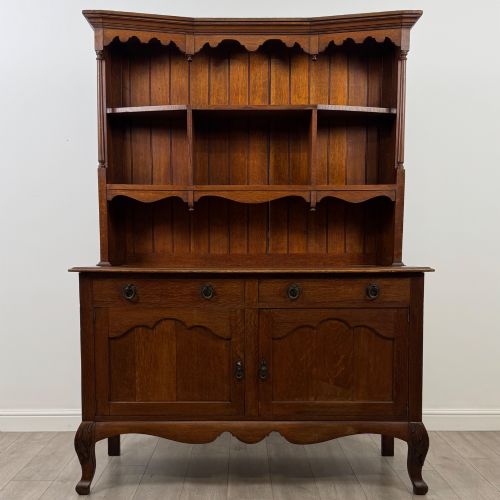
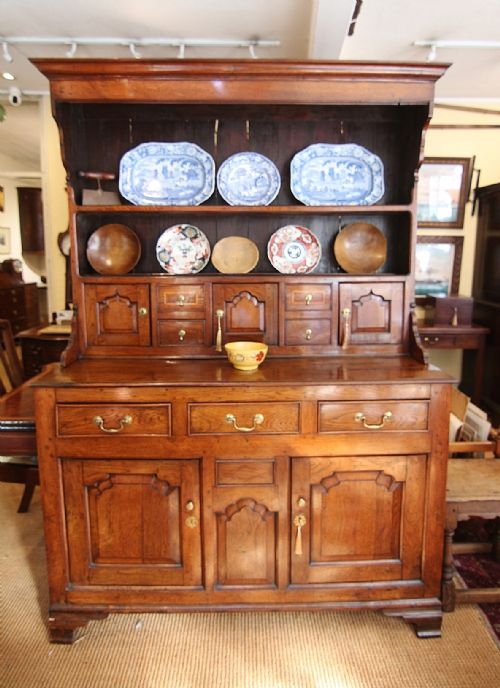
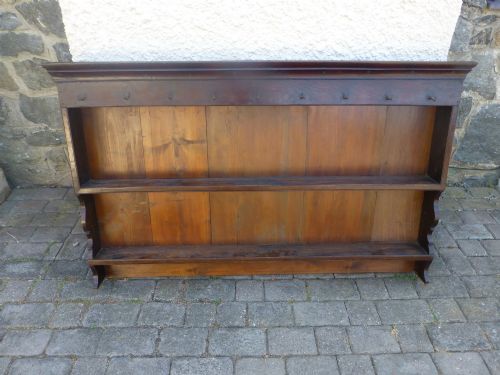
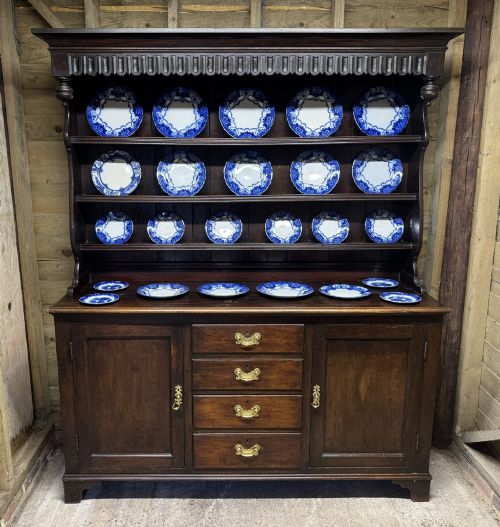
When you search for a country oak kitchen dresser, you are looking at substantial pieces of furniture built to hold tableware, dry goods, and everyday kitchen equipment. The forms range from open plate racks mounted on sturdy bases to grand multi-tiered cupboards with integrated display shelving.
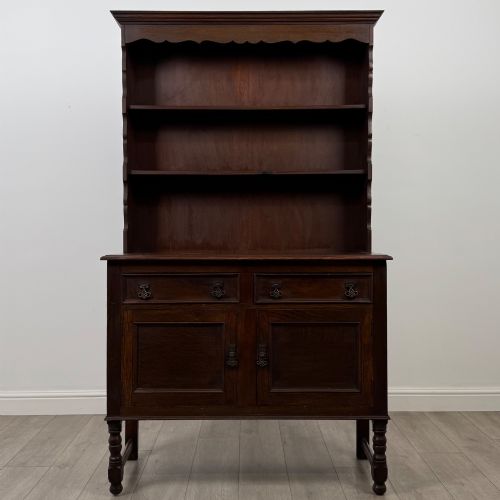
The versions most likely to appear on this page include eighteenth-century George III examples, regional Welsh vernacular designs, and later nineteenth-century cottage pieces. Many combine a potboard base or rows of drawers with upper plate racks designed to show off delftware.
Origins stretch across English shires, Welsh valleys, and French provinces, uniting utilitarian design with local cabinet-making traditions. These pieces reflect the shift from open hearths to organised kitchens where crockery needed both storage and ventilation.
Materials and Construction
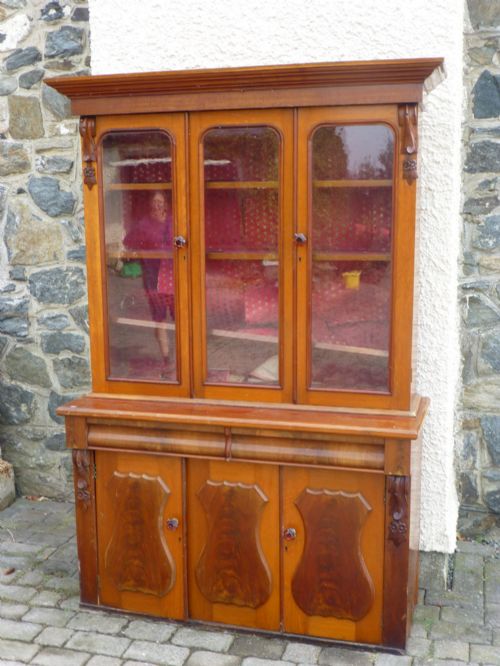
Makers relied primarily on solid oak for the structural frames, drawer linings, and topboards, supplemented occasionally by fruitwood, pine, or mahogany accents. Brass drop handles, iron latches, and glass panes appear on later glazed cupboard doors.
Panels were hand-planed and joined using traditional pegged mortise and tenon construction to withstand the heavy loads of domestic earthenware. Inlays of lighter woods or bone occasionally decorate the friezes of finer regional pieces from areas like Snowdonia.
Listings feature oak, pine, mahogany, and fruitwood across Georgian, Victorian, and Edwardian periods.
Distinctions in Quality
Quality rests in the proportion of the timber, the depth of colour achieved through centuries of wax polish, and the integrity of the regional construction. Superior examples retain their original brassware, unblemished potboards, and well-balanced plate racks without mismatched upper and lower sections.
Simpler provincial pieces display straightforward utility through plain planked backs and thick timber tops, whereas high-status regional workshops added moulded cornices, column details, and fine stringing. The distinction lies between honest local utility and elevated vernacular design.
The Country Oak Kitchen Dresser Glossary
- Potboard
- An open slatted lower shelf fitted between the legs of a dresser base. Originally used for storing heavy pots and pans off damp stone floors.
- Delft rack
- An open wooden shelving unit fixed above a dresser base or hung directly on a wall. Grooves hold ceramic plates upright for display and drying.
- Welsh dresser
- A regional cabinet type featuring extensive upper shelving combined with a deep lower base of drawers and cupboards. They often incorporate enclosed spice cupboards or glazed display doors.
- Bread and cheese cupboard
- A specialised regional storage form featuring ventilated pierced panels for food preservation. These compartments are integrated into the lower sections of specific country dressers.
Country Oak Kitchen Dresser: Frequently Asked Questions
How do I use a dresser in a modern kitchen?
Use the open plate racks for everyday ceramic display and the deep lower drawers for cutlery and table linen. Cupboard spaces accommodate glassware and bulky cookware while maintaining a traditional aesthetic.
Ensure the piece is anchored securely to the wall if it carries a heavy top rack, particularly in busy family spaces.
What is the difference between an 18th and 19th-century dresser?
Eighteenth-century examples often display pegged construction, hand-carved details, and rich patination developed over centuries of household use. Nineteenth-century versions tend to incorporate softer secondary woods and standardised hardware.
Earlier pieces frequently feature potboard bases, whereas Victorian variations lean towards enclosed cupboards and glazed upper doors.
Are the top racks and bases always original to each other?
Many country pieces were separated over generations, leading dealers to reunite bases and racks of similar age, timber, and regional origin. Careful inspection of the fixing points and wood colour reveals whether top and bottom evolved together.
Matched pairs still offer tremendous character and practical storage, provided the proportions balance harmoniously.
How should I care for old oak furniture?
Maintain the timber by applying natural beeswax sparingly to nourish the dry oak surface and preserve the deep historic patina. Avoid placing the furniture near direct heat sources or damp walls to prevent wood movement.
Dust regularly with a soft cloth and buff gently to keep the surface resilient against daily household wear.