




Pot Board Dresser Base
A pot board dresser base provides generous lower shelf storage beneath solid timber drawers, grounding a kitchen or dining room with practical utility.
Pot Board Dresser Base
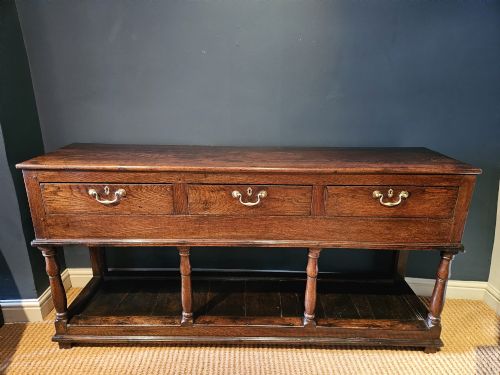
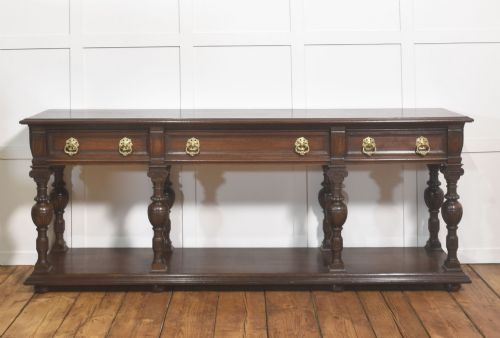
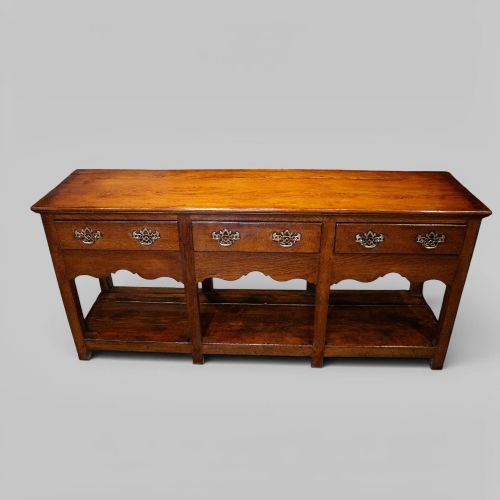
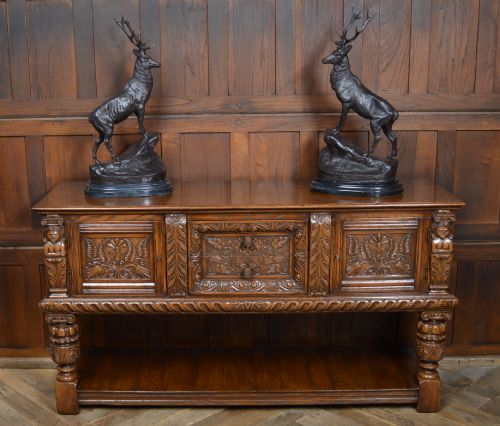
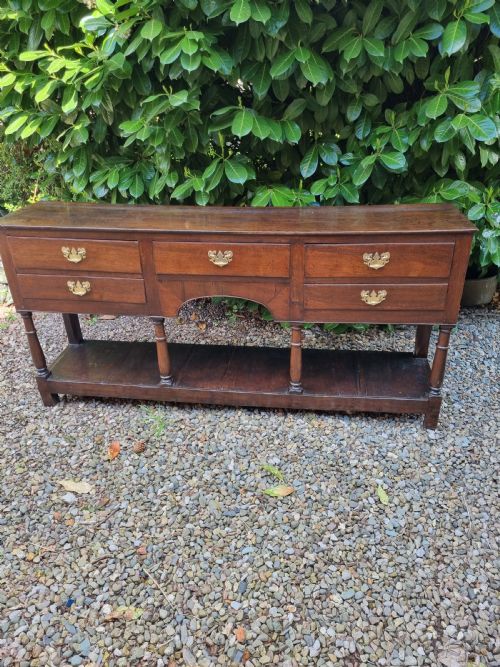
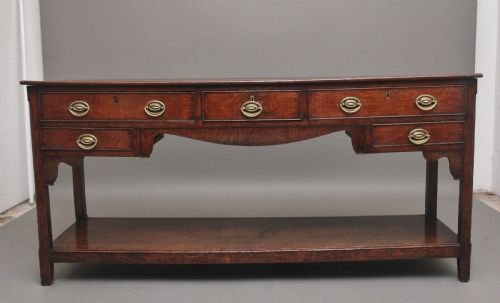
A pot board dresser base is a heavy lower storage unit designed for domestic kitchens and dining rooms, distinguished by a low open shelf beneath the main surface. The most common examples seen here originate from the Georgian and 18th Century periods, frequently built in regional English and Welsh styles.
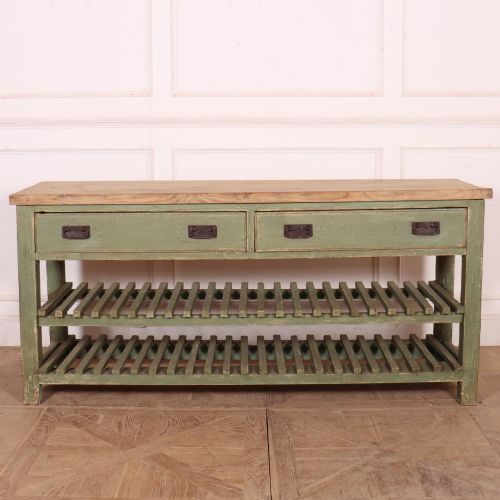
Most pieces offer a configuration of multiple drawers across the top section above the low pot shelf. Regional variations include examples with spice drawers, varying numbers of drawer fronts, and open pot board surfaces designed to hold heavy kitchen wares.
Materials and Technique
Construction relies primarily on native oak, joined with traditional framing methods to withstand heavy domestic use. Pine appears in secondary elements and specific regional pieces, whilst brass hardware such as drawer pulls and escutcheons adds functional detail.
Surfaces show the hand of the maker through pegged joints, joined boards, and occasional carved detailing associated with Jacobean Revival and later vernacular styles. Some examples exhibit painted finishes applied during later periods of use.
Listings feature oak predominantly, alongside occasional pine examples and brass hardware details across Georgian and Victorian periods.
Evaluating Construction
Quality rests upon timber selection, timber thickness, and the integrity of the original joints. Pieces retaining their original brass hardware, unreplaced pot boards, and minimal structural alterations represent the highest tier of survival.
Proportion and scale dictate the visual success of the piece, with smaller vernacular formats and untouched surface patination commanding greater interest from collectors.
The Pot Board Dresser Base Glossary
- Pot board
- The lower open shelf built into the base of a dresser, originally intended for storing pots, pans, and heavy domestic vessels. This shelf sits a few inches off the floor on stretcher feet or low legs.
- Welsh dresser
- A term applied to kitchen storage units originating from Wales, often characterised by robust oak construction and distinctive regional drawer layouts. These pieces frequently incorporate spice drawers and deep lower pot boards.
- Joined work
- Furniture construction utilising mortise and tenon joints secured with wooden pegs rather than metal nails. This technique provides exceptional structural rigidity over centuries of use.
- Escutcheon
- A protective plate surrounding a keyhole on a drawer or cabinet door, typically cast in brass on period furniture. Original brassware contributes to the historical integrity of the piece.
- Vernacular furniture
- Domestic pieces made by local craftsmen for everyday use rather than high-style metropolitan workshops. These items reflect regional traditions and locally available timbers.
Pot Board Dresser Base: Frequently Asked Questions
What was a pot board used for originally?
The lower shelf provided a stable place to store heavy earthenware pots, metal pans, and large kitchen utensils off the damp floor.
Over time, it evolved into a display surface for serving dishes and everyday kitchen crockery.
How do I tell an 18th century base from a 20th century revival?
Examine the timber shrinkage, tool marks on the underside of the boards, and the construction methods used in the drawer linings.
Revival pieces from the early 20th century often display uniform machine milling and lack the authentic wear patterns found on Georgian timber.
Can I use a dresser base in a modern kitchen?
These low sideboards function exceptionally well as kitchen islands, serving stations, or under-counter storage units.
The deep drawers and sturdy lower shelf accommodate modern kitchenware while adding historical texture to a contemporary room.
Why do some bases have more drawers than others?
Drawer configuration often depended on regional workshop traditions and the specific storage needs of the household.
Some Welsh and English makers preferred a bank of three or five small drawers above the pot board, whilst others utilised fewer, wider drawers.