


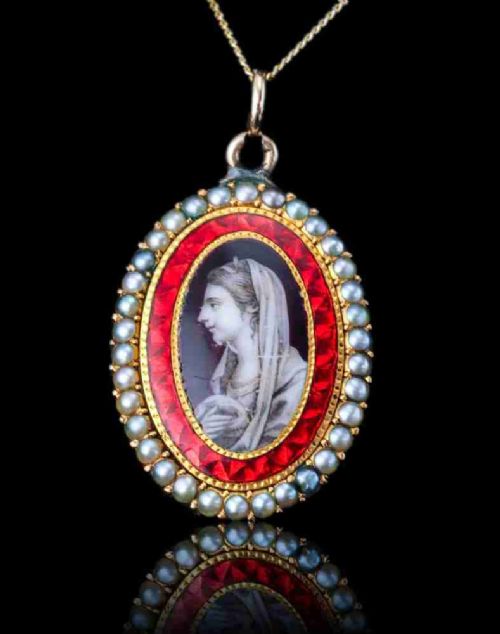


Portrait Miniature Jewellery
Portrait miniature jewellery preserves the likenesses of loved ones in wearable gold, enamel and painted porcelain.
Portrait Miniature Jewellery
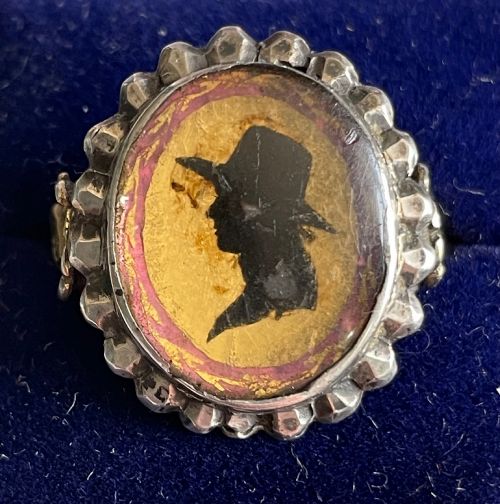
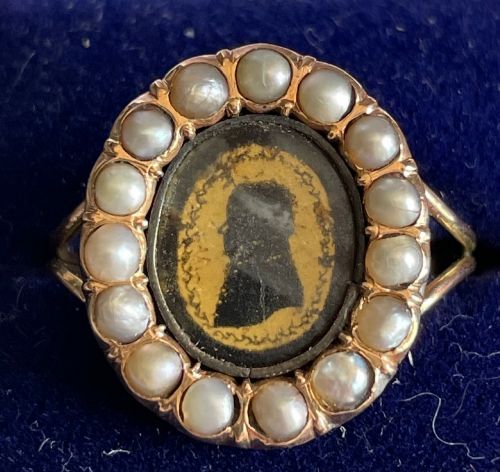
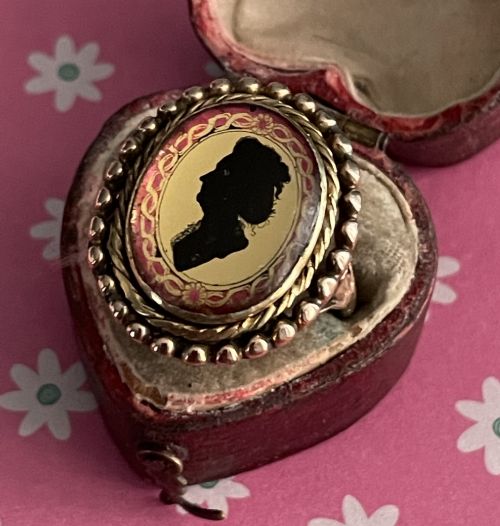
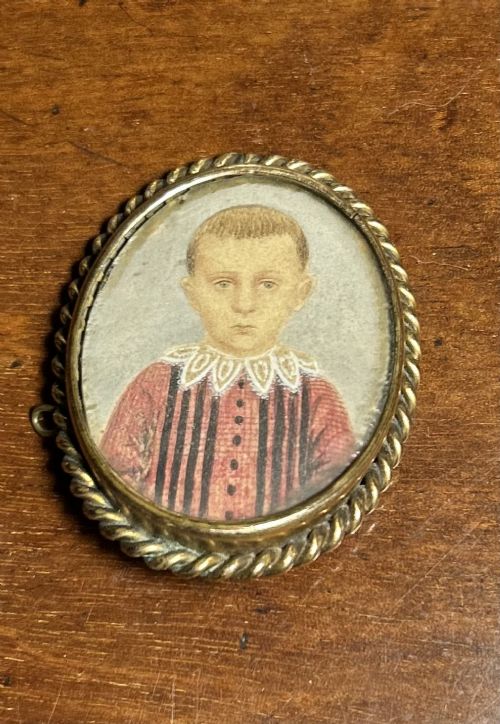
Portrait miniature jewellery combines intimate painted likenesses with wearable metal settings, spanning periods from the eighteenth century through the Edwardian era. You will frequently encounter Georgian and Victorian pendants, brooches and rings housing hand-painted watercolours, enamels or silhouettes.
The form developed from standalone miniature paintings into portable keepsakes, often worn close to the heart or as commemorative love tokens. Pieces range from simple silver rings to elaborate gold lockets framed with pearls or glass.
Makers utilised various formats, including stick pins, trinket boxes and pendant necklaces, each designed to display a specific style of portraiture. Continental and English examples dominate the selection, reflecting distinct regional tastes in miniature painting.
How they were made
Metalsmiths housed the miniatures within secure mountings of gold, silver, gilt bronze or brass, frequently incorporating glass fronts to protect the fragile paintwork. Components like pearls, enamel work and hinged lockets were added by hand to complete the settings.
Materials in these listings include gold, silver, enamel, glass, porcelain, pearl and watercolour.
What varies in quality
The skill of the portrait painter dictates the visual appeal, separating hasty commercial pieces from masterworks with lifelike depth and expression. Superior miniatures capture subtle shading in the subject's skin and accurate rendering of period dress.
The integrity and weight of the metal mount also influence the piece, with solid gold settings and intricate silver or enamel work demonstrating higher craftsmanship than simpler plated brass alternatives.
Henry Bone ARA·John Miers·Christian Friedrich Zincke·Meyle and Mayer
The Portrait Miniature Jewellery Glossary
- Verre eglomise
- A technique involving cold painting and gilding on the reverse of glass. This method produced striking silhouettes and portraits with a reflective, glossy finish.
- Silhouette
- A solid black profile portrait, often cut from paper or painted directly onto card, glass or ivory. These profile studies were popular in Georgian jewellery.
- Locket
- A small ornamental pendant that opens to reveal a hidden compartment. In this category, the compartment typically holds a painted miniature or a lock of hair.
- Enamel
- A durable substance created by fusing powdered glass to a metal substrate through firing. It provided vibrant, permanent colour for miniature portraits and decorative frames.
Portrait Miniature Jewellery: Frequently Asked Questions
How do I wear these pieces safely?
Wear them with care, ensuring they do not catch on clothing or suffer impacts that might crack the glass or delicate paintwork underneath. Pin brooches securely and remove pendants before strenuous activities.
Store each item separately in a padded box to prevent the metal settings from scratching the painted surfaces or glass covers.
How do I date a piece?
Examine the style of the clothing, hair and setting materials, which typically align with Georgian, Victorian, Edwardian or later nineteenth-century aesthetics. Hallmarks on the gold or silver mountings provide precise manufacturing dates or assay office locations.
Painting techniques also offer clues, as silhouettes and watercolours were more common in the eighteenth century, while porcelain and vibrant enamels grew prominent later.
Were these items worn daily?
Many pieces functioned as sentimental everyday accessories, keeping the memory of family members or romantic partners close to the wearer. Others served as mourning jewellery to commemorate those who had passed away.
Because they contained fragile watercolours or glass, owners often reserved more elaborate gold and pearl variants for special occasions rather than rough daily use.