


Portable Writing Desk Slope
A portable writing desk slope is a folding timber box built for travel, offering a firm inclined surface for correspondence and secure storage for papers.
Portable Writing Desk Slope
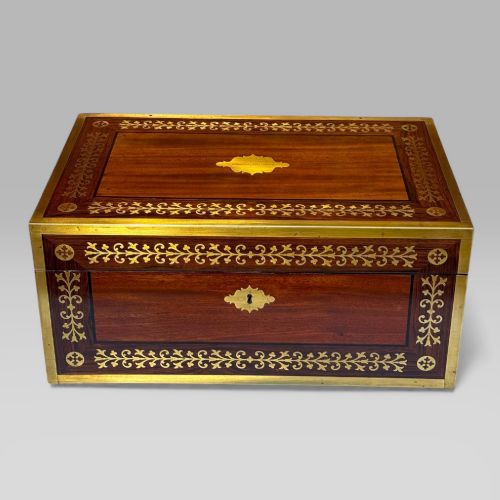
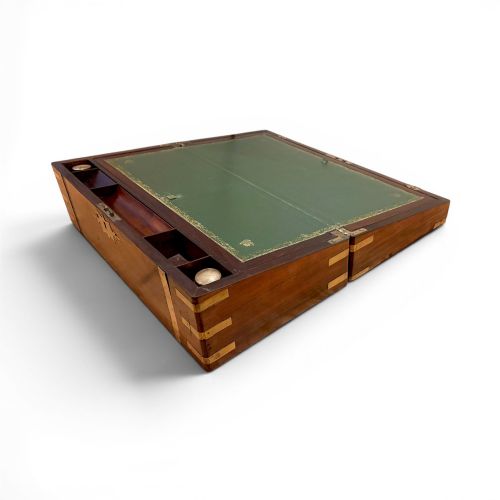
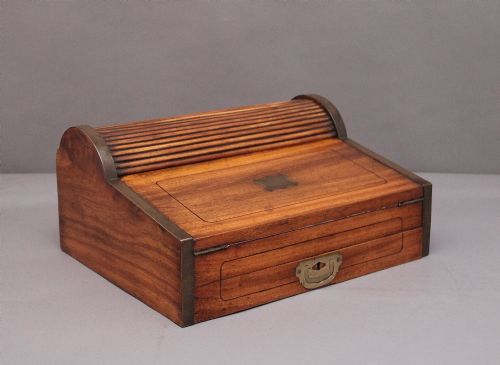
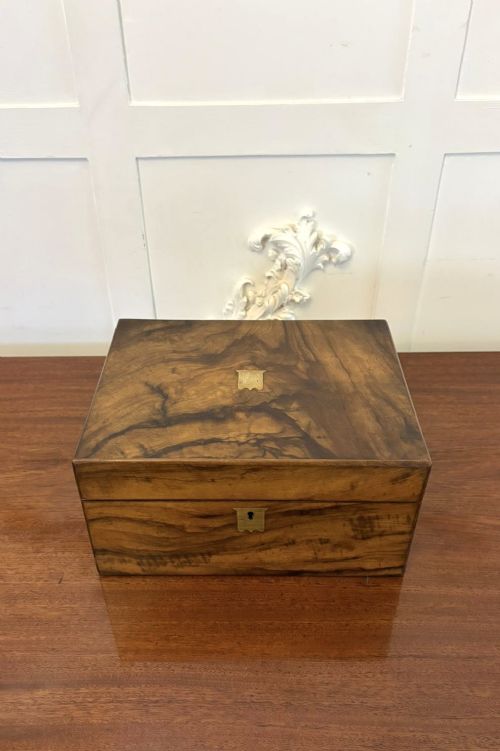
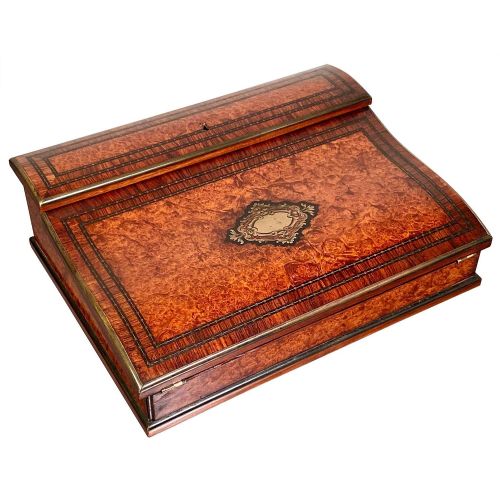
A portable writing desk slope is typically a folding wooden box that opens to reveal a sloping writing surface lined with leather. These pieces range from compact lap desks to substantial campaign boxes designed for officers and travellers.
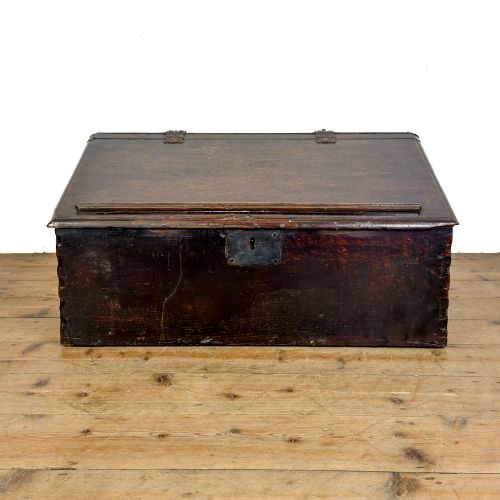
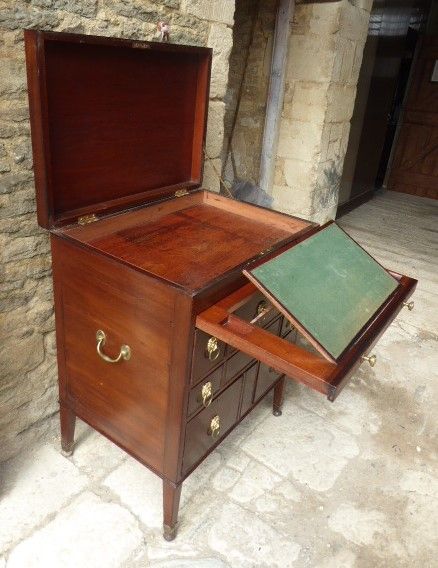
The selection on this page draws heavily from the Georgian, Victorian, and nineteenth-century periods, with forms including writing boxes, campaign chests, and table-top reading stands. Woods such as mahogany, walnut, rosewood, and camphor wood dominate the selection.
Makers often incorporated clever internal mechanics, such as secret drawers, hidden compartments, and dedicated spaces for inkwells and pens. Many examples reflect military or campaign origins, reinforced with brass corners and strapwork to withstand travel.
Materials and construction methods
Cabinetmakers built these boxes using dense timbers like mahogany, walnut, and rosewood, frequently selecting figured veneers or burr variations for decorative effect. Solid woods such as oak, elm, and camphor wood also appear, chosen for durability or distinct scent.
Structural integrity relied heavily on brass binding, corner plates, and flush-fitting campaign handles countersunk into the timber. Interiors combined fitted wooden partitions with leather writing surfaces, often secured by robust locks such as Bramah mechanisms.
Periods represented span from the eighteenth century through the Victorian era and the height of the campaign style.
Distinctions in construction and finish
Quality rests on the selection of timber, the precision of the brass inlay, and the complexity of the interior fitments. Finer boxes utilise solid or thickly veneered hardwoods with tightly fitted secret compartments and fully operational locks with original keys.
Simpler pieces rely on plain mahogany or oak without brass banding or intricate stationery compartments. The presence of specialised details like Tunbridgeware, ivory inlay, or parquetry elevates a piece within its period.
Mappin & Webb
The Portable Writing Desk Slope Glossary
- Campaign
- Describing furniture made to dismantle or fold for military travel. These pieces typically feature recessed brass handles and corner brackets.
- Secret drawers
- Concealed compartments hidden behind false panels or accessed via clever internal triggers. They were used for storing valuables and sensitive documents.
- Bramah lock
- A high-security barrel lock patented in the eighteenth century. It is known for pick-resistance and requires a specialised cylindrical key.
- Tunbridgeware
- A form of decorative woodwork produced in Kent using small mosaic tiles of naturally coloured woods to create geometric patterns.
- Lap desk
- A smaller portable writing box intended for use upon the knees or an easy chair rather than a fixed table.
Portable Writing Desk Slope: Frequently Asked Questions
How do you use a portable writing desk slope?
The box opens outward to form a slanted writing plane covered in leather, while the upper section holds paper, pens, and inkwells. Many models include ink bottles with screw lids to prevent leaks during travel.
Inside, compartments keep correspondence organised, and some designs feature a fold-out writing surface that extends the usable area. When closed, everything locks securely inside the timber casing.
What is a campaign writing slope?
A campaign writing slope is built for military officers or travellers on the move. These pieces feature protective brass corners, strapwork, and flush handles that do not catch on luggage.
Many incorporate sturdy hardwoods like mahogany or camphor wood and include secure locking mechanisms to protect documents on long journeys.
How do I spot secret drawers?
Secret drawers are usually concealed behind dummy partitions, removable pen trays, or sliding panels inside the stationery compartment. Finding them often requires removing the inkwells and pressing hidden spring levers.
Cabinetmakers integrated these compartments to keep currency, letters, and small valuables safe from prying eyes.