


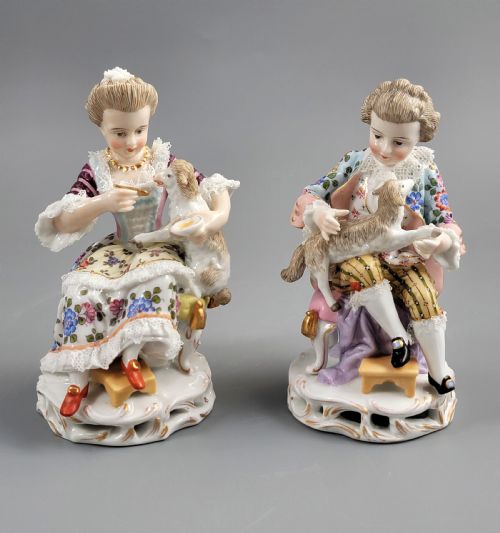


Porcelain Shepherd Figure
A porcelain shepherd figure brings pastoral charm into a room, capturing eighteenth and nineteenth century romantic ideals in miniature ceramic form.
Porcelain Shepherd Figure
A porcelain shepherd figure represents an idealized pastoral archetype, frequently paired with a shepherdess, a dog, or a pet lamb. When you search for a porcelain shepherd figure on this page, you encounter examples ranging from eighteenth-century Georgian productions to late nineteenth-century Continental revivals.
The physical forms include standalone figurines, seated pipers, statuettes, and figural candlesticks. English factories like Derby and Bow share space with German works from Sitzendorf and Dresden, alongside French bisque sculptures.
Most entries belong to the nineteenth century, reflecting a strong Victorian taste for Rococo Revival aesthetics. Eighteenth-century Georgian pieces appear less frequently, offering earlier examples of patch period marks and Derby models.
Materials and production methods
The primary substrate is hard-paste or soft-paste porcelain, modelled into intricate shapes before firing. Bisque porcelain appears in unglazed French sculptures, providing a matte surface that mimics carved marble.
Decoration relies on polychrome enamel painting, often enhanced with gold leaf or gilt highlights. Base details incorporate applied elements such as porcelain flowers, foliage, and textured rococo scrolls.
Listings span both English and German factories, recording periods from eighteenth-century Georgian up to nineteen-ten.
Factors determining quality
The application of enamel and gilding dictates visual success, where hand-painted polychrome decoration retains subtle shading rather than flat blocks of colour. The retention of fragile elements such as lambs, flutes, and floral encrustations influences the overall integrity of the piece.
Sitzendorf·Bloor Derby·Vion and Baury·Royal Dux·William Duesbury and Co·Bow
The Porcelain Shepherd Figure Glossary
- Bisque porcelain
- Un-glazed porcelain fired once to a matte, porous state that resembles white marble. This finish was favoured by nineteenth-century French makers for sculptural depth.
- Hard-paste porcelain
- A durable ceramic composition fired at very high temperatures using kaolin and petuntse. It provides a dense, vitrified body typical of many European factories.
- Patch mark
- A small, unglazed blemish on the underside of early English figures caused by the fireclay props used inside the kiln. These marks help date eighteenth-century Derby pieces.
- Polychrome
- Multicoloured decoration applied to ceramics using enamel paints before a final low-temperature firing. It brings vivid life to shepherd garments and landscape bases.
- Rococo Revival
- A nineteenth-century design style mimicking the asymmetrical scrolls, C-curves, and naturalistic motifs of the mid-eighteenth century. Many Victorian figures utilise these ornate bases.
Porcelain Shepherd Figure: Frequently Asked Questions
What is a porcelain shepherd figure?
A porcelain shepherd figure is a decorative ceramic statuette depicting a male herder, frequently accompanied by sheep, dogs, or musical instruments. These items stem from a long European tradition of romanticising rural life.
Such figures were produced across England and continental Europe from the mid-eighteenth century through the Victorian era. They functioned primarily as decorative mantel ornaments for affluent households.
How do I identify eighteenth-century pieces?
Eighteenth-century pieces often display specific factory characteristics such as patch marks, anchor daggers, or early crown and D marks. The paste tends to show subtle weight and glaze variations unique to early soft-paste or hard-paste recipes.
Stylistically, these earlier figures exhibit restrained rococo bases and hand-painted polychrome details that predate mass-produced nineteenth-century casting methods.
Where were these figures made?
Production centres span both English and continental factories. Notable English sites include Derby and Bow, while German output centres on Sitzendorf and Dresden.
French makers such as Vion and Baury also contributed large bisque sculptures during the nineteenth century. Royal Dux represents later Bohemian manufacturing.
How do I clean antique porcelain?
Cleaning antique porcelain requires gentle dusting with a soft, dry brush to remove surface particulate. Avoid harsh chemical cleaners or submersion, particularly on pieces with delicate gilt or enamel.
If washing is necessary, use lukewarm water with mild soap and dry immediately with a lint-free cloth. Fragile applied elements like floral encrustations demand extreme care.