


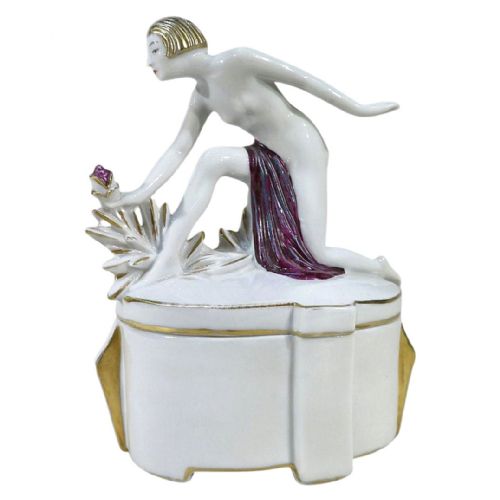
Porcelain Powder Box
Porcelain powder box designs bring vanity tables to life with painted figures, ceramic bowls, and gilt details.
Porcelain Powder Box
A porcelain powder box is a vanity accessory designed for holding cosmetic powder or small trinkets on a dressing table. When you search for a porcelain powder box, you encounter items intended for domestic use in bedrooms and boudoirs during the early twentieth century. These vessels combine functional storage with decorative display, taking the form of bowls, jars, and round boxes.
The most common versions on this page date from the Art Deco period of the 1930s, often featuring ceramic or porcelain construction. Many examples incorporate figural elements such as flapper girls, half dolls, pierrots, and bathing belles atop the lids. Originating largely from France, Germany, and Austria, these objects reflect the popular aesthetics and social habits of their era.
What varies in quality
The standard of hand painting on the figures and motifs separates everyday examples from finer productions. Crisp details in the facial expressions of flapper girls or animal figures indicate superior artisan skill during manufacture. Precise application of gilt and gold leaf also distinguishes better pieces from simpler ones.
The complexity of the form itself influences the overall quality of the vessel. Modelled figures such as jesters, ballerinas, or bathing belles require advanced ceramic moulding compared to plain round bowls. Preservation of the original glaze and enamels without loss or fading maintains the integrity of the design.
Powder boxes topped with ceramic pantechnicon dogs and jester figures ensure your dressing table keeps a sense of humour.
Limoges·Meissen
The Porcelain Powder Box Glossary
- Half doll
- A ceramic upper torso without legs, commonly used as a lid on powder jars and brush handles during the early twentieth century. These figures often depict stylish women in period dress.
- Flapper girl
- A cultural archetype of the 1920s and 1930s representing modern, independent young women. This motif appears frequently on vanity accessories from the period.
- Gilt
- A thin layer of gold applied to the surface of porcelain or ceramic objects for decoration. It is often found highlighting the rims and edges of powder bowls.
- Chinoiserie
- A European artistic style reflecting Chinese motifs and techniques. It appears on selected decorative porcelain items.
- Art Deco
- A design movement prevalent in the 1930s characterised by stylized geometric shapes and modernist figures. Most pieces on this page share this aesthetic.
Porcelain Powder Box: Frequently Asked Questions
What is a porcelain powder box?
A porcelain powder box is a decorative container designed to hold cosmetic powder on a dressing table. These items typically feature a fitted lid and a matching bowl.
Many examples from the early twentieth century incorporate sculpted figures or hand-painted motifs on the top.
How were these boxes used?
These vessels were kept on dressing tables to store loose face powder for daily makeup application. They also served to hold small trinkets and pins.
As vanity accessories, they added a decorative element to bedroom furnishings.
How do I identify Art Deco pieces?
Art Deco pieces from the 1930s often feature stylized figures such as flapper girls, bathing belles, and pierrots. The designs lean towards modern aesthetics of the period.
Form and decoration reflect the artistic trends of the interwar years.
What materials are used?
The primary materials are porcelain and ceramic, finished with glazes and enamels. Some items include gilt or gold leaf detailing.
Fabric and earthenware also appear across the selection of vanity accessories.
Where were they made?
Many of these items originated in European manufacturing centres such as France, Germany, and Austria. Prominent potteries and studios produced these decorative vanity items.
French and German makers contributed a large share of the surviving examples.